Your Soba Journey
Let's get our hands floury and dive right in. You've probably enjoyed a cold plate of zaru soba on a hot day, or slurped a steaming bowl of kitsune soba, and that question pops into your head: how are these uniquely nutty, slightly earthy noodles actually created? How are buckwheat noodles made, from a hard, triangular seed to those elegant, grey-brown strands? The answer is a fascinating mix of tradition, patience, and a surprising amount of physical skill. It's not like making wheat pasta. Not even close. Buckwheat is a stubborn, gluten-free rebel, and working with it is a craft. I remember my first attempt ended in a crumbly mess that more closely resembled bird seed than noodles. It was humbling.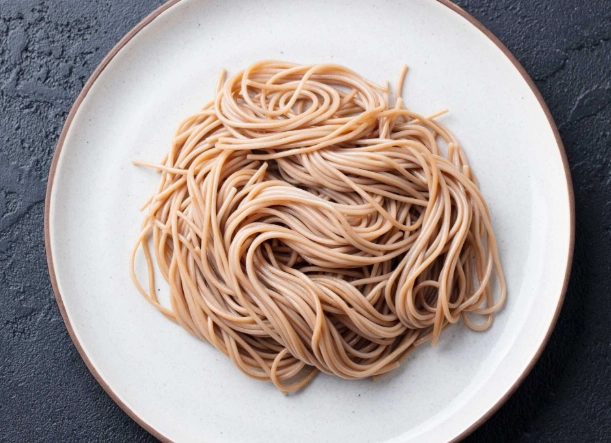
This guide isn't just a dry recipe. We're going to walk through the entire journey. We'll look at the traditional artisan method that has been honed over centuries in Japan, the modern adaptations that make it accessible, and the precise reasons behind each step. Understanding how buckwheat noodles are made completely changes how you appreciate your next bowl. You'll know why that texture matters, why the color varies, and what separates great soba from just okay soba.
The Heart of the Matter: It All Starts with the Flour
Before any mixing or kneading happens, the single most important decision determines the noodle's soul: the flour. This is where many home attempts go sideways. You can't just grab any buckwheat flour off the shelf and expect success.
Traditional soba masters use 100% buckwheat flour, known as ju-wari (十割). This is the pinnacle of the craft, producing noodles with an intense, pure buckwheat flavor and a distinctively soft yet firm texture. They're also the most fragile and difficult to handle. More commonly, you'll find blends. Ni-hachi (二八) soba, meaning "two-eight," is 20% wheat flour to 80% buckwheat. This small addition of wheat gluten makes the dough infinitely more manageable for rolling and cutting while still letting the buckwheat flavor shine. Then there's ichi-go, roku (一五), a 50/50 split, which is very forgiving for beginners but tastes noticeably more like regular pasta.
The milling process matters too. Stone-milling is the old-school, preferred method. It's slower and generates less heat, which preserves the delicate oils and aromatics in the buckwheat groats. High-speed steel mills can cook the flour slightly, dulling its fragrance. The fineness of the grind is another variable—too coarse and the noodles will be gritty; too fine and they can become gummy.
I made the coarse flour mistake once. The resulting noodles had a satisfying rustic chew, but they also released more starch into the cooking water, making it murkier. It's a trade-off.
Choosing Your Buckwheat Flour: A Quick Guide
Here’s a breakdown to help you visualize the differences, which is crucial before you even start the process of how buckwheat noodles are made.
| Flour Type (Japanese Name) | Buckwheat % | Wheat Flour % | Flavor Profile | Difficulty Level | Best For |
|---|---|---|---|---|---|
| Ju-wari (十割) | 100% | 0% | Intense, earthy, pure buckwheat | Expert | Purists, gluten-free diets |
| Ni-hachi (二八) | 80% | 20% | Rich, nutty, balanced | Intermediate | Classic restaurant-style soba |
| Ichi-go, Roku (一五) | 50% | 50% | Mild, approachable | Beginner | Home cooks, first attempts |
| Store-Bought "Soba" Flour | Varies (often 40-60%) | Varies | Mild to moderate | Beginner | Convenience, predictable results |
The Traditional Craft: A Step-by-Step Journey
This is the core of it. The artisan method is a rhythmic, physical dance. Watching a master soba chef (soba-shi) is mesmerizing. It looks effortless, but every movement has purpose.
Step 1: Mixing and the Quest for "Snow"
The flour is mounded on a large wooden board (konebachi). A well is made in the center. Water is added gradually—not all at once. This is critical. The water must be measured and cold. The soba-shi uses their fingers to gently incorporate the water from the center outward, creating a mixture that resembles wet snow or fine crumbs. The goal here is even hydration. No dry pockets of flour, no large wet lumps. This initial mix, if done right, sets the stage for everything that follows. If you rush this, you'll fight the dough later. I've rushed it. You end up kneading forever trying to fix it.
Step 2: Kneading and the "Earthworm" Stage
Now the crumbs are gathered and pressed together. This isn't wheat dough kneading with vigorous pushing and folding. It's more like a careful pressing, folding, and rotating. You're trying to consolidate without overworking. The dough is stiff. As it comes together, a master will roll it into a cylinder and then press it down, repeating the process. They talk about the dough reaching a consistency like an "earthworm"—firm but pliable, uniform in color without streaks. This can take 10-15 minutes of steady, patient work. When you pinch it, it should feel cool and smooth, not sticky or crumbly.
Step 3: Rolling Out: The Grand Stretch
This is the iconic image. The ball of dough is placed on a large, floured board. A long, thin rolling pin (soba-bo) is used. The technique is all about even pressure and constant rotation. You roll from the center out, then turn the dough a quarter turn. Roll out, turn. Roll out, turn. The dough expands into a larger and larger circle, maintaining an even thickness. The target is a perfect, wide circle about 2-3 millimeters thick. Any thin spots will tear during cutting; any thick spots will cook unevenly. Masters can get it paper-thin and nearly translucent. My first few rolls looked like amoebas, not circles. It takes practice to feel the evenness under the pin.
Step 4: The Art of the Cut
The thinly rolled sheet is folded in a specific, accordion-like manner, with ample flour (uchi-ko) between the layers to prevent sticking. Then, with a specialized heavy soba knife (soba-kiri bocho), the chef makes swift, confident, guillotine-like chops. The width of the knife and the precision of the cut determine the noodle's thickness—typically between 1.5 and 2 mm. This is where years of training show. A perfect cut yields noodles that separate cleanly with a gentle shake, each strand identical. A poor cut yields a stuck-together mass. This step, perhaps more than any other, defines how traditional buckwheat noodles are made. It's the moment of truth.
Step 5: Cooking and the Icy Bath
Fresh soba cooks in a flash. A large pot of vigorously boiling water is essential. The noodles are gently scattered in and stirred immediately to prevent clumping. Because they're fresh, they cook in just 60-90 seconds. The second they float and the water returns to a boil, they're done. Overcooking is a disaster—they turn to mush.
Immediately, they are scooped out and plunged into a bowl of ice water. This shock stops the cooking instantly, firms up the texture, and washes away excess surface starch, giving them that clean, distinct chew. They're then drained meticulously. This contrast between the hot boil and the ice bath is non-negotiable for perfect texture.
How Are Buckwheat Noodles Made Today? Modern Methods
Let's be real, not everyone has a 3-foot rolling pin and years to practice. Modern production answers the question of how are buckwheat noodles made for the masses. The principles are the same, but machines handle the heavy lifting.
Industrial mixers ensure perfectly even hydration. Huge, calibrated rollers press the dough into sheets of exact, consistent thickness. Then, through dies with precisely sized holes, the sheets are extruded or cut into noodles. These machines can produce thousands of portions per hour. The noodles are then pre-cooked (parboiled), cooled, and packaged—this is the "fresh" or "chilled" soba you find in supermarket refrigerators. Dried soba undergoes a drying tunnel after cutting.
Is it worse? Not necessarily. A good machine-made ni-hachi soba can be excellent—consistent, reliable, and delicious. But it often lacks the subtle, alive texture of hand-cut noodles. The mechanical extrusion can create a denser, less porous noodle that doesn't grip sauce quite the same way. It's a trade-off between artisan soul and scalable perfection.
Honestly, for a quick weeknight meal, a quality store-bought chilled soba is a gift. Trying to make everything from scratch every time is a fast track to burnout.
Giving It a Go: Key Tips for Home Cooks
Inspired to try? Here’s the distilled wisdom, the stuff you won't always find in a basic recipe.
- Start with a blend. Don't be a hero. Begin with an 80/20 or 50/50 flour mix. The wheat gluten is your training wheels. It makes the process of learning how buckwheat noodles are made far less frustrating.
- Water temperature is secret weapon. Use ice-cold water. Some masters even use chilled water with a single ice cube in it. Cold dough is easier to handle and results in a chewier noodle.
- Weigh everything. Volume measurements for flour are too inconsistent. A kitchen scale is your best friend here. Precision in the flour-to-water ratio is 80% of success.
- Rest the dough, but not too long. After kneading, let the dough rest wrapped in plastic for 20-30 minutes. This allows the moisture to fully distribute. But don't let it sit for hours—it can dry out or become too soft.
- Flour liberally when rolling and folding. Use more dusting flour (preferably buckwheat or potato starch) than you think you need when rolling and before folding to cut. Sticking is the enemy of clean cuts.
- Don't fear imperfection. Your first batch will likely be uneven. Some noodles will be thick, some thin. They'll still taste amazing because you made them. The flavor of fresh-cut soba, even if ugly, beats perfect dried noodles any day.
Answering Your Curiosities: The Soba FAQ
After diving deep into how are soba noodles made, other questions always pop up. Let's tackle some common ones.
More Than Just Noodles: A Final Thought
Learning how buckwheat noodles are made is more than a cooking lesson. It's a window into a philosophy that values ingredient integrity, seasonal awareness (new crop buckwheat, shin-soba, is a celebrated event), and mindful craftsmanship. Each step, from selecting the seeds to the final cut, is intentional.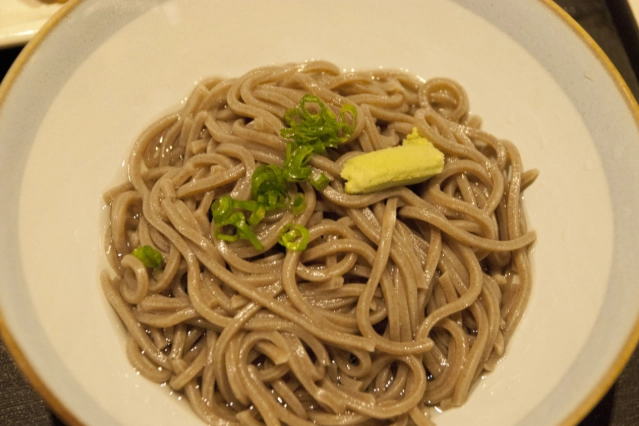
You don't have to become a soba-shi to appreciate this. Next time you eat soba, whether from a fancy shop or a plastic pack, you'll understand the journey. You'll notice the texture, the color, the way it holds the dipping sauce. You might even taste the difference between a machine-cut and a hand-cut strand. That awareness, that connection from field to bowl, is the real reward. It turns a simple meal into a story.
Maybe you'll try making them yourself. Maybe you'll just seek out a better quality product. Either way, you're now part of the story of how these wonderful, earthy noodles find their way to our tables.
Reader Comments