Let's be honest. Sometimes you just need a bowl of something warm, savory, and deeply satisfying. For me, that's often a steaming hot bowl of beef udon soup. It's not fancy, but when done right, it hits every note—chewy udon noodles, thinly sliced beef that melts in your mouth, and a broth that's both delicate and rich. I've spent years perfecting my recipe at home and hunting down the best bowls in restaurants from Tokyo to San Francisco. What most recipes online don't tell you is that the secret isn't in one magical ingredient, but in understanding the balance between three core elements: the dashi base, the beef, and the noodles themselves. Get one wrong, and the whole bowl feels off.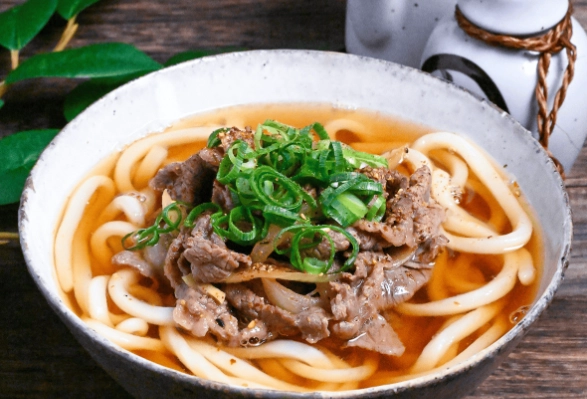
What's in This Bowl?
The Foundation: Demystifying the Broth
This is where most home cooks go wrong. They think a strong beef broth is the goal. It's not. Authentic beef udon soup uses a Japanese dashi as its base, which is then seasoned. The beef flavor comes from the topping, not from stewing bones for hours.
You have two main paths:
The Purist's Dashi: Kombu (dried kelp) and katsuobushi (bonito flakes). Steep kombu in cold water, heat it up just before boiling, remove the kombu, then bring to a boil and add a handful of katsuobushi. Turn off the heat, let it steep, then strain. It's light, umami-rich, and the true backbone. Resources like the official site of Japan's Ministry of Agriculture, Forestry and Fisheries highlight dashi as the cornerstone of washoku (Japanese cuisine).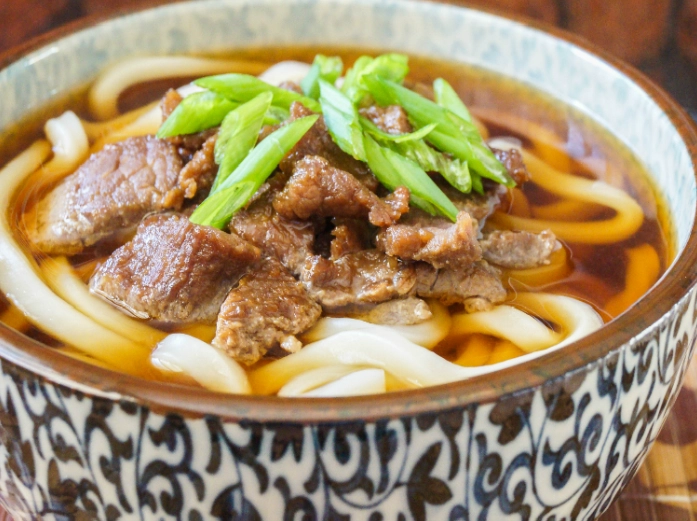
The Practical Hybrid: Here's my non-consensus tip for weeknights. Use a good quality dashi packet or granules (I like Hondashi) as your base. Then, enhance it. After you quickly cook your beef slices, you'll have flavorful juices and fond in the pan. Deglaze that pan with a splash of mirin and soy sauce, then pour all those concentrated beefy bits right into your dashi. It bridges the gap between pure dashi and a meat stock perfectly.
Seasoning is next. The classic trio is soy sauce, mirin, and a touch of sugar. Don't just dump them in. Taste as you go. The broth should be savory-sweet, but not cloying. It should make you want to take another sip, not leave you thirsty.
Broth Flavor Check: Before adding noodles, sip your broth. Is it flat? A tiny pinch of salt or a few more drops of soy sauce can wake it up. Too salty? A splash of water or a tiny pinch of sugar can balance it. Remember, the noodles will soak up some saltiness.
Choosing (and Cooking) Your Beef
You don't need expensive Wagyu for a great bowl (though it's amazing if you have it). The key is thin slicing and quick cooking.
Best Cuts for the Job
Ribeye or Sirloin: My top choice. Good marbling means flavor and tenderness without being overly fatty. Ask your butcher to slice it paper-thin against the grain, or partially freeze it for 30 minutes and slice it yourself with a very sharp knife.
Flank or Skirt Steak: More beefy flavor, but can be chewy if not sliced perfectly thin and against the grain. A great budget-friendly option with character.
Avoid stewing cuts like chuck. They need long braising and will turn tough in the soup.
The 60-Second Cooking Moment
This is the micro-step everyone misses. Don't boil your beef in the broth. It will turn gray and rubbery.
Heat a small skillet until very hot. No oil needed if the beef has some fat. Lay the slices in a single layer—don't crowd them. Sear for 20-30 seconds per side, just until they lose their red color but are still tender. You're not making a steak. You're locking in flavor and texture. Then, use those pan juices to boost your broth as mentioned earlier.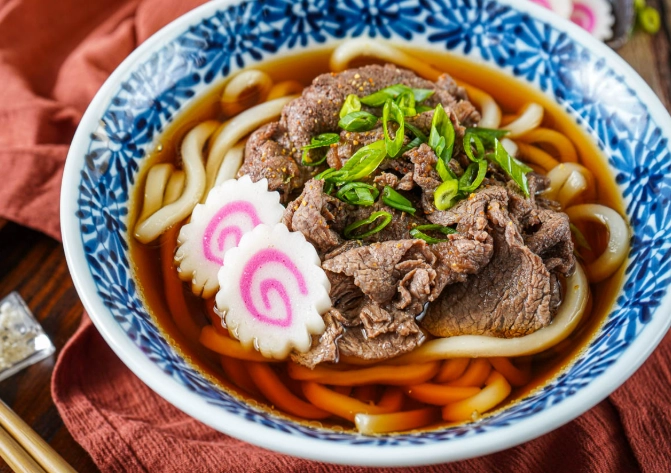
Udon Noodle Know-How
Udon noodles are the soul of the dish. Their thick, chewy texture is non-negotiable.
Fresh/Frozen Udon: The gold standard. You'll find them in the refrigerated or frozen section of Asian markets. They're pre-cooked, so you just need to heat them through in hot water for a minute or two. The texture is springy and perfect.
Dried Udon: A perfectly good pantry staple. Cook them according to package directions, but taste a minute early. You want al dente—a firm bite. Overcooked udon becomes mushy and sad. After draining, rinse briefly under cold water to stop the cooking and remove excess starch, which keeps the broth clearer.
I rarely recommend making udon from scratch for a quick soup. The effort is immense, and good fresh noodles are widely available now.
Putting It All Together: My Go-To Recipe
Here's how I make it on a busy Wednesday. Serves 2.
Ingredients:
- Broth: 4 cups water, 1.5 tsp dashi granules (or 1 packet), 3 tbsp soy sauce, 2 tbsp mirin, 1 tsp sugar.
- Protein: 200g (7oz) ribeye or sirloin, sliced very thin.
- Noodles: 2 portions (about 300g) fresh or frozen udon.
- Toppings: 2 green onions (thinly sliced), shichimi togarashi (Japanese seven-spice), optional: a soft-boiled egg, narutomaki (fish cake), spinach.
Steps:
- Bring a pot of water to boil for the noodles.
- In another pot, make the broth. Combine water and dashi granules, bring to a simmer. Add soy sauce, mirin, and sugar. Stir to dissolve, then keep at a very low simmer. Taste and adjust.
- Cook the udon in the boiling water according to package directions (usually 1-2 min for fresh). Drain and rinse briefly.
- While noodles cook, heat a small skillet over high heat. Sear the beef slices in batches for 20-30 seconds per side until just cooked. Set beef aside.
- Pour any juices from the beef skillet into the simmering broth. This is the flavor booster.
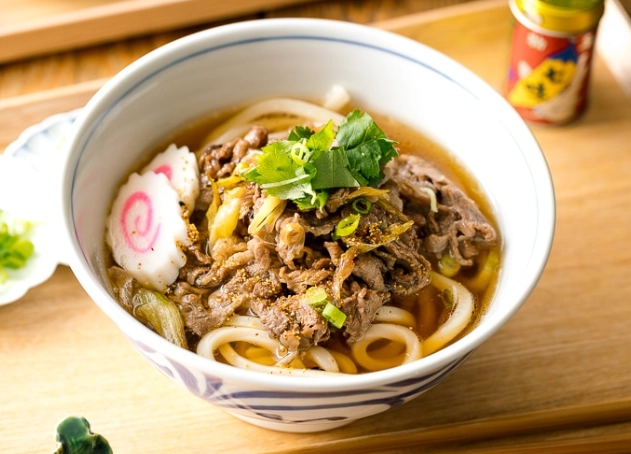
- Divide the hot noodles between two deep bowls. Ladle the hot broth over the noodles. Top with the seared beef slices.
- Garnish with green onions and a sprinkle of shichimi togarashi. Serve immediately.
The whole process takes 20 minutes, max.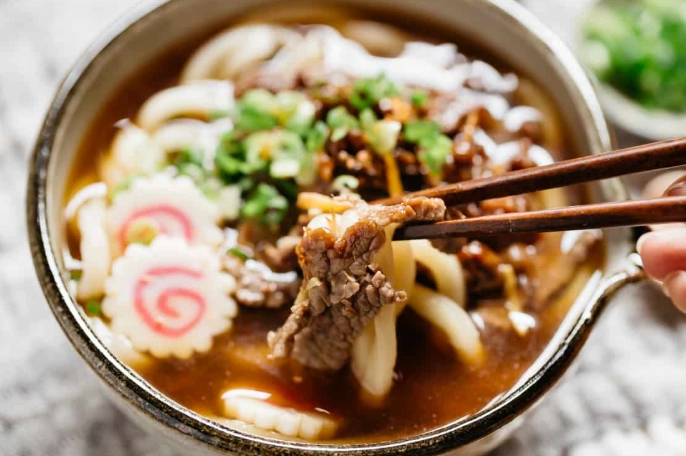
Where to Eat: Top Restaurant Picks
Sometimes you just want someone else to do the cooking. Here are three spots, based on personal visits and consistent quality, that serve exceptional beef udon.
| Restaurant & Location | Their Signature Beef Udon | Price Point & Notes |
|---|---|---|
| Marugame Udon Multiple locations (US, Int'l) |
Niku Udon. The benchmark for fast-casual. Their broth is clean and savory, beef is thinly sliced and tender, and you watch them cut the udon fresh. It's reliable and delicious. | $10-$13. Counter service. Expect lines at peak times. Their tempura toppings are also fantastic. |
| Udon Shin Greenwich Village, NYC |
Beef Udon Hot Pot. This is a next-level experience. It arrives at your table bubbling in a clay pot. The broth is deeper, often with a slight sukiyaki sweetness, and the ingredients cook gently right in front of you. | $18-$25. Sit-down restaurant. Reservations recommended. The texture of the noodles in the hot pot is uniquely delightful. |
| TsuruTonTan Udon Noodle Brasserie Union Square, NYC |
Sukiyaki Udon. A luxurious twist. They use high-quality beef in a rich, slightly sweet soy-based broth that absolutely defines comfort. The bowls are famously huge. | $20-$30. Upscale casual. Great for groups. The sukiyaki broth is richer than a standard beef udon, almost a hybrid dish. |
For authentic options in Japan, look for local udon-ya (udon shops) in places like Kagawa Prefecture (famous for sanuki udon), where the focus is on the noodle itself.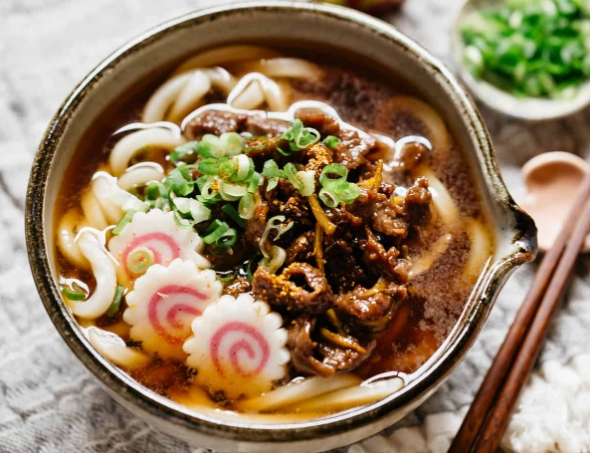
Your Beef Udon Questions, Answered
Reader Comments