Let's be honest. You've probably had that moment at a Japanese restaurant. You see "tonkatsu curry" on the menu, order it, and get this glorious plate of crispy fried pork cutlet smothered in a rich, savory, slightly sweet curry sauce, served over a mountain of rice. It's comfort food on a whole other level. And then you think, "I wish I could make this at home." But it seems... complicated. The frying. The sauce. Getting it all right.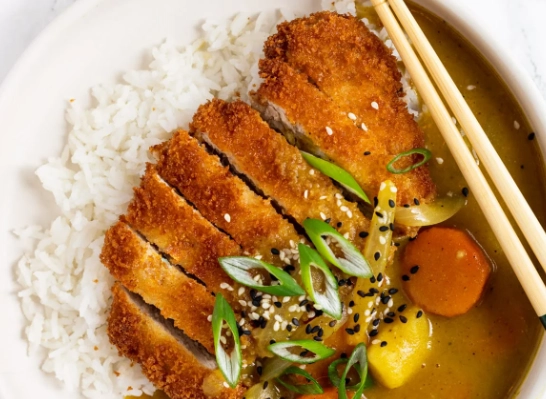
My Tonkatsu Curry Journey
Well, I'm here to tell you it's absolutely doable. I've messed it up plenty of times myself—soggy breading, bland curry, the whole nine yards—so I know exactly where things can go wrong. This guide is the result of all those trials (and errors). We're going to break down tonkatsu curry into its parts, demystify the process, and get you to a point where your homemade version might just beat the restaurant's.
What Exactly is Tonkatsu Curry?
Sometimes you see it written as "katsu curry" or "katsukarē." At its heart, it's a hybrid. You take tonkatsu—a breaded, deep-fried pork cutlet—and you serve it with Japanese curry. Not Indian curry, not Thai curry, but the uniquely Japanese version that's thicker, milder, and often has a subtle sweetness from ingredients like apples or honey. The curry acts as a sauce for both the rice and the crispy pork. It's a staple in Japanese home cooking and casual restaurants (you'll find it in almost every "yōshoku" or Western-style food restaurant).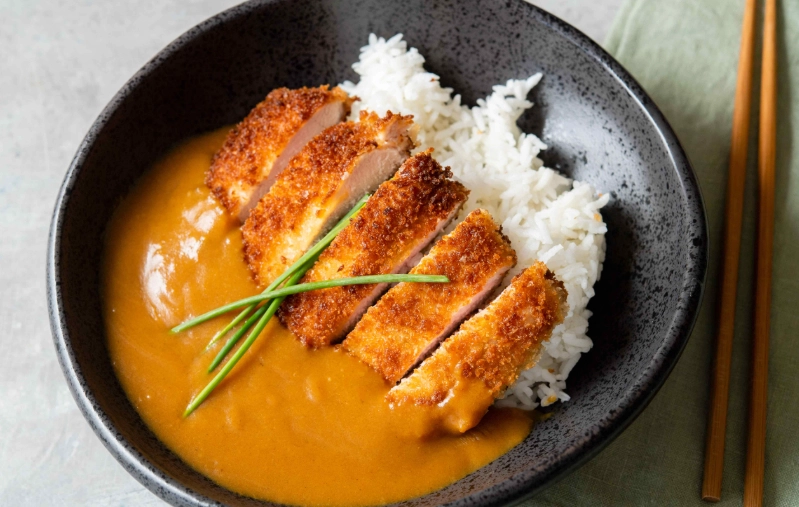
Why did this combo become so popular? Think about it. Tonkatsu by itself can be a bit dry. Curry by itself is, well, saucy. Put them together, and the curry keeps the pork moist while adding a huge burst of flavor, and the katsu adds a satisfying crunch that breaks up the softness of the rice and sauce. It's genius, really.
A Quick Dip into History (It's More Interesting Than You Think)
This dish is a great example of how Japan adapts foreign ideas. Curry was introduced by the British (who got it from India) in the late 1800s. The Japanese navy adopted it as a hearty, nutritious, and easy-to-serve meal on ships. Meanwhile, tonkatsu evolved from European breaded cutlets. According to the Japan National Tourism Organization, Western-style cuisine (yōshoku) became hugely popular in the Meiji era as Japan modernized.
Nobody knows exactly who first decided to slap a fried pork cutlet into a bowl of curry rice, but it was a match made in heaven. By the mid-20th century, thanks to the invention of instant curry roux blocks by companies like S&B and House Foods, both curry and tonkatsu curry became easy, affordable, and beloved comfort foods for families across Japan. You can read more about the fascinating journey of curry in Japan on the Japanese Ministry of Foreign Affairs website, which highlights it as a key part of the country's culinary culture.
The beauty is in its customization. Every family, every region, every restaurant has its own little twist.
Deconstructing the Dish: Your Tonkatsu Curry Roadmap
To master tonkatsu curry, you need to conquer three components: the curry sauce, the fried pork cutlet, and the rice. We'll tackle them in that order, because the curry benefits from simmering, and you want your katsu as fresh and hot as possible.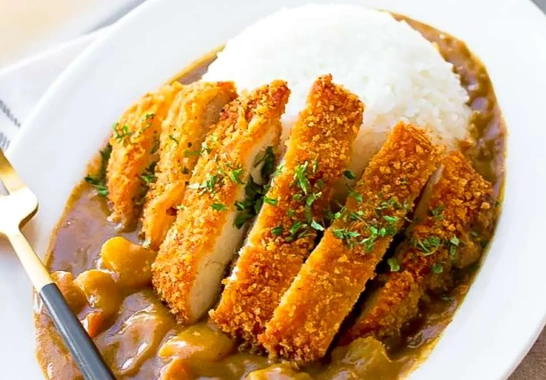
Part 1: The Heart of the Matter – The Curry Sauce
This is where the flavor lives. You have two main paths: from-scratch or using a curry roux block. I'll be straight with you: most households in Japan use the blocks. They're consistent, quick, and honestly, really good. But knowing how to make it from scratch gives you ultimate control and bragging rights.
The From-Scratch Foundation (The "Why" Behind the Flavor):
- The Roux: This is the thickening agent and flavor base. Equal parts fat (butter or oil) and flour, cooked slowly until it's a rich brown color. This "browning" is what gives the curry its deep, nutty flavor and color. Don't rush it. A blonde roux makes for a bland-looking, less flavorful curry.
- The Aromatics: Onions, garlic, ginger. These are non-negotiable. I chop a mountain of onions and cook them down until they're deeply caramelized and sweet. This step alone can take 30 minutes, but it adds an incredible depth. It's the secret weapon.
- The Spices: This is your chance to play. Classic Japanese curry spice blends often include curry powder (of course), garam masala, turmeric, cumin, coriander, and a hint of cinnamon or cardamom. The Japan External Trade Organization (JETRO) has noted the growing global interest in Japanese food products, including these unique spice blends.
- The Umami & Sweetness: Here's where it gets fun. For umami, you need a good stock (chicken, vegetable, or dashi) and something like tomato paste, soy sauce, or Worcestershire sauce. For the characteristic sweetness, people add grated apple, honey, or even a bit of ketchup or chocolate. Yes, chocolate! A single square of dark chocolate melted into the pot adds a wonderful richness and rounds out the flavors without making it taste like dessert.
Now, for the roux block method. It's not cheating; it's being practical. Brands like S&B Golden Curry, House Vermont Curry (has apple and honey), and Java Curry (spicier) are all excellent. They're a blend of spices, flour, oil, and flavorings all in one.
My personal process? I still sauté onions, garlic, ginger, and other veggies (carrots, potatoes) to build a fresh flavor base. Then I add water or stock and my chosen protein (sometimes I make just the curry with chunks of stewing beef or chicken). I simmer until the veggies are tender, *then* I turn off the heat and stir in the broken-up roux blocks. Why turn off the heat? To prevent the curry from getting grainy or the roux from clumping. Stir until fully dissolved, then simmer for just 5 more minutes to thicken. It's foolproof.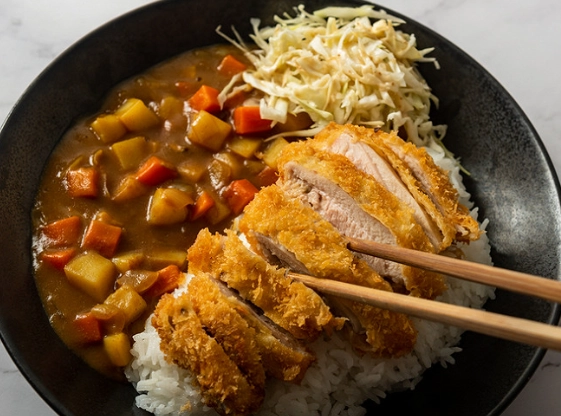
Part 2: The Star of the Show – The Perfect Tonkatsu
This is where many home cooks get nervous. Deep-frying. But with a few tips, it's manageable and so worth it.
The Cut: You want pork loin or pork fillet (tenderloin). Loin has a bit of fat, which equals flavor and juiciness. Fillet is super lean and tender. Your choice. I prefer loin for a classic tonkatsu curry. Pound it gently to an even thickness (about 1 cm / 0.5 inch). This ensures even cooking.
The Breading Station (The Holy Trinity): This is a three-step process you cannot skip: Flour -> Egg -> Panko.
1. Flour: Lightly dust the pork. This gives the egg something to grip onto. 2. Egg: Beat it well. This is the glue. 3. Panko: These Japanese breadcrumbs are the key to that iconic, craggy, ultra-crispy crust. They're flakier and airier than Western breadcrumbs. Press the panko on firmly. Don't be shy.
Frying: Use a neutral oil with a high smoke point like canola, vegetable, or peanut oil. You need enough to submerge the cutlet at least halfway. The ideal temperature is around 170°C (340°F). Too hot, and the outside burns before the inside cooks. Too cool, and the katsu absorbs too much oil and gets greasy. Fry for about 5-6 minutes per side until golden brown and the internal temperature reaches 63°C (145°F).
My trick? I use a wire rack over a baking sheet to drain, NOT paper towels. Paper towels trap steam and can make the bottom soggy. A rack lets air circulate all around, keeping everything crisp.
Let it rest for a couple of minutes before slicing. This lets the juices redistribute so they don't all run out when you cut into it. Slice it into thick strips just before serving.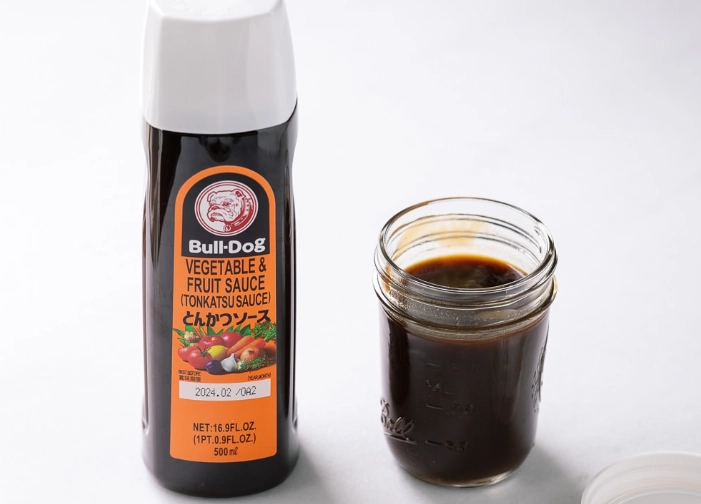
Part 3: The Supporting Cast – Rice & Assembly
Short-grain Japanese rice is a must. It's stickier and clumps together, making it perfect for eating with curry. Rinse it well until the water runs clear to remove excess starch. Cook it according to your rice cooker's instructions or on the stovetop.
Assembly is an art form. The classic way: Mound the rice on one side of a deep plate or shallow bowl. Place the sliced tonkatsu neatly beside it. Then, lovingly pour the hot curry sauce over... wait for it... *half* of the katsu and *half* of the rice. This is crucial! You want to preserve some of that beautiful crunch on the exposed part of the pork. Drowning the whole thing immediately turns it into a soggy mess, which defeats the purpose.
A common garnish is fukujinzuke, a sweet and salty pickled vegetable relish, or just a simple side of shredded cabbage for freshness and crunch.
Your Tonkatsu Curry Toolkit: Ingredients & Equipment
Let's get practical. What do you actually need to buy and have on hand?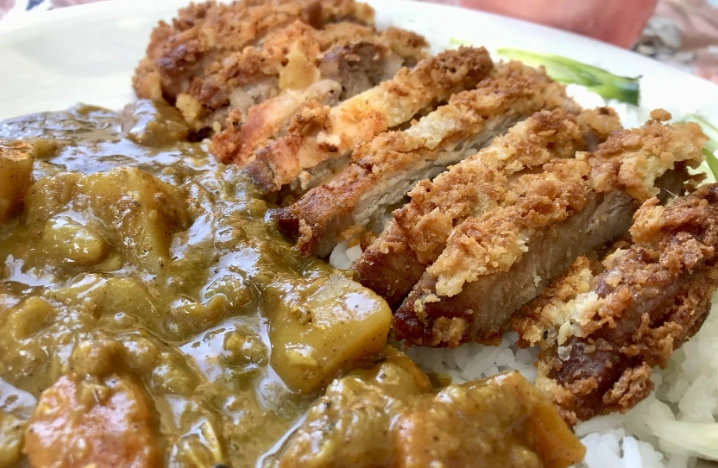
| Ingredient Category | Essential Items | Nice-to-Haves / Variations |
|---|---|---|
| For the Curry | Onions, Carrots, Potatoes, Garlic, Ginger, Cooking Oil, Water/Stock, Curry Roux Blocks (or flour/butter/spices) | Apple (grated), Honey, Tomato Paste, Soy Sauce, Worcestershire Sauce, Dark Chocolate, Bay Leaf |
| For the Tonkatsu | Pork Loin or Fillet Cutlets, Salt, Black Pepper, All-Purpose Flour, Eggs, Panko Breadcrumbs | Tonkatsu Sauce (or make your own with Worcestershire, ketchup, soy sauce, sugar), Shredded Cabbage, Lemon Wedge |
| For Serving | Short-Grain Japanese Rice (e.g., Koshihikari) | Fukujinzuke (pickled relish), Beni Shoga (red pickled ginger) |
Equipment-wise, you don't need anything fancy. A large, heavy-bottomed pot for the curry. A deep frying pan, wok, or Dutch oven for frying (a thermometer is a HUGE help). A wire rack for draining. That's pretty much it.
Leveling Up: Advanced Tips & Twists on the Classic
Once you've got the basic tonkatsu curry down, the world is your oyster.
Cheese Katsu Curry: Place a slice of melty cheese (like mozzarella or a mild cheddar) on the pork before breading. Fry as usual. The result is an oozy, cheesy center. It's decadent.
Menchi Katsu Curry: Instead of a whole pork cutlet, use seasoned ground pork (or a pork/beef mix), form it into a patty, bread it, and fry it. It's like a super juicy, crispy hamburger in your curry.
Different Proteins: Chicken katsu (using chicken breast) is incredibly popular. You can even use a firm fish like cod or a thick portobello mushroom for a vegetarian version—just adjust frying times.
Regional Styles: In the northern island of Hokkaido, they might add dairy like butter or cream to the curry for richness. In Okinawa, you might find hints of local spices.
What about spice level? Most Japanese curry is mild. If you like heat, add a pinch of cayenne to your from-scratch version, or look for "hot" varieties of roux blocks. A dab of Japanese karashi (hot mustard) on the side is also a traditional way to add a kick.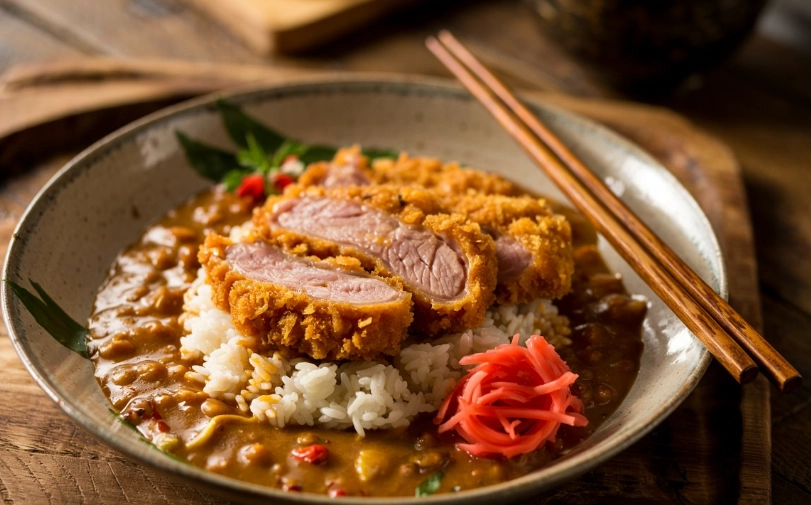
Answering Your Tonkatsu Curry Questions (FAQ)
I get asked these all the time. Let's clear them up.
Too thick: Simply add a splash of hot water or stock and stir until you reach the desired consistency.
My Personal Journey with This Dish (And a Confession)
I remember the first time I tried to make tonkatsu curry. I was overconfident. I didn't bother with a thermometer for the oil. I threw the pork in when the oil was barely warm. What I got was a pale, greasy, sad piece of meat that soaked up oil like a sponge. The curry was from a block, but I just dumped everything in the pot at once and boiled it. The potatoes disintegrated, the carrots were rock hard, and the sauce was watery. It was a disaster. My roommate politely said it was "interesting."
It took me a few more attempts, reading recipes, watching videos, to understand the *why* behind each step. Why caramelize the onions? Why the specific frying temperature? Why let the katsu rest? Once those pieces clicked, everything changed. Now, it's one of my most requested dishes when friends come over. There's something incredibly satisfying about serving a plate of food that looks and tastes like it came from a restaurant, but came from your own kitchen.
The real joy of tonkatsu curry isn't just in eating it. It's in the process. The sizzle of the pork hitting the oil. The smell of the curry spices filling your house. The final assembly. It's a project, but a deeply rewarding one.
So, are you ready to give it a try?
Start with a good quality roux block to take the guesswork out of the sauce. Focus on nailing the tonkatsu—get that temperature right. Use a wire rack. And for heaven's sake, don't drown the whole cutlet in sauce. Leave some crunch.
Once you've mastered the classic, then start playing. Add that square of chocolate. Try the cheese version. Make it your own. That's how food traditions are born, after all. One crispy, saucy, delicious plate at a time.
Reader Comments