Quick Navigation
- Where They Come From: A Tale of Two Journeys
- The Blueprint: Breaking Down the Physical Differences
- The Cooking Method: This is Where the Magic Diverges
- Flavor and Dipping: The Final Frontier
- Side-by-Side: The Ultimate Comparison Table
- Answering Your Burning Questions (FAQ)
- How to Choose and What to Look For
So you're standing in a food court, or maybe scrolling through a delivery app, and you see both "fried dumplings" and "gyoza" on the menu. They look kinda similar – little crescent-shaped parcels with a crispy bottom. The price might be different. You pause. What is the actual difference between fried dumplings and gyoza? Are you just paying extra for a fancy Japanese name?
Let's get this out of the way: they're cousins, not twins. Delicious, savory cousins with a shared family tree but distinct personalities. Calling them the same thing is like saying a baguette and ciabatta are identical because they're both bread. It misses the nuance, the history, and frankly, the joy of appreciating each for what it is.
I remember the first time I ordered "gyoza" expecting the heavy, doughy fried dumplings I grew up with from my local Chinese takeout. What arrived were delicate, thin-skinned parcels with a distinct garlic-and-ginger punch and a lace-like crispy skirt. It was a revelation. It also started a years-long curiosity that led me down rabbit holes of culinary history, countless kitchen experiments (some disastrous), and conversations with chefs. This isn't just academic; it changes how you order, cook, and enjoy them.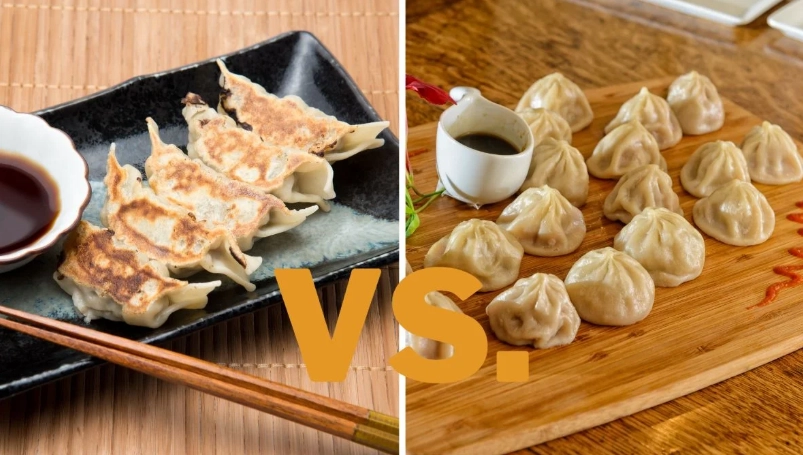
The short answer? It's about origin, wrapper, filling, cooking technique, and flavor philosophy.
Where They Come From: A Tale of Two Journeys
To understand the difference between fried dumplings and gyoza, you have to start at the source. The story begins in China, with the humble jiaozi. These boiled, steamed, or pan-fried dumplings are ancient, with a history stretching back over a thousand years. They're integral to Chinese culture, especially during Lunar New Year, where their shape resembles ancient gold ingots, symbolizing wealth.
Now, follow the dumpling trail to Japan. Japanese soldiers stationed in Manchuria (northeast China) during World War II encountered jiaozi. They brought the concept home with them after the war. In post-war Japan, food was scarce, and wheat became a staple. The idea of a meat-and-vegetable stuffed wheat wrapper was practical, affordable, and delicious. But the Japanese palate and culinary style adapted it. They made the wrapper thinner, refined the filling, and perfected a specific cooking method. Thus, gyoza was born – a Japanese interpretation of a Chinese classic.
The "fried dumplings" you see on Western menus, particularly in North America, are often a further adaptation. They usually refer to a style influenced by Cantonese cuisine (from Southern China), but often simplified and made heavier to suit a different market. They're the hearty, filling, sometimes greasy version that became a staple of takeout boxes. So while gyoza has a clear Japanese identity, "fried dumplings" on a generic menu can be a bit of a catch-all.
Think of it like this: Jiaozi is the original Chinese parent. American-style Chinese fried dumplings are one child who moved abroad and adopted local habits. Gyoza is the other child who moved to Japan, studied the art of refinement, and developed a distinct, elegant style of its own.
The Blueprint: Breaking Down the Physical Differences
Okay, history lesson over. Let's get practical. When you pick one up, what should you look for? The differences are in the details.
The Wrapper: Thin vs. Thick
This is the biggest giveaway. Gyoza wrappers are uniformly thin. They're almost translucent before cooking. This isn't an accident. Thin wrappers allow for a higher filling-to-wrapper ratio and let the filling's flavor shine without a starchy barrier. They also crisp up beautifully without becoming tough.
Many fried dumplings, especially the westernized kind, use a thicker, doughier wrapper. It's more substantial, chewier, and can sometimes feel a bit undercooked or doughy in the thicker pleated areas. It's designed to be hearty and filling. I've had some where the wrapper was so thick it dominated the whole experience, which isn't always a good thing.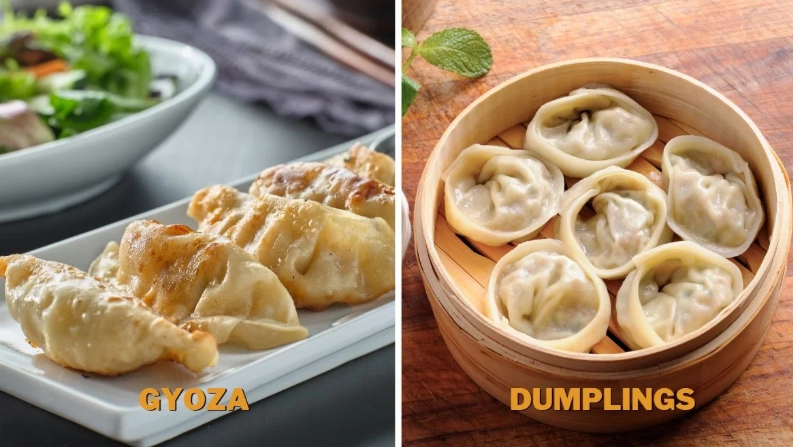
The Shape and Pleats
Look at the pleats (the folds along the top). Gyoza pleats are small, precise, and numerous. They're a sign of skill. The classic shape is a crescent, with a flat bottom for searing and a neatly pleated back. It's elegant.
Fried dumplings can be more varied. You might see crescent shapes, but also simpler half-moons with fewer, larger pleats, or even purse-like shapes. The pleating is often more functional than artistic.
The Filling: Fine vs. Chunky
Open one up. Gyoza filling is typically finely minced, almost to a paste-like consistency. The goal is a homogeneous blend where pork, cabbage, garlic, ginger, and green onion are fully integrated. The seasoning is pronounced – you taste the garlic, the ginger, the soy, the sesame oil. It's a balanced, aromatic punch.
Fried dumpling fillings can be coarser. You might identify distinct chunks of cabbage, shreds of carrot, or pieces of mushroom. The seasoning can be simpler, often leaning heavier on soy sauce and sometimes sweeter. The texture is more heterogeneous.
A chef once told me: "Gyoza filling should be so fine you can't pick out a single ingredient with a fork. It should be one flavor." That stuck with me. It's a different culinary goal.
The Cooking Method: This is Where the Magic Diverges
You'd think "fried" means the same thing for both. It doesn't. The technique is arguably the most critical difference between fried dumplings and gyoza.
Gyoza is almost always cooked using a specific method called "potstickers" style, though the Japanese have perfected it. It's a hybrid technique:
- Pan-Fry First: The gyoza are placed in a hot oiled pan and seared until the bottoms are golden brown and crispy.
- Steam to Finish: Water (or a water-and-flour mixture) is quickly added to the hot pan, which is then immediately covered. The gyoza steam in this trapped heat, cooking the wrapper and filling through.
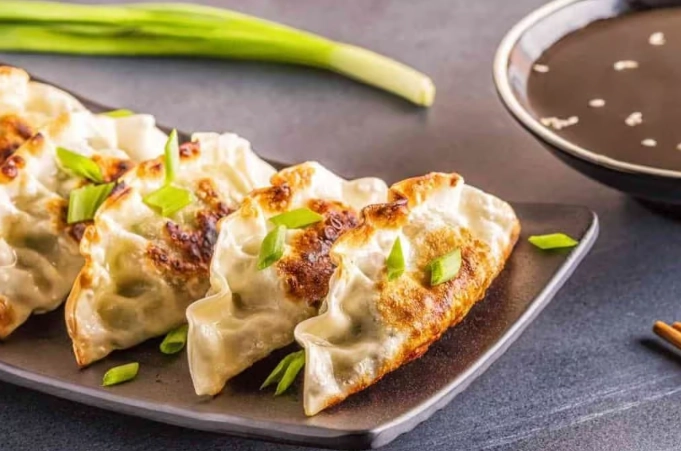
- Crisp Again (Optional): The lid is removed to let the remaining water evaporate, leaving the gyoza with a crispy bottom, a tender-yet-chewy top, and a perfectly cooked filling. The best ones have a lacy, crispy "skirt" from the starch in the water mixture.
This method is non-negotiable for authentic gyoza. It creates a wonderful textural contrast in every bite.
Fried Dumplings, in many Western contexts, are often deep-fried or shallow-fried until completely crispy. They're cooked through by the oil's heat alone, resulting in an all-over crunchy, sometimes greasy, exterior. You don't get the soft-steamed top. It's a single texture experience. Some more authentic Chinese restaurants will use the potsticker method for their "fried dumplings," which blurs the line, but the wrapper and filling differences usually remain.
So, gyoza = steamed top, crispy bottom. Many fried dumplings = crispy all over.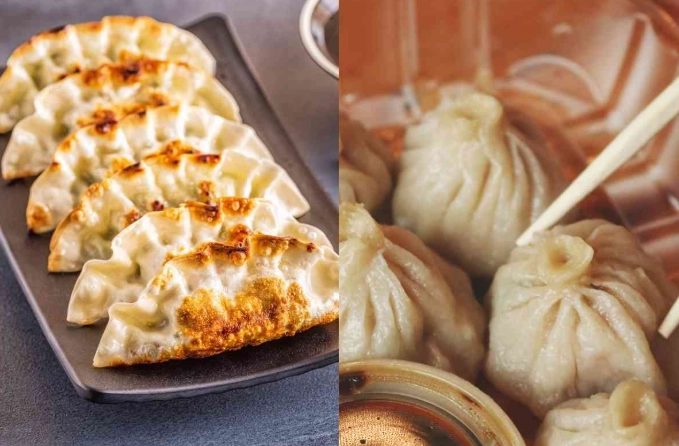
Flavor and Dipping: The Final Frontier
Close your eyes and taste. The flavor profiles point directly to their cultural roots.
Gyoza is all about umami and aromatic sharpness. The filling is savory from pork and soy, but the garlic and ginger are front and center. It's clean, direct, and designed to be eaten with a simple dipping sauce of rice vinegar, soy sauce, and a touch of chili oil (rayu). The acidity cuts the richness.
Fried Dumplings often have a milder, sometimes sweeter profile. The garlic and ginger might be toned down. They're frequently served with a sweet and sour sauce, duck sauce, or a heavy, thick soy-based sauce. The sauce is often a dominant component, meant to coat and add flavor to the doughier wrapper.
A word of caution: If you're dipping your gyoza in a thick, sweet red sauce, you're missing the point. You're drowning its delicate aromatics. Try the vinegar-soy mix next time.
Side-by-Side: The Ultimate Comparison Table
Sometimes you just need to see it all in one place. Here’s a clear breakdown of the core differences between fried dumplings and gyoza.
| Aspect | Gyoza (Japanese) | Fried Dumplings (Common Western Style) |
|---|---|---|
| Origin | Japanese adaptation of Chinese jiaozi. | Westernized adaptation, often based on Cantonese styles. |
| Wrapper | Very thin, uniform, delicate. | Thicker, doughier, more substantial. |
| Filling Texture | Finely minced, almost paste-like, homogeneous. | Coarser, chunkier, more heterogeneous. |
| Key Flavors | Pronounced garlic, ginger, soy. Clean umami. | Milder, often sweeter, sometimes more generic "savory." |
| Primary Cooking Method | Pan-fried then steamed (potsticker method). | Often deep-fried or shallow-fried until fully crispy. |
| Final Texture | Crispy lace skirt & bottom, tender-chewy top. | Uniformly crispy or crunchy all over. |
| Typical Dipping Sauce | Rice vinegar, soy sauce, chili oil (light & acidic). | Sweet & sour sauce, duck sauce, thick soy sauce. |
| Culinary Philosophy | Refinement, balance, texture contrast. | Hearty, filling, comfort food. |
Answering Your Burning Questions (FAQ)
How to Choose and What to Look For
Next time you're ordering or buying frozen, use this checklist.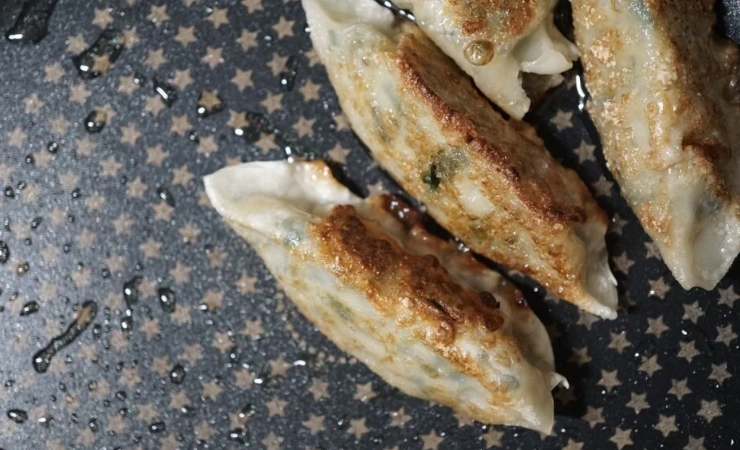
- On a Restaurant Menu: If it says "gyoza," expect thinner skin, garlic-ginger filling, and a crispy bottom/soft top. If it says "fried dumplings" or "pan-fried dumplings," be prepared for a potentially doughier, all-crispy experience. Look at the description for clues like "garlic-ginger" or the sauce it comes with.
- In the Frozen Aisle: Read the name and the box imagery. Authentic Japanese brands (like Bibigo or brands from a Japanese market) will say "gyoza" and often show the characteristic shape. The ingredient list for the filling should prominently feature garlic and ginger. For Chinese-style, look for "potstickers" or "fried dumplings." The wrappers in the picture will look thicker.
- Cooking at Home: If you're following a recipe titled "gyoza," it should call for thin wrappers and the fry-then-steam method. If it says to deep-fry them, you're venturing into different territory.
So, what is the difference between fried dumplings and gyoza? It's a layered answer. Gyoza is the refined, Japanese version: thin skin, finely minced aromatic filling, cooked with a fry-steam-fry method for textural contrast, served with a light, acidic dip. Western-style fried dumplings are often the heartier cousin: thicker dough, chunkier filling, fully crispy from frying, often paired with a sweeter sauce.
Neither is inherently better—they serve different cravings. Sometimes you want the elegant, nuanced bite of a good gyoza. Other times, only the satisfying, doughy crunch of a classic fried dumpling will do. The real win is knowing what you're about to eat, so you can appreciate it on its own terms. Now go forth, order with confidence, and enjoy every delicious, debated bite.
Reader Comments