Your Tonkatsu Roadmap
- From Western Import to National Treasure: A Bite of History
- Deconstructing the Perfect Bite: What Makes a Tonkatsu, a Tonkatsu?
- The Supporting Cast: Sauce, Cabbage, and More
- Beyond the Classic: The Wonderful World of Katsu
- How to Eat Tonkatsu Like a Pro (And Where to Find It)
- Can You Make It at Home? A Realistic Guide.
- The Final Verdict on Japan's Beloved Cutlet
You've probably seen it on menus, a golden-brown cutlet often perched on a bed of shredded cabbage. Maybe you've heard friends rave about it after a trip to Japan. So, what is a tonkatsu, really? Is it just a fancy pork chop? The short answer is no, not really. It's something much more specific, and in my opinion, much more delicious when done right. It's a dish that sits at this wonderful intersection of simple comfort and precise technique. A proper tonkatsu is a revelation – juicy pork encased in a shatteringly crisp, airy crust that somehow doesn't feel greasy. But a bad one? Well, it's just a sad, soggy piece of fried meat.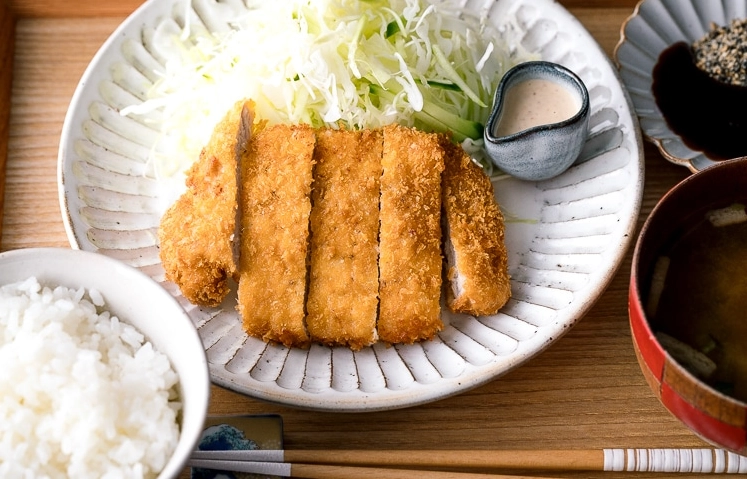
Let's get the basics out of the way first. What is a tonkatsu? At its core, it's a Japanese dish consisting of a breaded, deep-fried pork cutlet. The name itself tells you what it is: "ton" comes from "ton" (豚), the Japanese word for pig, and "katsu" is a shortened form of "katsuretsu," which is derived from the English word "cutlet." So, literally, pork cutlet. But that translation does it a disservice. It's like calling a croissant 'butter bread' – technically true but missing the soul of the thing.
From Western Import to National Treasure: A Bite of History
Here's something that surprises a lot of people: tonkatsu isn't some ancient, centuries-old tradition. Its story is actually a great example of how Japanese cuisine adopts and adapts. The dish first appeared in the late 19th century, during the Meiji era, a time when Japan was actively looking to the West. Restaurants called "yōshoku" (Western food) places started serving European-style breaded meat dishes, like the French côtelette de veau or the German schnitzel.
The story goes that a restaurant in Tokyo called Rengatei, which opened in 1895, is often credited with serving an early version. But back then, it was probably more of a generic "katsuretsu" made with beef or pork. The shift to specifically pork and the refinement into the tonkatsu we know today happened gradually. The use of panko (those big, fluffy Japanese breadcrumbs) instead of fine Western breadcrumbs was a game-changer. Panko creates a lighter, crisper, and more distinct coating that doesn't get soggy as quickly. This was a masterstroke of adaptation.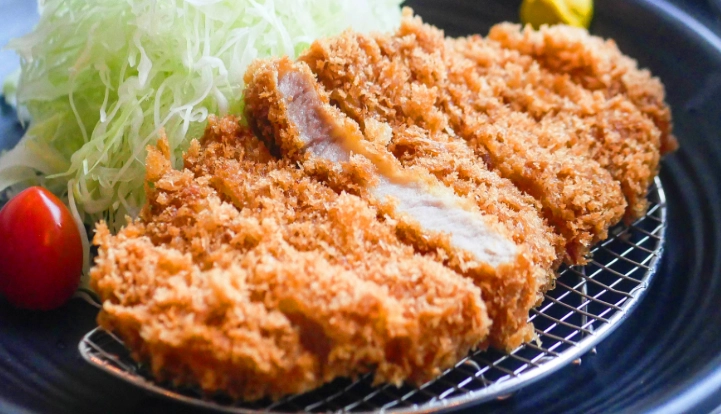
By the early 20th century, it had cemented its place as a beloved, affordable dish. It moved from fancy yōshoku restaurants to more everyday eateries and home kitchens. You can read more about the fascinating history of yōshoku and its influence on modern Japanese food culture on the Japan National Tourism Organization's guide, which provides excellent context for dishes like tonkatsu.
So, what is a tonkatsu in the historical sense? It's a perfect example of washoku (traditional Japanese dietary culture) in action, which UNESCO recognizes for its social and cultural importance. It took a foreign concept and made it uniquely, quintessentially Japanese. The Japanese Ministry of Agriculture, Forestry and Fisheries highlights this cultural integration as a key aspect of their culinary heritage on their Washoku page.
Deconstructing the Perfect Bite: What Makes a Tonkatsu, a Tonkatsu?
Okay, history lesson over. Let's talk about what's actually on the plate. Understanding the components is key to answering "what is a tonkatsu?" because every part has a role. It's a symphony, not a solo act.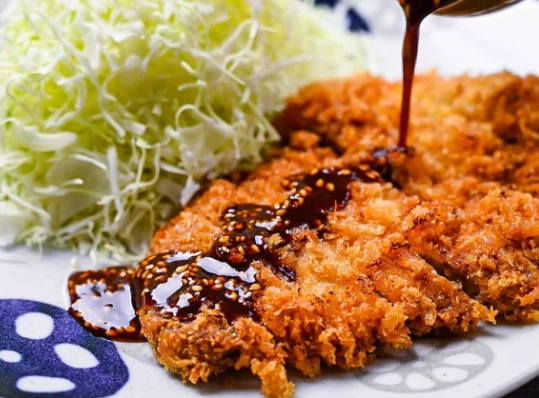
The Star: The Pork Cutlet Itself
Not just any pork will do. You typically have two main choices, and this is where personal preference really comes in:
- Hire (ヒレ, Filet or Tenderloin): This is the leaner, more tender cut. It's incredibly soft and has a fine texture. Purists and high-end tonkatsu specialists often prefer hire for its melt-in-your-mouth quality. The downside? Because it's so lean, it can dry out if overcooked by even a minute. It requires a very careful hand.
- Rosu (ロース, Loin): This is my personal favorite, and the choice of many classic tonkatsu joints. Rosu has a ribbon of fat running along the edge and some marbling within. This fat renders during frying, basting the meat from the inside and making it incredibly juicy and flavorful. It has more of a porky taste and a satisfying chew than the hire. For a first-timer, I almost always recommend rosu.
Some places offer other cuts, like kata (shoulder), but hire and rosu are the classics. The thickness matters too – usually between 1.5 to 2 centimeters. Too thin, and it fries too fast, overcooking the meat. Too thick, and the crust might burn before the center is done.
The Crust: The Panko Principle
This is arguably what defines the dish. The coating is a three-step dredge: first in flour, then in beaten egg, and finally pressed firmly into a mountain of panko breadcrumbs.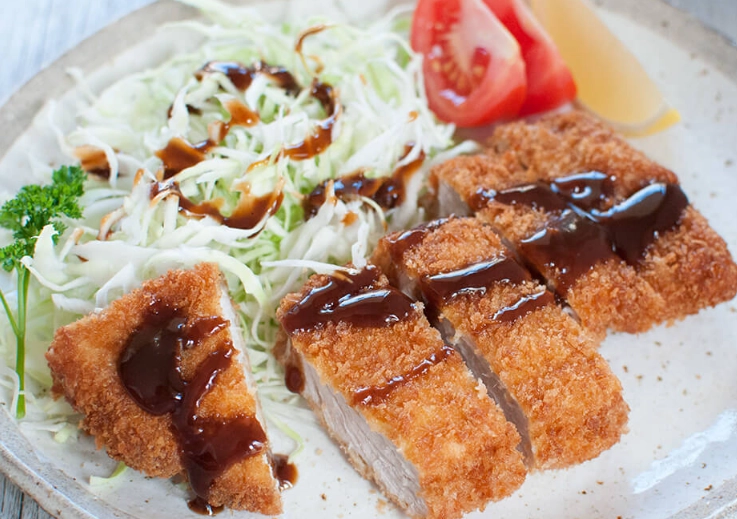
What's the big deal about panko? They're made from crustless bread, cooked with an electric current which gives them a unique, airy, shard-like structure. They don't absorb as much oil as fine, sandy breadcrumbs. The result is a coating that's extraordinarily crisp, light, and stays crunchy much longer. Freshness of the panko is huge. Stale panko just won't puff up the same way.
The Cooking: Deep-Frying with Precision
This isn't a casual shallow fry. A proper tonkatsu is deep-fried in a neutral, high-heat oil like canola or soybean oil, often at two temperatures. The first fry at a slightly lower temperature cooks the pork through gently. Then, it's removed, allowed to rest for a moment (letting the residual heat finish the job), and then fried again at a higher temperature for a short burst. This second fry is the secret to that ultimate, no-sogginess-ever crispiness. It's a technique that requires attention.
The goal is a perfect golden-brown color. If it's too pale, the crust is undercooked and greasy. Too dark, and it tastes bitter. That perfect hue is the sign of a cook who knows their oil temperature and timing.
The Supporting Cast: Sauce, Cabbage, and More
You don't eat the cutlet alone. The classic presentation is a study in balance.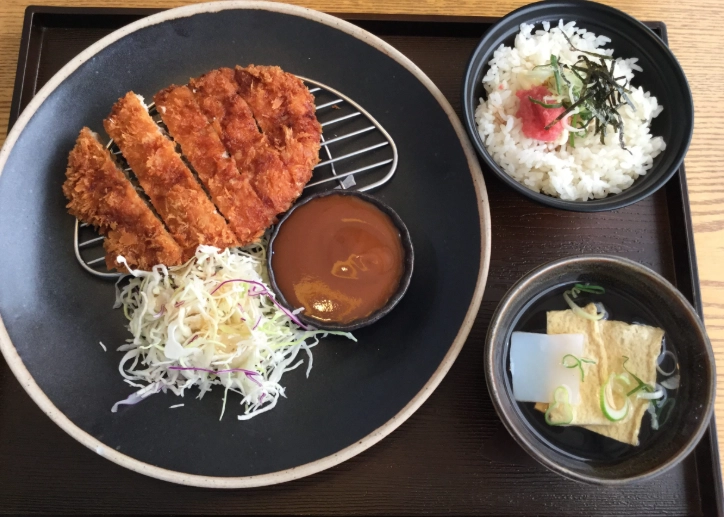
The Tonkatsu Sauce: This is non-negotiable. It's a thick, savory-sweet-fruity brown sauce that's a distant relative to Worcestershire sauce but much richer and more complex. Think of flavors like apple, tomato, vegetables, and spices, all simmered down into a glossy, umami-packed condiment. Brands like Bull-Dog or Otafuku are household names in Japan. Some high-end restaurants make their own proprietary blend. You don't drown the tonkatsu in it; you dip each bite, or pour a modest stripe across the top. The sauce cuts the richness of the fried pork perfectly.
The Mountain of Cabbage: On the side, you'll always get a huge pile of finely shredded raw cabbage. It's not just a garnish. It's a crucial palate cleanser. The cool, watery, slightly sweet crunch of the cabbage resets your taste buds between bites of the rich, fried meat. It's a brilliant, healthy counterpoint. It's usually served with a dressing, often a light sesame or ponzu-based one, but purists eat it plain.
The Other Usual Suspects: A mound of steamed Japanese short-grain rice (gohan), a bowl of miso soup (often with a ton of clams or pork bits), and a small dish of Japanese pickles (tsukemono), like yellow takuan or crunchy cucumber. This is the classic "teishoku" (set meal) format. Every element has a purpose, creating a complete, satisfying meal.
Beyond the Classic: The Wonderful World of Katsu
Once you understand what a tonkatsu is, you start seeing its influence everywhere. It's the foundation for a whole family of dishes. Here are some of the most popular variations:
| Dish Name | What Is It? | Key Difference from Classic Tonkatsu |
|---|---|---|
| Chicken Katsu (Torikatsu) | Breaded, deep-fried chicken cutlet, usually breast or thigh. | Lighter flavor than pork, often served with the same tonkatsu sauce or sometimes with a lemon wedge. |
| Menchi Katsu | A breaded, deep-fried patty made of ground meat (usually pork or a pork-beef mix), onions, and spices. | Different texture—juicy and crumbly inside, crisp outside. A popular budget-friendly option and bento box staple. |
| Katsu Sando | A sandwich made with a tonkatsu (or other katsu) fillet, tonkatsu sauce, and usually shredded cabbage, between slices of soft, crustless white bread. | Portable meal! The soft bread contrasts wonderfully with the crispy cutlet. A konbini (convenience store) legend and modern gourmet darling. |
| Katsu Curry | A tonkatsu cutlet served on top of a plate of Japanese curry rice. The ultimate comfort food mashup. | The crispy cutlet soaks up the rich, spiced curry gravy. It's less about the individual crispiness and more about the combined, hearty flavor. |
| Katsudon | A rice bowl dish where a tonkatsu cutlet is simmered in a slightly sweet sauce of dashi, soy, and mirin with beaten egg and onions, then served over rice. | The crust softens into a delicious, savory blanket. It's a completely different textural experience—soft, savory, and utterly comforting. |
See? The basic concept of a breaded, fried cutlet is incredibly versatile. This adaptability is a big part of why asking "what is a tonkatsu?" opens a door to a whole segment of Japanese food culture.
How to Eat Tonkatsu Like a Pro (And Where to Find It)
Let's get practical. You're hungry, you want tonkatsu. What should you do?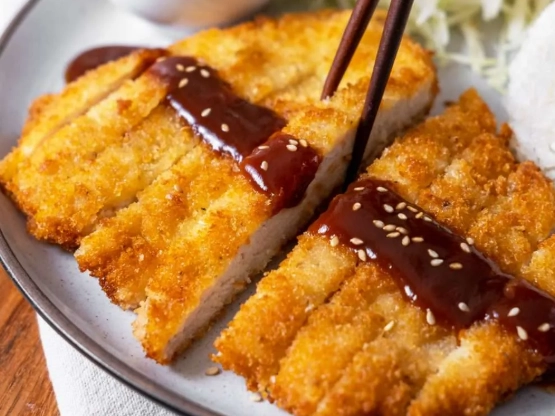
The Ordering Ritual
In a specialized tonkatsu restaurant (often called a "tonkatsu-ya"), the menu is usually simple. You'll choose your cut (hire or rosu) and the size (sometimes just a single or double cutlet). They might ask how you want your rice and cabbage (usually unlimited refills, which is amazing). The set meal is called "tonkatsu teishoku." Some places are famous for using specific breeds of pork, like Kurobuta (Berkshire) pork, which is richer and more marbled. It's pricier but a fantastic experience.
The Eating Technique
- Start with the cabbage. Take a few bites with its dressing. Refresh your palate.
- Appreciate the crust. Listen to that crunch when you cut it with your provided metal spatula or knife.
- Sauce strategically. Either pour a line of sauce across one end of the cutlet, eating from the sauced end toward the plain end, or dip each bite into the sauce dish. Don't soak it.
- Alternate. A bite of tonkatsu, a bite of rice, a bite of cabbage. Sip some miso soup in between. This rotation is the traditional rhythm and the best way to enjoy the meal without fatigue.
Finding Great Tonkatsu
In Japan, you're spoiled for choice. From famous chains like Maisen (housed in a converted bathhouse in Tokyo) to tiny local joints, there's one everywhere. Outside Japan, look for restaurants that specialize in it, not just ones that have it as one item on a huge menu. A dedicated tonkatsu-ya cares about their oil freshness and cut quality.
For a deep dive into the regional variations and top spots, serious food publications like Saveur have explored the dish in detail, offering insights from chefs and food writers that go beyond the basics.
Can You Make It at Home? A Realistic Guide.
Absolutely. Making tonkatsu at home is a rewarding project, though it can be a bit messy. Here's a no-nonsense breakdown of what you need and the pitfalls to avoid.
- Pork: 2-centimeter thick pork loin chops (rosu). Ask your butcher to score the fat edge in a few places to prevent curling.
- Panko: Get the coarsest you can find. Freshness matters.
- Neutral Oil: Enough for deep-frying in a heavy pot (like a Dutch oven). A thermometer is VERY helpful.
- Tonkatsu Sauce: Just buy a bottle from an Asian market. Bull-Dog is perfect. Making it from scratch is a whole other multi-hour project.
- The Set-Up: Three shallow dishes for flour, beaten egg, and panko. A wire rack for draining, NOT paper towels (steam=soggy bottom!).
The Process, Simplified: Pound the pork gently to an even thickness. Season with salt and pepper. Dredge in flour, shake off excess. Dip in egg, let excess drip off. Press firmly into panko, coating all sides. Let it sit for 5 minutes. Heat oil to 340°F (170°C). Fry for about 5-6 minutes, turning occasionally, until golden and cooked through. Remove to a wire rack and let rest for 3-4 minutes. If you're feeling ambitious, heat the oil to 375°F (190°C) and fry for another 30-60 seconds for extra crisp. Rest again, slice, and serve.
The Biggest Home Cook Mistakes: 1) Oil not hot enough (leads to greasy, pale crust). 2) Overcrowding the pot (drops oil temp). 3) Using fine breadcrumbs (won't be the same). 4) Cutting it immediately (lets all the juices run out). Let it rest!
The Final Verdict on Japan's Beloved Cutlet
So, what is a tonkatsu? It's more than just food. It's a piece of culinary history, a lesson in texture and balance, and a gateway to understanding how Japanese cuisine thinks about a complete meal. It's the satisfying crunch that gives way to juicy, flavorful pork. It's the sharp, sweet tang of the sauce against the clean bite of cabbage. It's the humble, everyday dish that can be elevated to an art form in the right hands.
It's also incredibly accessible. You don't need a special occasion to enjoy it. That's its magic. Whether you seek out a renowned specialist in Ginza or grab a quick katsu sando from a 7-Eleven in Shinjuku, you're participating in a shared cultural experience.
The next time someone asks you, "What is a tonkatsu?" you can tell them it's not just a fried pork cutlet. It's a crispy, savory, deeply satisfying icon of Japanese comfort food. And then, hopefully, you'll go get one together. Just remember to order the rosu.
Reader Comments