In This Article
- Why Karaage? The Cultural Love Affair
- Karaage vs. The World: What Makes It Special?
- A Tour of Japan's Karaage Landscape: It's Not All the Same
- Where to Find the Best Karaage in Japan (A Casual Guide)
- Making Karaage at Home: It's Easier Than You Think
- Answering Your Burning Karaage Questions (FAQ)
- The Final Verdict: More Than Just a Dish
If you've ever found yourself wondering, "What is the most popular chicken dish in Japan?" while scrolling through food pics or planning a trip, you're not alone. It's a question that pops up a lot, and the answer might seem obvious to some, but the story behind it is way more interesting than you'd think.
Forget fancy French techniques or delicate sushi for a second. When it comes to sheer, unadulterated love, frequency on dinner tables, and presence in everything from convenience stores to high-end pubs, one dish reigns supreme. It's not even a contest, really.
The champion is karaage.
Japanese fried chicken. But calling it just "fried chicken" feels like a massive disservice. It's like calling a Rolls-Royce "a car." Technically true, but it misses all the nuance, craft, and cultural obsession.
The Straight Answer: The most popular chicken dish in Japan is karaage (唐揚げ). It's a category of bite-sized, marinated, lightly coated, and deep-fried chicken (or other meats/seafood) that is ubiquitous, beloved, and deeply woven into the fabric of everyday Japanese life.
I remember my first real encounter with it wasn't in a fancy restaurant, but at a local izakaya (pub) after work. The plate that landed on our table wasn't huge, but the aroma was insane – a mix of savory soy, ginger, and that perfect golden fry. One bite, and it was clear: this was different. Juicy beyond belief, flavorful all the way through, and with a crust that was more of a whisper than a crunch. It was a revelation. No wonder it's the answer to what is the most popular chicken dish in Japan.
Why Karaage? The Cultural Love Affair
But why, of all things, is it fried chicken? Japan has yakitori (skewers), chicken teriyaki, chicken nanban... all fantastic. Yet karaage sits on the throne. To understand that, you have to look at its role.
Karaage is the ultimate comfort food and communal dish. It's the star of obento (lunch boxes), the perfect beer companion at an izakaya, the go-to party food, and a staple family dinner. It's affordable, incredibly satisfying, and wildly versatile. You can find it everywhere:
- Convenience Stores (Konbini): Lawson's "L-Chicken" and FamilyMart's "FamiChiki" are legendary. They sell millions daily. This is peak everyday karaage.
- Supermarkets: Most have a dedicated fried food counter (agemono corner) with multiple varieties of karaage, sold by weight.
- Specialty Stores: Dedicated karaage shops, like the famous chain "Karaage-kun," dot city streets.
- Izakaya and Restaurants: Every pub has its own recipe, often a point of pride.
It's democratic. It's accessible. And honestly, it's just stupidly delicious. The Japanese have perfected the art of frying to a science, focusing on moisture retention, flavor penetration, and oil management in a way that's frankly obsessive.
"Karaage isn't just food; it's a mood. It's the sound of a busy izakaya, the taste of a festival, the warmth of a home-cooked meal. Its popularity is because it fits perfectly into every corner of Japanese life."
Karaage vs. The World: What Makes It Special?
If you're thinking, "Okay, it's just fried chicken pieces," hold on. The devil is in the details, and these details are what elevate it to answer what is the most popular chicken dish in Japan so definitively.
The process is simple but precise:
- Marination (下味, shitaji): This is the soul. Chicken (typically thigh for juiciness) is marinated for hours, often overnight. The base is almost always soy sauce and sake or mirin. Then the magic variables come in: grated ginger, grated garlic, sesame oil, a touch of sugar. This isn't a surface flavor; it seasons the meat thoroughly.
- Coating (衣, koromo): Lightness is key. The chicken is lightly dredged in flour, or a mix of flour and potato starch (katakuriko). Potato starch is the secret weapon for many – it creates a crisper, lighter, and less greasy crust that stays crunchy longer. Some use just potato starch.
- Frying (揚げる, ageru): Double-frying is common. First fry at a lower temperature to cook the inside gently, then a second, hotter fry to crisp the exterior. The oil is clean and at the perfect temperature. The result? A crust that's delicate, almost lacy, and not at all bready or heavy.
Compare that to Southern-style fried chicken (which I also love, don't get me wrong). That's about a thick, seasoned crust, often with buttermilk. Korean fried chicken (yangnyeom) is about an ultra-crispy crust later coated in glossy sauce. Karaage is about enhancing the chicken itself with a subtle, flavorful, and fragile armor.
The Great Debate: Tori no Karaage vs. Tatsuta-age
Even within karaage, there are sub-categories that cause friendly debate.
- Tori no Karaage (鶏の唐揚げ): The standard. Marinated in soy-ginger-garlic, coated in flour/potato starch, fried. This is what most people mean.
- Tatsuta-age (竜田揚げ): A specific style where the marinade includes more soy sauce and sometimes a bit of sugar, giving the finished chicken a deeper, reddish-brown color (from the soy caramelizing). The coating is often just potato starch. Some say it's just a type of karaage; others insist it's distinct.
Honestly, the lines are blurry. Many shops and home cooks use the terms interchangeably. The core idea remains: marinated, lightly coated, deep-fried joy.
A Tour of Japan's Karaage Landscape: It's Not All the Same
One of the coolest things about digging into what is the most popular chicken dish in Japan is discovering the regional twists. Travel across Japan, and the karaage changes.
| Region/City | Specialty Name / Twist | What Makes It Different |
|---|---|---|
| Nagoya | Tebasaki | While technically a chicken wing (not thigh) dish, it's a Nagoya icon. Glazed in a sweet, spicy, sesame-based sauce after frying, it's a messy, addictive flavor bomb. A must-try variant. |
| Okinawa | Okinawan Karaage | Heavily influenced by American presence. Often uses larger chunks, a simpler salt-and-pepper or soy-based marinade, and is sometimes even pressure-fried for extreme juiciness. |
| Hokkaido | The local name for karaage in Hokkaido. Often uses a slightly stronger, garlic-forward marinade and is a beloved pairing with Sapporo beer. It feels heartier, suited for the cold climate. | |
| Various (Festivals) | Karaage on a Stick | A matsuri (festival) staple. A large, juicy piece of karaage impaled on a bamboo skewer, easy to eat while walking. Simpler seasoning, pure crowd-pleaser. |
Then you have the sauce vs. no-sauce debate. Purists (like me, usually) believe great karaage needs nothing but perhaps a squeeze of lemon or lemon wedge on the side. The marinade should be enough. But many places, especially izakaya, offer a variety of dips: tartar sauce, spicy mayo (karashi mayonnaise), ponzu (citrus-soy), or even a simple dusting of seasoned salt or pepper (shichimi).
Pro Tip: When at an izakaya, if they offer multiple dip choices, try the lemon wedge first to taste the chicken's true flavor. Then experiment with the sauces. You'll appreciate the craft more.
Where to Find the Best Karaage in Japan (A Casual Guide)
You don't need a fancy guide. The beauty of the most popular chicken dish in Japan is its omnipresence. But if you want to chase some highlights:
- For the Konbini Experience: Go to any Lawson and get the "L-Chicken" (Red pack for original, Black for pepper). FamilyMart's "FamiChiki" is also a fierce rival. This is the people's champion. Eat it warm from the heater. It's shockingly good for the price (around 120 yen).
- For a Specialty Chain: Karaage-kun (からあげクン) by 7-Eleven's parent company is everywhere. They have wild flavors like cheese, yuzu pepper, and nanban (with tartar sauce). It's fun and consistent.
- For a Sit-Down Izakaya Staple: Any local, non-chain izakaya. Look for a busy one with salarymen. Order the "tori no karaage" and a beer. This is the classic pairing. The quality in these local spots is often higher than you'd expect.
- For a Dedicated Shop: In major cities, search for "karaage-ya." Some, like Shinsekai in Tokyo's Ameyoko market, have cult followings for their juicy, generously portioned pieces.
I made a trip once just to compare konbini karaage. Spent a week eating from Lawson, FamilyMart, and 7-Eleven. My friends thought I was crazy. But you know what? It was a delicious, greasy-fingered research project. Each has its merit. Lawson's is well-seasoned and juicy, FamilyMart's has a great crust, 7-Eleven's (Karaage-kun) is more experimental. There's no single "best"—it's a mood thing.
Making Karaage at Home: It's Easier Than You Think
Want to try making this most popular chicken dish in Japan yourself? Good news: it's very home-cook friendly. Here's a no-fuss approach.
Simple Home-Style Karaage Recipe:
- Chicken: Get 500g of boneless, skin-on chicken thighs. Cut into bite-sized pieces. Skin-on is non-negotiable for me—it adds flavor and protects the meat during frying.
- Marinate: In a bowl, mix 2 tbsp soy sauce, 1 tbsp sake, 1 tbsp grated ginger (the tube stuff is fine), 1 grated garlic clove, and a tiny pinch of sugar. Add chicken, massage well, cover, and fridge it for at least 30 minutes, but 2+ hours is ideal.
- Coat: Drain excess marinade (don't wipe it off). Put 3-4 tbsp of potato starch (or a 50/50 mix with flour) in a bag. Add chicken, shake to coat lightly. Let it sit for 5 mins—this helps the coating stick.
- Fry: Heat neutral oil (like canola) to 340°F (170°C) in a deep pot. Fry pieces in batches for about 3-4 minutes until lightly golden and cooked. Remove, drain. Crank heat to 375°F (190°C). Fry again for 45-60 seconds until golden brown and super crispy. Drain on a rack, not paper towels (steam makes it soggy).
- Serve: Immediately, with lemon wedges. Maybe a side of cabbage salad.
The biggest home cook mistake? Crowding the pot. It drops the oil temp and you get greasy, soggy chicken. Be patient. Do small batches.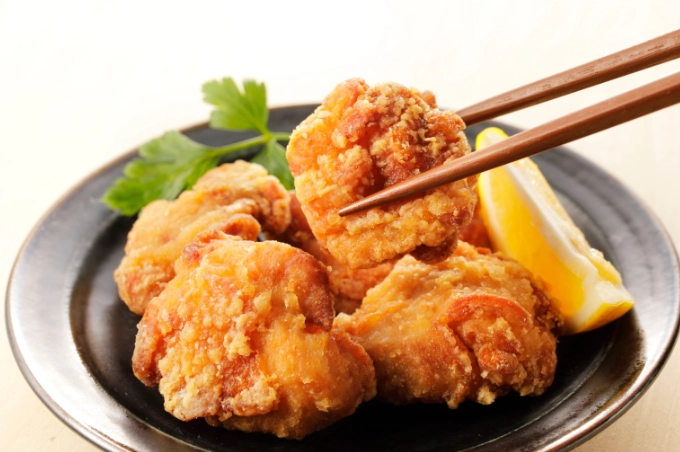
Answering Your Burning Karaage Questions (FAQ)
Let's tackle some common things people search once they know what is the most popular chicken dish in Japan.
Is karaage always made with chicken?
Mostly, yes. "Tori no karaage" specifies chicken. But "karaage" as a cooking method can apply to other things: ika karaage (fried squid), aji karaage (fried horse mackerel), even gobo karaage (fried burdock root). But if a menu just says "karaage," 99% of the time it's chicken.
How do you pronounce "karaage"?
Kah-rah-ah-geh. Four syllables. Not "car-age." The "ge" is like "geh" in "get."
What's the difference between karaage and katsu?
Massive difference. Chicken katsu (torikatsu) is a chicken cutlet—a breast pounded flat, coated in flour, egg, and panko (coarse breadcrumbs), then fried. It's a Western-derived dish (like tonkatsu). Karaage is marinated, bite-sized, and uses a fine flour/potato starch coating. Different texture, different eating experience.
Is it healthy?
Let's be real. It's deep-fried. It's not a health food. But the Japanese approach—smaller pieces, lighter coating, good oil drainage—makes it feel less heavy than other fried foods. Everything in moderation, right? A few pieces with a big side of cabbage salad balances it out.
Can you get good karaage outside of Japan?
Yes, absolutely. In cities with a strong Japanese diaspora or food scene, you can find excellent karaage. Look for Japanese-run izakayas or specialty shops. The hallmarks are juiciness, a light crust, and that distinct soy-ginger-garlic flavor. If it tastes like generic fried chicken, it's not the real deal.
The Final Verdict: More Than Just a Dish
So, when someone asks, "What is the most popular chicken dish in Japan?" you now have the answer and the whole story. It's karaage. Not just because it tastes incredible (it does), but because it's woven into the culture in a way few other dishes are.
It's the taste of a quick konbini lunch, the sound of a lively izakaya after work, the smell of a summer festival. It's comfort, community, and craftsmanship in a simple, golden-brown package. It's democratic perfection.
Is it the fanciest Japanese dish? No. Is it the most technically complex? Not really. But is it the most loved, the most widespread, the most reliably delicious? Without a doubt. That's why karaage holds the title.
Next time you're in Japan, or at a Japanese restaurant, skip the usual suspects for a moment. Order the karaage. Have it with a cold beer. You'll understand exactly why this is the answer. And you might just find yourself, like millions of people in Japan do every single day, craving it again soon after.
That's the power of the real most popular chicken dish in Japan.
Reader Comments