In This Guide
Let's be honest, the first time I heard "beef tataki ponzu," I pictured some fancy, complicated restaurant dish I could never make at home. I was wrong. It's actually one of those deceptively simple Japanese dishes that feels luxurious but is totally achievable in your own kitchen. The magic is in the contrast—the barely-seared, cool, tender beef against the bright, citrusy, savory punch of the ponzu sauce. It's a flavor explosion that's light yet satisfying.
I remember my first attempt. I overcooked the beef. It was more gray than pink, and the texture was off. The ponzu was just store-bought stuff that tasted kind of flat. It was fine, but it wasn't the revelation I was hoping for. It took a few tries, some research, and chatting with a chef friend who worked in Tokyo to really get it right. Now, it's my go-to appetizer when I want to impress people without spending all day in the kitchen.
So, what exactly is it? At its core, beef tataki ponzu is a Japanese dish of very lightly seared beef (usually filet or sirloin) that is quickly chilled, thinly sliced, and served with a ponzu citrus-soy dipping sauce. The word "tataki" means "pounded" or "hit," which historically referred to a method of tenderizing the meat, but nowadays it mostly describes this specific quick-sear technique. The ponzu sauce is the non-negotiable partner here—it's what elevates it from simple seared beef to something special.
Where Did This Dish Even Come From?
Pinpointing the exact origin of beef tataki is a bit tricky. Most food historians agree the technique has roots in the Tosa region (modern-day Kochi Prefecture) in Japan. The story often goes that it was inspired by the way European sailors or traders cooked meat over high heat. Japanese chefs adapted this method but applied their own philosophy of minimalism and highlighting pristine ingredients.
The ponzu part of the equation has a clearer lineage. Ponzu sauce, a blend of soy sauce and citrus juice (usually yuzu, but also sudachi or kabosu), has been a staple in Japanese cuisine for centuries. Combining the rich umami of soy with the aromatic acidity of citrus was a natural progression. Putting the two together—the delicate beef tataki and the vibrant ponzu—was a stroke of culinary genius. It's a perfect example of washoku principles, balancing taste, texture, and visual appeal. For a deeper dive into traditional Japanese culinary principles, the Japanese Ministry of Agriculture, Forestry and Fisheries has excellent resources on washoku as an intangible cultural heritage.
It's not some ancient, ceremonial dish, though. Its popularity in modern restaurants, both in Japan and globally, speaks to its timeless appeal. It bridges the gap between something familiar (beef) and something intriguing (the unique preparation and sauce).
What You Absolutely Need to Make It
This isn't a dish that needs a million ingredients. In fact, its beauty lies in simplicity. But the quality of those few ingredients matters a lot.
The Star: Choosing Your Beef Cut
Since the beef is barely cooked, you need a cut that's naturally tender and has great flavor even when rare. You also want one with minimal gristle or connective tissue.
- Filet Mignon/Tenderloin: The top choice for most. It's incredibly tender, lean, and has a consistent texture. It's almost foolproof. The downside? It can be pricey and is less flavorful than fattier cuts.
- Top Sirloin/Strip Steak: My personal favorite for beef tataki ponzu. It has more beefy flavor than filet, a bit of marbling, and is usually more affordable. You just need to be a bit more careful to trim any tough silverskin.
- Ribeye Cap: If you can find it, this is luxury tier. Incredibly flavorful and tender. The fat renders beautifully with a quick sear.
- What to avoid? Steer clear of tough, braising cuts like chuck or round. They need long, slow cooking to become tender.
A quick tip: talk to your butcher. Ask for a center-cut piece that's uniform in thickness, about 1.5 to 2 inches thick. This ensures even searing.
The Soul: Demystifying Ponzu Sauce
This is where you can make or break your beef tataki ponzu. Store-bought ponzu is convenient, but homemade? It's a game-changer. The difference in brightness and depth is night and day.
Real ponzu is more than just soy and lemon juice. Traditional recipes often involve simmering kombu (dried kelp) and katsuobushi (bonito flakes) in rice vinegar and mirin, then straining it and mixing with soy sauce and citrus juice. This adds a profound layer of umami.
- 1/2 cup good-quality soy sauce (like Kikkoman)
- 1/4 cup fresh yuzu juice (or a mix of 3 parts lemon + 1 part lime + a hint of grapefruit if yuzu is unavailable)
- 2 tablespoons rice vinegar
- 1 tablespoon mirin
- A small piece of kombu (about 2-inch square) and a small handful of katsuobushi (optional, but highly recommended)
Combine everything except the citrus juice in a small saucepan. Heat gently until just before a simmer, then turn off the heat. Let it steep for 30 minutes. Strain, let it cool completely, then stir in the citrus juice. It keeps for weeks in the fridge.
Why bother? The kombu and katsuobushi infuse the base with a savory, oceanic depth that makes the final ponzu sauce incredibly complex. Organizations like the Kikkoman Corporation, a global authority on soy sauce, often discuss the role of umami in creating balanced sauces like ponzu.
The Supporting Cast
You'll see various garnishes. They're not just for looks; they add crucial texture and flavor contrasts.
- Daikon Radish: Grated into a fluffy pile ("daikon oroshi"). It's refreshing and helps cut the richness.
- Scallions (Green Onions): Thinly sliced, preferably on a sharp diagonal. They add a mild oniony bite and color.
- Shiso Leaves: If you can find them, they add a unique, minty-basil-like aroma that's quintessentially Japanese.
- Toasted Sesame Seeds: A sprinkle adds nuttiness and crunch.
- Arugula or Microgreens: A modern, easy-to-find substitute that adds a nice peppery note.
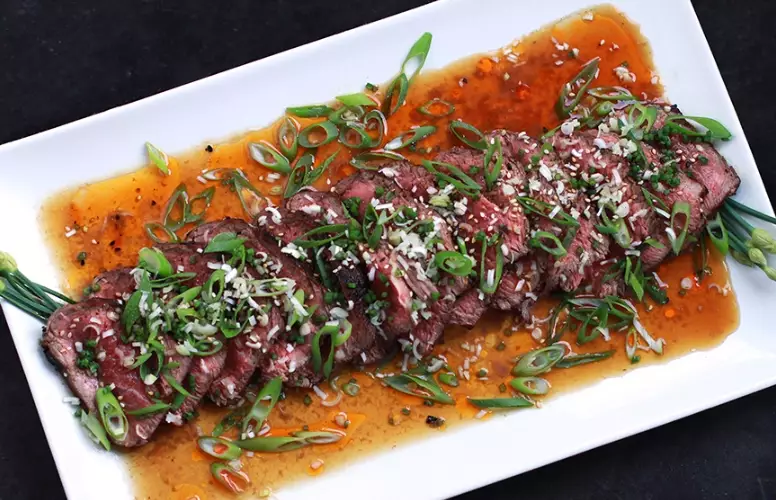
The Step-by-Step: No More Guesswork
Okay, let's get to the cooking. This isn't hard, but there are a few key steps you can't rush.
Prepping the Beef
Take your chosen cut out of the fridge at least 30 minutes before cooking. A cold steak going into a hot pan will seize up and cook unevenly. Pat it extremely dry with paper towels. Moisture is the enemy of a good sear. Season it generously with salt and pepper just before it hits the pan.
The Critical Sear
Use a heavy-bottomed skillet (cast iron is perfect) and get it screaming hot. Add a thin layer of a high-smoke-point oil like canola or grapeseed. Place the beef in and don't move it. You want to develop a deep brown crust. This should take about 60-90 seconds per side, including the edges. You're literally just searing the very outside.
Immediately transfer the seared beef to an ice bath. Yes, you read that right. Plunge it into a bowl of ice water. This stops the cooking dead in its tracks, guaranteeing that perfect rare interior. Let it sit for a minute, then pat it thoroughly dry again. Wrap it tightly in plastic wrap and pop it in the freezer for 20-30 minutes. This firms it up, making it infinitely easier to slice paper-thin.
Slicing and Plating
Use the sharpest knife you own. A long, thin slicing knife is ideal. Slice against the grain as thinly as you can. Arrange the slices slightly overlapping on a plate. Drizzle a little ponzu over the top, and serve the rest on the side. Pile your chosen garnishes artistically on top or to the side.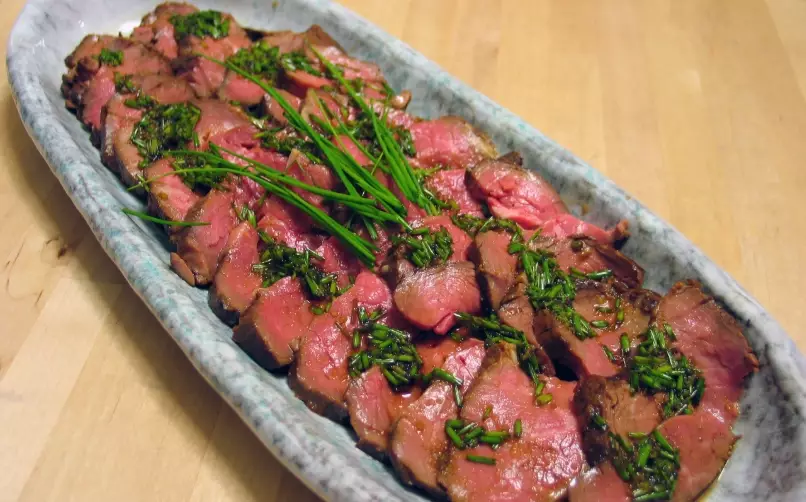
Common Pitfalls (And How to Dodge Them)
I've made these mistakes so you don't have to. Here’s a quick table to troubleshoot your beef tataki ponzu journey.
Beef is gray all the way throughOvercooked. Sear was too long or beef was too thin.Use a thicker cut (1.5"). Sear quickly. Use the ice bath immediately.| Problem | Likely Cause | The Fix |
|---|---|---|
| Beef is tough or chewy | Wrong cut (too tough), sliced with the grain, or (rarely) slightly overcooked. | Use tenderloin or sirloin. Always slice against the grain. Use a timer for the sear. |
| No good crust on the beef | Pan not hot enough, beef was wet, or you moved it too soon. | Pat beef ultra-dry. Heat pan until oil shimmers. Don't touch the beef for the first minute. |
| Ponzu sauce tastes flat or just salty | Using only soy and lemon, or low-quality ingredients. | Make the homemade version with rice vinegar and mirin. Use fresh, high-quality citrus. |
| Slices are ragged and thick | Knife isn't sharp enough, or beef didn't firm up in freezer. | Sharpen your knife. Ensure the beef is firm to the touch before slicing. |
Beyond the Basics: Pairing and Serving Ideas
Beef tataki ponzu is incredibly versatile. It's fantastic as a standalone appetizer, but you can build a whole meal around it.
What to drink with it? The acidity of the ponzu sauce pairs beautifully with crisp, dry drinks. A cold Japanese lager or a dry sake (like a ginjo) is classic. For wine, think high-acid whites like Sauvignon Blanc or a light-bodied, low-tannin red like Pinot Noir.
Make it a meal: Serve it over a bed of mixed greens for a killer salad. Or, slice it a bit thicker and tuck it into a crusty baguette with some arugula and a swipe of wasabi mayo for an insane sandwich. Leftover beef tataki ponzu (if you have any!) is amazing chopped up and tossed into a cold soba noodle salad the next day.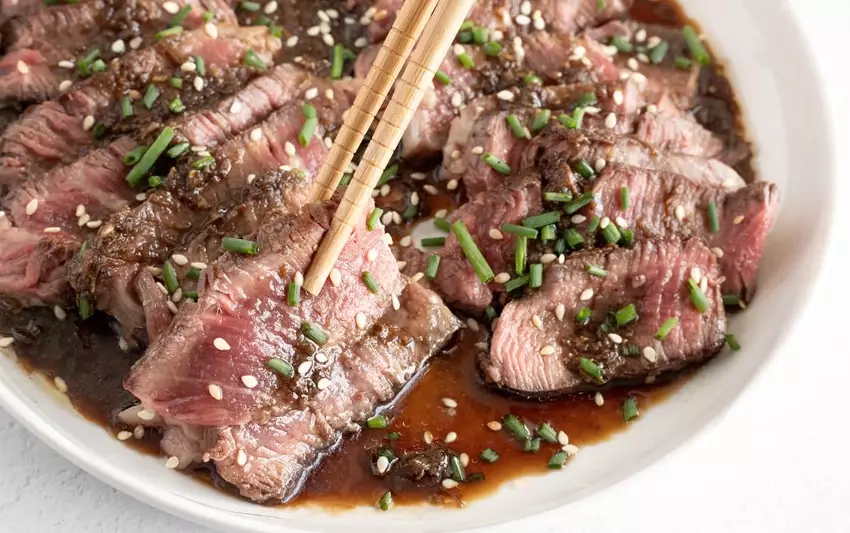
Answering Your Beef Tataki Ponzu Questions

Wrapping It Up
Making an incredible beef tataki ponzu at home isn't about fancy techniques. It's about attention to a few simple details: a good cut of beef, a blisteringly hot sear, an immediate chill, and a vibrant, homemade ponzu sauce. It's a dish that feels special but is surprisingly straightforward once you understand the rhythm.
The best part? It’s customizable. Don't have shiso? Use basil. Can't find daikon? Try a simple watercress salad. The core idea—seared, rare beef with a citrus-soy dip—is what makes beef tataki ponzu so enduringly popular.
Give it a shot. Maybe your first try won't be perfect (mine sure wasn't), but even a "pretty good" homemade beef tataki ponzu beats most restaurant appetizers. And when you nail it? You'll have a stunning, delicious dish that’ll make you feel like a pro.
What’s your biggest hurdle when thinking about making this dish? Is it the searing, the slicing, or just tracking down the ingredients? Once you get past that first step, the rest is just following the delicious path to your plate.
Reader Comments