Quick Navigation
- So, Where Did Japanese Potato Salad Come From Anyway?
- The Heart of the Matter: Core Ingredients & Why They Matter
- The Step-by-Step: How to Actually Make It
- Common Variations & Twists
- Potato Showdown: Which Spud Works Best?
- Answers to Questions You're Probably Asking
- Wrapping It Up: Your Path to Potato Salad Bliss
Okay, let's talk about Japanese potato salad. If you're picturing the heavy, mayo-drenched stuff you might find next to some fried chicken at a deli, think again. This is something else entirely. It's creamy, sure, but it's also got this amazing crunch and a subtle tang that makes you go back for spoonful after spoonful. I first had it at a tiny izakaya (that's a Japanese pub) in Tokyo, and I was hooked. It was nothing like the potato salad I grew up with.
The thing is, making a truly great Japanese potato salad at home isn't just about boiling potatoes and mixing in mayo. There are little tricks, almost secrets, that transform it from a simple side dish into something you crave. And sometimes, you can get it wrong. I know I did the first few times—my potatoes turned to glue, or the flavor was just flat.
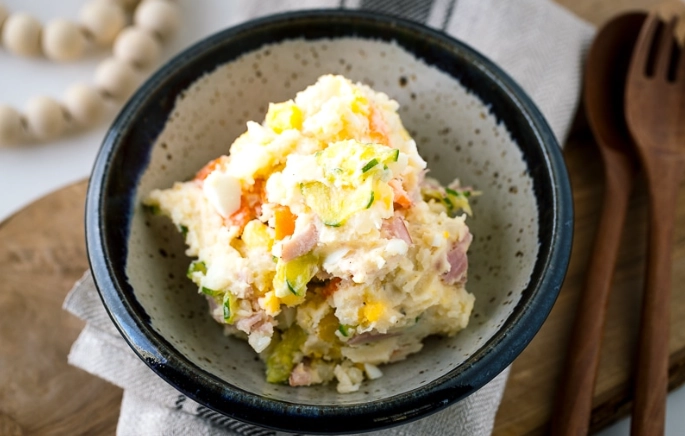 It's the harmony of soft, creamy potato and crisp, fresh vegetables that makes it special.
This guide is my attempt to save you from those mistakes. We'll dig into where this dish even came from (it's a fascinating story of cultural adaptation), break down every ingredient, and walk through the process step-by-step. By the end, you'll know exactly how to make an authentic Japanese potato salad that could hold its own in any Tokyo kitchen.
So, Where Did Japanese Potato Salad Come From Anyway?
This is my favorite part. Japanese potato salad isn't some ancient, traditional dish. It's a yōshoku item. Yōshoku refers to Western-style dishes that were adapted to Japanese tastes during the Meiji era (late 1800s) when Japan opened up to the world. Think tonkatsu (pork cutlet), korokke (croquettes), and omurice. Potato salad came over from Europe, probably via the British or the French, and Japan put its own spin on it.
The Japanese version lightened the typically heavier Western style. They introduced ingredients like cucumber and carrots for freshness and texture, and they perfected a mashing technique that created a creamier, more cohesive mixture than the chunky American style. It became a staple of deli counters (sōzai corners), home kitchens, and bento boxes. It's everyday comfort food. If you're curious about this era of culinary fusion, the Japanese Ministry of Agriculture, Forestry and Fisheries has a great overview on Washoku and Yōshoku.
The Heart of the Matter: Core Ingredients & Why They Matter
You can't build a great house without good bricks, right? Same goes for Japanese potato salad. Every ingredient has a role. Let's get into the specifics.
The Potato: Your Foundation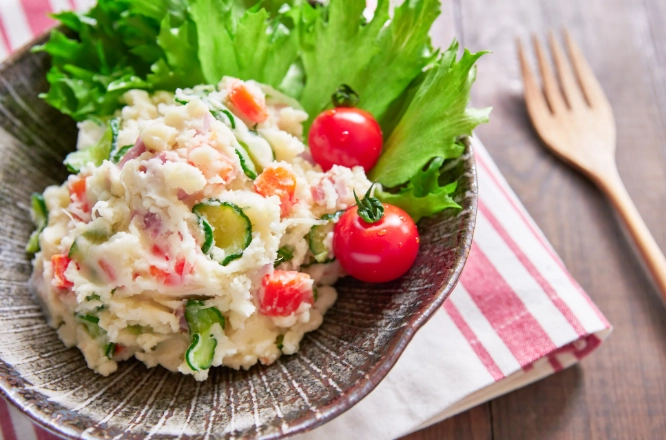
This is the big one. Get the potato wrong, and you're fighting a losing battle. You need a starchy potato. In Japan, they often use May Queen or Danshaku varieties. In the US and elsewhere, look for Yukon Golds or Russets.
- Yukon Gold: My personal favorite. They have a naturally buttery flavor and just the right amount of starch. They mash beautifully into a creamy texture without becoming pure glue.
- Russet (Idaho): Very starchy. They'll give you the fluffiest mash, but you have to be careful not to overwork them, or they get gummy. A good choice if you're confident.
- Red or New Potatoes: I'd avoid these for the classic version. They're waxy. They hold their shape too well, and you'll end up with a chunky salad that lacks the signature creamy base. It'll taste fine, but it won't be that authentic, cohesive texture.
The Vegetables: Texture and Freshness
This is where the magic of texture happens. The contrast is everything.
- Cucumber: Almost always used. But here's the critical step most recipes miss: you must salt and drain them. Slice them thin, toss with a pinch of salt, and let them sit for 10-15 minutes. Then squeeze out the bitter water. This prevents your salad from becoming a watery mess and keeps the cucumber crisp.
- Carrot: Adds sweetness and color. I like to cut them into small, thin matchsticks or grate them. They're usually added raw for a firm bite.
- Onion: Red onion is great for color and a milder bite. Some use sweet yellow onion. To take the harsh edge off, you can quickly soak the sliced onion in cold water for 5-10 minutes, then pat dry.
- Ham: Not always, but very common. It adds a salty, savory note. Use a good quality cooked ham, diced small.
The Dressing: It's More Than Just Mayo
Yes, Japanese mayonnaise (like Kewpie) is the star. It's made with only egg yolks (not whole eggs), rice vinegar, and MSG, giving it a richer, tangier, umami-packed flavor. It's a game-changer. You can find it in most Asian grocery stores or online.
But it's not just mayo. A little rice vinegar or lemon juice is often mixed in to brighten everything up. Seasonings are simple: salt and white pepper. Some add a tiny bit of sugar to balance, but I often skip it if the carrots are sweet enough.
The Step-by-Step: How to Actually Make It
Alright, let's get our hands dirty. Follow these steps in order—the sequence is part of the technique.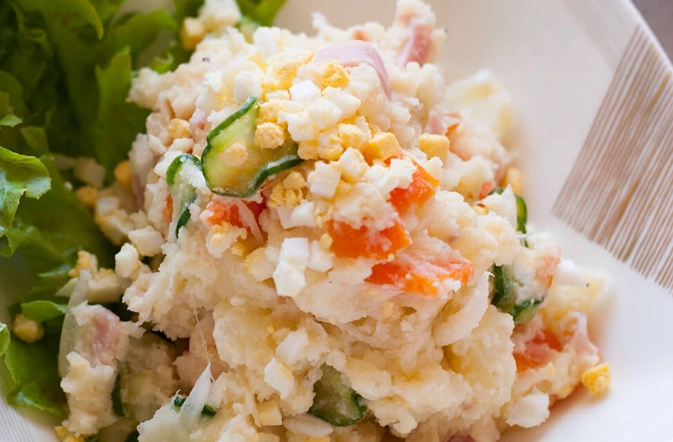
Step 1: Prep Your Veggies First
Don't wait. Slice your cucumber, salt it, and set it aside to drain in a colander. Cut your carrots and onions. Get this done while your potatoes boil. It makes the whole process flow.
Step 2: Cook the Potatoes Perfectly
Peel and cut your potatoes into even, large chunks (about 1.5-inch pieces). Start them in cold, well-salted water. Bring to a boil, then simmer until a knife slides in easily—usually 15-20 minutes. Do not overcook. Mushy potatoes turn into paste.
Step 3: The Crucial Mashing & Seasoning
Drain the potatoes well and return them to the hot pot for a minute to evaporate excess moisture. Mash them while they're hot. I use a potato ricer for the smoothest, fluffiest texture (it's worth the small investment). If using a masher, leave a tiny bit of texture. Immediately, while hot, season with a pinch of salt and a splash of rice vinegar or lemon juice. The heat helps the potatoes absorb this flavor.
Step 4: Combine and Chill
Let the mashed potatoes cool down to at least room temperature. Squeeze all the water out of your cucumber. Now, in a large bowl, gently fold the cooled potatoes, the crisp vegetables, diced ham (if using), and Japanese mayonnaise together. Start with maybe 3/4 of the mayo you think you'll need, then add more to taste. Overmixing will make it gluey.
Step 5: The Final Rest
Cover and refrigerate for at least an hour, preferably two or three. This is non-negotiable. The flavors meld, the texture sets, and it becomes infinitely better. A freshly mixed Japanese potato salad is always a bit lackluster.
Common Variations & Twists
The basic formula is a canvas. Once you've mastered it, try these: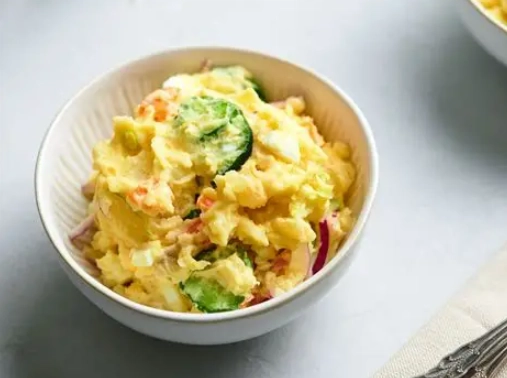
- With Corn: Adds pops of sweetness. Use canned corn, well-drained, or fresh cooked corn kernels.
- With Apple: Sounds weird, but a finely diced tart apple (like Granny Smith) adds a fantastic sweet-tart crunch. Soak the dice in lightly salted water to prevent browning.
- With Tuna: A classic bento box addition. Drain a can of good-quality tuna in water (not oil) and flake it in.
- Tarako or Mentaiko: For the adventurous. Adding a bit of salted pollock or cod roe brings an incredible umami punch and a beautiful pink-orange color. It's a next-level move.
Potato Showdown: Which Spud Works Best?
Let's make this visual. Here’s a quick comparison to help you decide.
| Potato Type | Best For... | Watch Out For... | Final Texture |
|---|---|---|---|
| Yukon Gold | The all-rounder. Great flavor, creamy mash. | Can be a bit denser than Russet. | Creamy, cohesive, slightly buttery. |
| Russet (Idaho) | The fluffiest, most traditional texture. | Overmashing leads to gluey disaster. | Very light, fluffy, and airy. |
| Red / New Potatoes | Salads where you want distinct chunks. | Won't create a creamy, unified base. | Chunky, firm, less cohesive. |
Answers to Questions You're Probably Asking
Can I make Japanese potato salad ahead of time?
Absolutely. In fact, you should. Making it a day ahead is ideal. The flavors have time to marry beautifully. Just keep it tightly covered in the fridge. It should be good for 2-3 days, though the cucumbers will slowly lose their perfect crispness.
My salad turned out watery. What happened?
Two likely culprits: 1) You didn't salt and drain the cucumbers (or other watery veggies). 2) You added the mayo to the potatoes while they were still warm. The heat can break the mayo and release oil/water. Always cool your potatoes first.
Is there a substitute for Japanese mayonnaise (Kewpie)?
You can make a decent approximation. Mix regular American mayo with a little rice vinegar (or lemon juice) and a tiny, tiny pinch of MSG (or use a bit of dashi powder). It won't be identical, but it'll get you closer than plain mayo. Honestly, just buy the Kewpie. It lasts forever in the fridge.
Why is my potato salad gluey or pasty?
You overworked the potatoes. Either you used a food processor (never do this!), over-mashed with a tool, or stirred the final mixture too vigorously. Starch molecules get over-released and create a glue-like texture. Be gentle.
What do you eat with Japanese potato salad?
It's incredibly versatile. It's a classic side for tonkatsu (fried pork cutlet) or grilled fish. It's perfect in a bento box. I love it as a side with a simple sandwich for lunch, or even as a dip with crispy lettuce leaves. It's a crowd-pleaser at barbecues too.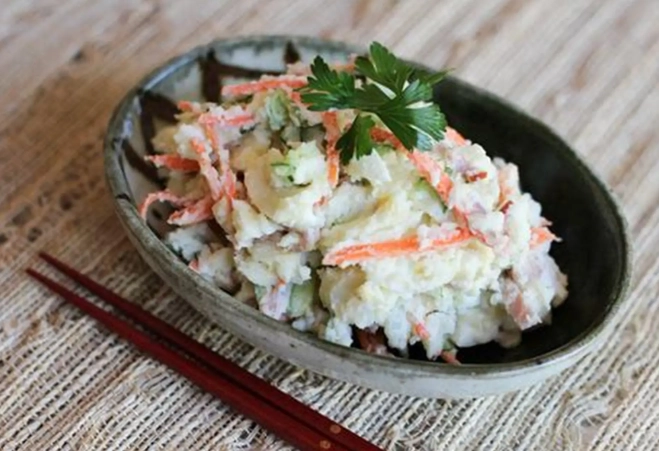
Wrapping It Up: Your Path to Potato Salad Bliss
So there you have it. Japanese potato salad is more than a recipe; it's a technique. It's about understanding how texture contrasts work, how to treat each ingredient with respect, and having the patience to let it chill. Forget the heavy, bland versions of the past. This is a bright, creamy, crunchy, and utterly moreish dish that deserves a spot in your regular rotation.
Start with the classic recipe. Master the cucumber-salting and the potato-mashing. Get that Kewpie mayo. Once you've got that down, feel free to play—add some corn, try the apple version, maybe a sprinkle of shichimi togarashi for heat. The foundation is what matters. Now go make some, and let it chill. The wait is the hardest part, but I promise, it's worth it.
Reader Comments