In This Guide
- What Exactly is Daikon, Anyway?
- The Core of Any Great Daikon Salad: Prep & Technique
- Top Daikon Salad Recipes You Need to Try
- Let's Talk Nutrition: Why Daikon Salad is a Smart Choice
- Common Daikon Salad Questions (Answered)
- Beyond the Basic: Creative Add-Ins and Variations
- How Your Daikon Salad Stacks Up: A Quick Comparison
- A Few Parting Thoughts (From My Kitchen to Yours)
Let's talk about daikon salad. You've probably seen those long, white radishes at the store, looking kind of like giant pale carrots, and wondered what on earth to do with them. Maybe you picked one up, brought it home, and it sat in your fridge for a week while you searched for a good daikon salad recipe that didn't seem too intimidating. I've been there.
The truth is, a simple daikon radish salad is one of the most refreshing, crunchy, and healthy things you can make. It's a staple in a lot of Asian cuisines for a reason. But if you've never worked with daikon before, it can be a bit of a mystery. Is it spicy? Do you cook it? How do you stop it from getting watery? We're going to answer all of that and more.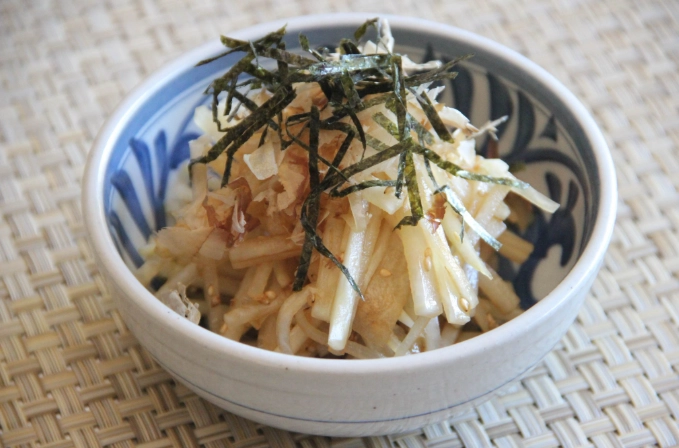
This isn't just one recipe. It's a whole guide to understanding this fantastic vegetable and turning it into salads you'll want to make again and again. From the classic, tangy Japanese-style salad to a bright, herby Vietnamese version, we'll cover the bases. I'll even throw in some tricks I learned the hard way (like how to avoid a soggy mess).
What Exactly is Daikon, Anyway?
Before we dive into making a killer daikon salad, let's get to know our main ingredient. Daikon (pronounced "dye-kon") is a mild-flavored winter radish. The name comes from Japanese, where "dai" means large and "kon" means root. It's not wrong—these things can get huge.
The flavor is much less peppery and pungent than your standard red radish. When raw, it has a crisp, juicy texture and a clean, slightly sweet and peppery taste, but the heat is very mild. When you grate it or slice it thin for a daikon salad, it releases a lovely, fresh juice that becomes part of the dressing. It's incredibly versatile.
Nutritionally, it's a powerhouse of low-calorie goodness. We'll get into the specifics later, but think vitamin C, fiber, and digestive enzymes. It's the kind of vegetable that makes you feel good after eating it.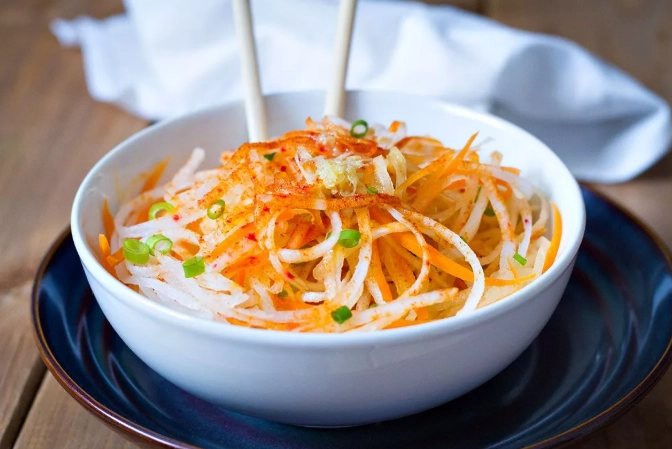
The Core of Any Great Daikon Salad: Prep & Technique
This is where most daikon salad recipes fall short. They just tell you to "slice the daikon" and move on. But how you prepare it makes all the difference between a good salad and a great one. Let's break it down.
Peeling and Cutting: It Matters More Than You Think
Do you need to peel daikon for salad? Usually, yes. The skin can be a bit tough and earthy, especially on larger, older roots. A vegetable peeler makes quick work of it. For younger, smaller daikon, you can often just give it a good scrub.
Now, the cut. This isn't just about aesthetics; it changes the texture and how the vegetable absorbs dressing.
- Julienne (Matchsticks): The classic cut for many Asian-style salads. It gives maximum crunch and a delicate mouthfeel. Use a sharp knife or a mandoline for uniformity. This is my go-to for a traditional daikon salad.
- Thin Half-Moons or Rounds: Great for quicker prep or when you want a more substantial bite. A mandoline is your best friend here for paper-thin slices.
- Grated: This is a game-changer. Grated daikon becomes almost creamy while still retaining bits of texture. It soaks up dressing beautifully and is common in Japanese dishes like okonomiyaki. A box grater works, but a Japanese oroshigane (grater) creates a finer, fluffier pulp.
I learned this the hard way. My first attempt at a daikon and carrot salad turned into a watery pool at the bottom of the bowl because I salted it like I would cucumbers. Not ideal. Now, I'm more careful.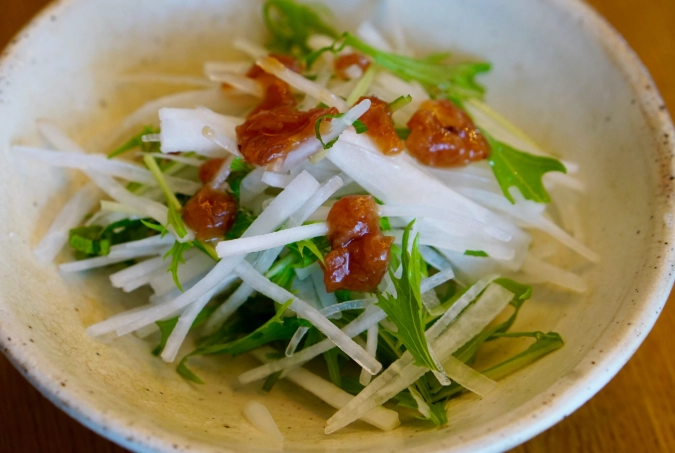
Taming the (Occasional) Bitterness
Sometimes, especially with older or very large daikon, you might detect a hint of bitterness or excessive pungency. It's not common, but it happens. Here's a chef's trick: after cutting, soak the daikon in ice water for 10-15 minutes. This crisps it up and mellows any harsh flavors. Just make sure to drain and pat it very dry before dressing.
Top Daikon Salad Recipes You Need to Try
Okay, enough theory. Let's get to the good stuff. Here are a few foundational daikon salad recipes that showcase its range. Think of this as your starting point.
The Classic Japanese "Daikon Salad" (Daikon Sarada)
This is what most people picture. It's clean, bright, and highlights the daikon's natural flavor. The dressing is typically a mix of rice vinegar, a touch of soy sauce or dashi, mirin (sweet rice wine), and a hint of sesame oil.
My favorite version is simple: julienned daikon and carrot, maybe some thinly sliced cucumber. For the dressing, I whisk together 3 parts rice vinegar, 1 part soy sauce, a teaspoon of mirin, a half-teaspoon of sesame oil, and a pinch of sugar. Toss it just before serving and top with toasted sesame seeds and a sprinkle of shredded nori (seaweed). The result is a daikon salad that's tangy, slightly sweet, and utterly refreshing. It's the perfect palate cleanser alongside a rich meal.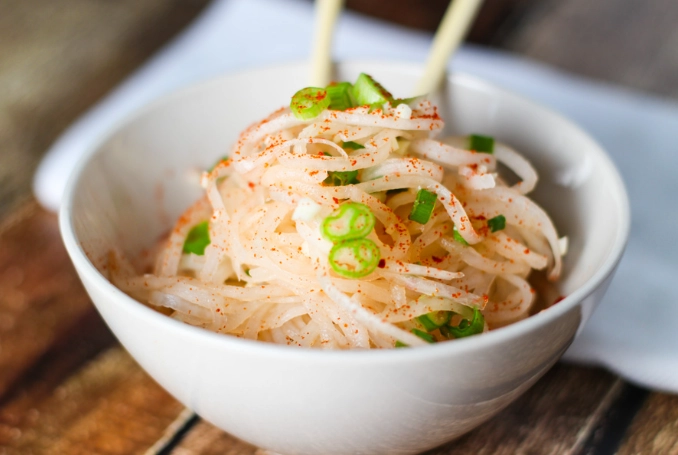
The Zesty Vietnamese Style (Goi Cuon Chay Inspiration)
This one packs a flavor punch. Think of the fresh herbs and textures in a Vietnamese spring roll, turned into a salad. Shredded daikon and carrot form the base, often with some green papaya if you have it.
The dressing is a vibrant nuoc cham: fish sauce (or soy sauce for vegetarian), lime juice, sugar, water, garlic, and bird's eye chili. Toss the veggies with plenty of fresh mint, cilantro, and Thai basil. Add some crushed peanuts on top for crunch. This daikon salad is a meal in itself—explosive with flavor, herbaceous, and incredibly satisfying.
The Creamy, Western-Style Twist
If you want to introduce daikon to people who might be skeptical, this is your gateway recipe. It's like a coleslaw, but better. Combine grated daikon and carrot with a creamy, tangy dressing.
I make a dressing with Greek yogurt (or mayonnaise), a splash of apple cider vinegar, a dab of Dijon mustard, a little honey, salt, and pepper. It's creamy but not heavy. Throw in some raisins or dried cranberries and chopped walnuts or pecans. The daikon's crunch holds up beautifully against the creamy dressing, and its mild flavor lets the other ingredients shine. It's a fantastic healthy daikon salad for potlucks or picnics.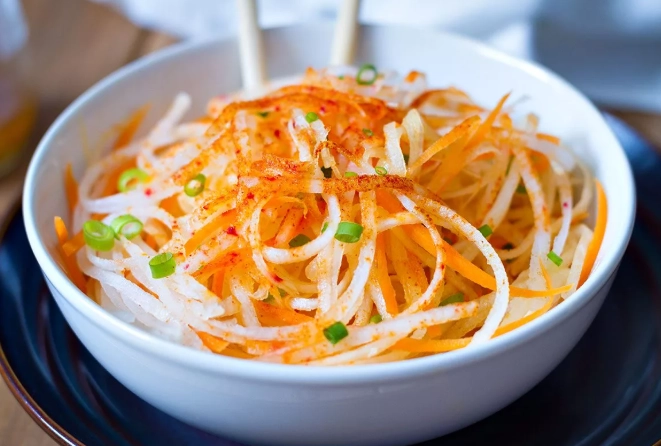
Let's Talk Nutrition: Why Daikon Salad is a Smart Choice
You're not just eating something tasty; you're doing your body a favor. Daikon is incredibly low in calories but high in nutrients and water content. According to data from the USDA FoodData Central, daikon is an excellent source of vitamin C, providing a significant portion of your daily needs in a single serving. Vitamin C is crucial for immune function and skin health.
But the real star of the show, in my opinion, is the enzyme called diastase (along with amylase and protease). These enzymes aid in the digestion of starches, proteins, and fats. That's why in Japan, grated daikon (daikon oroshi) is frequently served with grilled fish or tempura—it's not just a garnish; it's a digestive aid. Eating a daikon salad before or with a heavy meal can actually make you feel less bloated afterward.
It's also a good source of fiber, both soluble and insoluble, which promotes gut health and regularity. The high water content helps with hydration. The Harvard T.H. Chan School of Public Health consistently highlights the benefits of a diet rich in a variety of vegetables like daikon for reducing the risk of chronic diseases.
So, when you're eating a healthy daikon salad, you're getting a hydrating, crunchy vehicle for flavor that also quietly supports your digestion and overall health. Not bad for a humble root vegetable.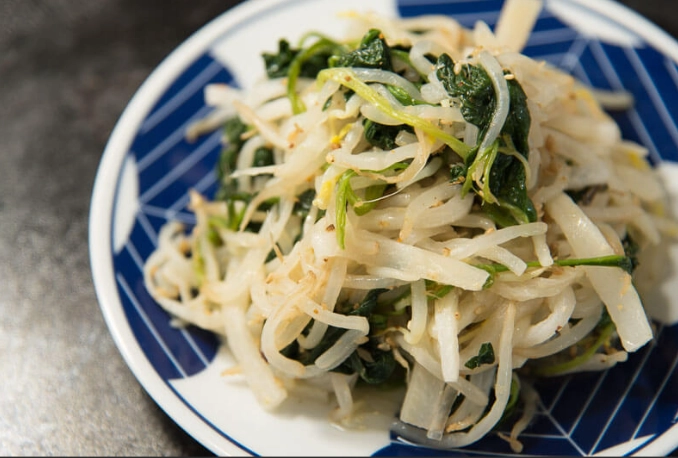
Common Daikon Salad Questions (Answered)
Beyond the Basic: Creative Add-Ins and Variations
Once you've mastered a simple daikon radish salad, the world is your oyster. Don't be afraid to mix and match. Here are some ideas to get your creativity flowing.
- Add Protein: Turn it into a main course. Shredded cooked chicken, flaked tuna or salmon, tofu (crispy or soft), or even edamame beans work wonderfully.
- Fruit for Sweetness: Thinly sliced apple or pear, orange segments, or pomegranate arils add a lovely sweet contrast to the daikon's crispness.
- More Veggie Crunch: Jicama, kohlrabi, or watermelon radish all share a similar crunchy texture and play well with daikon.
- Herb Bomb: Don't underestimate herbs. Dill, chives, parsley, shiso leaf, or perilla can elevate a simple salad dramatically.
I sometimes make a "clean-out-the-fridge" daikon salad. Last week's had daikon, a lonely apple, some leftover roasted almonds, and a handful of arugula. I whipped up a quick lemon-mustard vinaigrette, and it was delicious. The point is, you don't need to follow a recipe to the letter. Use what you have.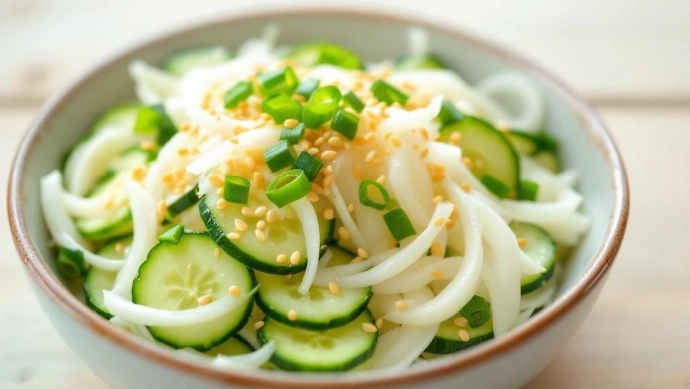
How Your Daikon Salad Stacks Up: A Quick Comparison
Wondering which style might suit your meal or mood? This table breaks down some popular approaches to making a daikon salad.
| Salad Style | Key Ingredients (Besides Daikon) | Dressing Profile | Best Served With |
|---|---|---|---|
| Classic Japanese | Carrot, cucumber, sesame seeds | Tangy, light (rice vinegar, soy, sesame oil) | Grilled fish, rice bowls, tonkatsu |
| Vietnamese Herb Salad | Carrot, fresh mint/cilantro, peanuts | Sweet, sour, salty, spicy (nuoc cham) | Spring rolls, grilled meats, as a standalone light meal |
| Creamy Slaw-Style | Carrot, cabbage, raisins, nuts | Creamy, tangy (yogurt/mayo, vinegar, mustard) | Burgers, sandwiches, BBQ, fried chicken |
| Simple Refreshing | Just daikon! | Lemon juice or ponzu, a drizzle of olive oil | As a palate cleanser between rich courses |
See? There's a daikon salad for almost every occasion.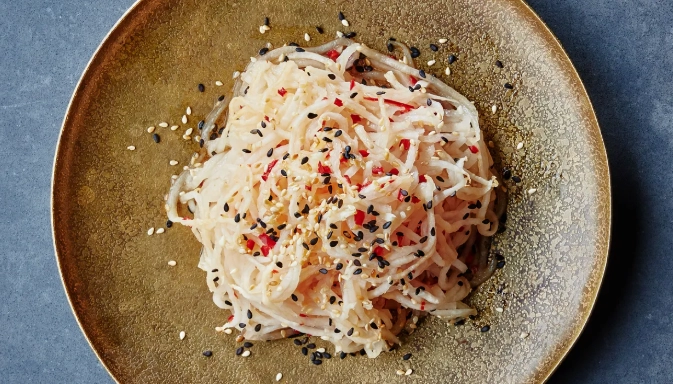
A Few Parting Thoughts (From My Kitchen to Yours)
Daikon is a seriously underrated vegetable in many Western kitchens. It's cheap, lasts a decent while in the crisper drawer, and offers a unique texture and health boost that lettuce-based salads just can't match. Making a daikon salad is less about precise recipes and more about embracing its versatility.
Start with one of the core recipes I mentioned. Get a feel for how the daikon behaves. Then, start experimenting. Add a different herb. Try a new vinegar in your dressing. Toss in some leftover protein.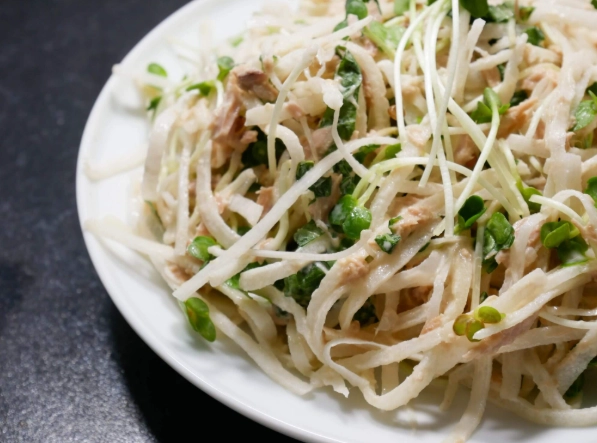
The beauty of a good daikon salad lies in its simplicity and adaptability. It's a testament to how a single, humble ingredient can be the star of the show with just a little know-how. For more on the cultural significance and varieties of daikon in Japan, you can explore resources from the Japanese Ministry of Agriculture, Forestry and Fisheries (MAFF).
Really, the hardest part is over. You know what to do now. The rest is just mixing and tasting. Go make a fantastic daikon salad.
Reader Comments