What's Inside This Guide
- Why Buckwheat? And Why Add Eggs?
- Gathering Your Arsenal: Ingredients & Tools
- The Core Buckwheat Egg Pasta Recipe: A Step-by-Step Journey
- Flour Blending Guide: Choosing Your Path
- So, Your Dough is a Mess? Let's Fix It.
- Answering Your Buckwheat Pasta Questions
- Taking It Further: Creative Twists on the Basic Recipe
Let's be honest. The first time I tried a buckwheat egg pasta recipe, it was a disaster. The dough crumbled like sandcastle, it stuck to everything (including my confidence), and the final product had the delicate texture of a roofing tile. I almost swore off it for good. But then I got curious. Why did this simple combination of buckwheat flour, eggs, and maybe a pinch of salt defeat me so thoroughly? The answer, I found, wasn't in the ingredients list, but in the tiny, unspoken details that most recipes gloss over.
So I kept at it. Through sticky countertops and more than a few batches destined for the compost, I figured it out. This guide is everything I wish I'd had. It's not just a list of steps; it's the why behind each step. We're going to dig into the soul of buckwheat flour—this nutty, gluten-free powerhouse—and learn how to coax it into becoming tender, flavorful noodles that hold their own against any semolina pasta.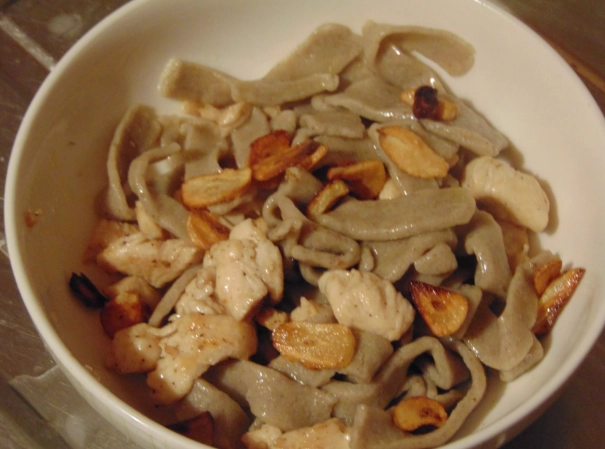
Why bother? Because store-bought gluten-free pasta often tastes like cardboard and has the structural integrity of wet paper. Homemade buckwheat egg pasta is different. It's got character. A deep, earthy flavor that pairs incredibly with rich mushroom sauces, brown butter, or a simple pesto. It's also surprisingly nutritious. Buckwheat is a great source of fiber and plant-based protein, as noted in nutrient data from the USDA's FoodData Central. When you combine it with the richness of egg yolks, you're creating something special.
Ready to make pasta that will actually impress you? Let's start from the very beginning.
Why Buckwheat? And Why Add Eggs?
Most pasta recipes use 00 flour or semolina. They're predictable. Buckwheat is a wildcard. It's not even a grain; it's a seed related to rhubarb. That means zero gluten. Gluten is the protein network that gives traditional pasta its chew and elasticity. No gluten means no built-in structure. That's the challenge.
This is where the eggs come in. In a classic buckwheat egg pasta recipe, the eggs are the heroes. The yolks provide fat and richness, but more importantly, the proteins in the whole egg act as a binder. They create a different kind of structure to hold the buckwheat particles together. It's a more fragile, tender structure than gluten, which is why handling is so crucial.
The flavor profile is the real win. Semolina pasta is often a neutral canvas. Buckwheat pasta is the flavor. It's nutty, earthy, and slightly toasty. It can stand up to bold, autumnal sauces in a way that delicate egg pasta never could.
Gathering Your Arsenal: Ingredients & Tools
You don't need much, but what you choose matters. This isn't the place for substitutions if you can avoid it.
The Non-Negotiables (The Ingredients)
Buckwheat Flour: This is the star. Look for a fine, light grind. Dark, coarse flour will make gritty, dense pasta. I prefer stone-ground for flavor. Make sure it's fresh—buckwheat flour can go rancid. Give it a sniff; it should smell clean and nutty, not musty. You'll need about 2 cups for a standard batch.
Eggs: Large, room-temperature eggs. Cold eggs don't incorporate as well. The standard ratio is about 1 egg per 100g of flour, but buckwheat is thirstier. We might adjust. For richness, some recipes use extra yolks. I find 2 whole eggs + 1 extra yolk gives a great balance of bind and flavor without being too eggy.
Salt: A pinch of fine sea salt in the dough seasons it from the inside. Don't skip it.
That's it for the purest form. Many recipes, including traditional Italian "pizzoccheri" from Valtellina, use a blend. Why? Pure buckwheat pasta can be very delicate. Adding a bit of all-purpose or "00" flour (even just 20-25%) introduces a tiny amount of gluten, making the dough infinitely easier to roll and handle without overpowering the buckwheat flavor. It's a great cheat for beginners.
The Hardware
- A Large Wooden Board or Clean Counter: Wood is ideal. It provides just the right amount of friction.
- A Bench Scraper: Your best friend. For mixing, cutting, and cleaning up sticky bits.
- Rolling Pin or Pasta Machine: A machine is faster and gives even thickness, but a rolling pin works fine. Just be prepared for a workout. If using a machine, have the clamp ready.
- Sharp Knife or Pasta Cutter: For cutting tagliatelle, pappardelle, etc.
- Kitchen Scale (Highly Recommended): Flour compactness varies. Measuring by weight (grams) is foolproof.
The Core Buckwheat Egg Pasta Recipe: A Step-by-Step Journey
Here is the master formula. I'm giving you the pure version first. Remember, you can substitute up to 1/4 of the buckwheat flour with "00" or all-purpose if you want a more forgiving dough.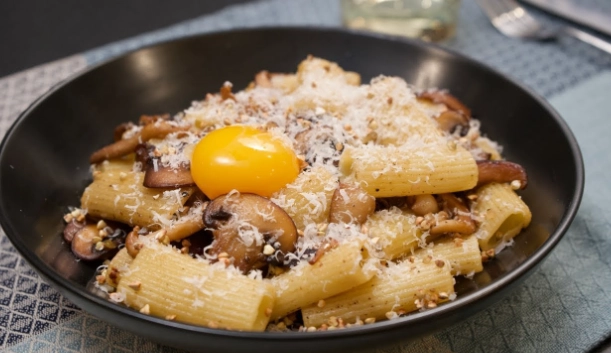
Ingredients List
- 200g (about 1 2/3 cups) fine buckwheat flour, plus extra for dusting
- 2 large eggs, at room temperature
- 1 large egg yolk
- 1/2 teaspoon fine sea salt
Step 1: The Mound & The Well
Pile your flour on the board. Make a big well in the center—like a volcano crater. You want sturdy walls to hold the eggs. Crack the whole eggs and extra yolk into the well. Add the salt right on top of the eggs.
Why the well method? It slowly incorporates the flour from the inside out, preventing a dry, crumbly mess.
Step 2: The Initial Mix
Using a fork, gently beat the eggs and salt, still contained within the well. Now, start pulling in tiny amounts of flour from the inner wall of the well. Do this slowly. Patience is key. The mixture will go from liquidy to pasty to a very soft, shaggy dough.
Step 3: Kneading (The Gentle Art)
Once most of the flour is incorporated and you can handle it, use your hands to bring it all together. It will be sticky. This is normal. Dust your board and hands lightly with buckwheat flour. Now, knead. But forget the hearty push-and-fold of bread dough.
For buckwheat egg pasta dough, use a gentle, pressing motion. Push the heel of your hand into the dough, then fold it over. Turn. Repeat. You're not developing gluten, you're just evenly hydrating the flour and distributing the egg binder.
Knead for 5-8 minutes until the dough is smooth and slightly elastic. It should feel like firm Play-Doh, not soft bread dough. If it's cracking, it's too dry (add a few drops of water). If it's a sticky mess, add a tiny sprinkle of flour.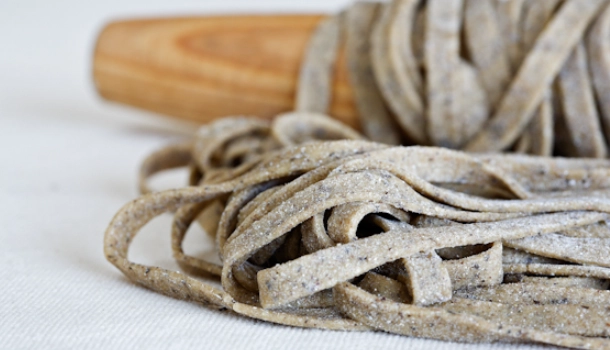
Step 4: The Rest
Wrap the dough tightly in plastic wrap or put it in a sealed container. Let it rest at room temperature for at least 30 minutes. This is non-negotiable. It allows the flour to fully absorb the moisture and relaxes the dough, making it much easier to roll out without springing back.
Step 5: Rolling & Cutting
Divide the rested dough into 2 or 3 pieces. Keep the pieces you're not working with covered. Lightly dust your surface with buckwheat flour. Start rolling.
With a Rolling Pin: Roll from the center out, turning the sheet frequently to maintain an even shape. Aim for about 1/16 inch thick (roughly 1.5mm). You should be able to vaguely see your hand through it.
With a Machine: Start on the widest setting. Dust the dough lightly. Roll it through. Fold it into thirds (like a letter), turn it 90 degrees, and roll it through again on the same setting. Do this 2-3 times to strengthen the sheet. Then, progressively move to thinner settings, dusting only if absolutely necessary to prevent sticking. Stop at setting #6 or #7 on most machines.
Once rolled, let the sheet dry for just 2-3 minutes until it's no longer sticky but still pliable. Dust lightly with flour, loosely roll it up, and cut across the roll to your desired width. Unfurl your noodles immediately and toss them with a little extra flour to prevent sticking.
Step 6: Cooking Your Masterpiece
Bring a large pot of well-salted water to a boil. Fresh pasta cooks fast. Gently drop in the noodles. They'll sink and then float. Cook for just 2 to 4 minutes. Taste one! It should be tender but still have a slight bite (al dente). Drain, but don't rinse. Toss immediately with your chosen sauce.
Flour Blending Guide: Choosing Your Path
Not sure which flour mix to use? This table breaks down the most common options and what to expect from your buckwheat egg pasta recipe with each.
| Flour Blend | Ratio (Buckwheat:Other) | Best For | Texture & Flavor Notes | Difficulty |
|---|---|---|---|---|
| Pure Buckwheat | 100:0 | Gluten-free purists, traditional pizzoccheri | Most nutty flavor, tender but can be crumbly. Requires careful handling. | High |
| Buckwheat + "00" Flour | 75:25 or 80:20 | Beginners, anyone wanting easier rolling | Excellent balance. Strong buckwheat flavor with better elasticity and chew. | Medium |
| Buckwheat + All-Purpose | 75:25 | Accessibility (AP flour is everywhere) | Similar to "00" blend, but may be slightly less silky. Still a great result. | Medium |
| Buckwheat + Rice Flour | 70:30 | Gluten-free, seeking a lighter texture | Lighter color, milder flavor. Can be a bit more brittle when dry. | Medium-High |
So, Your Dough is a Mess? Let's Fix It.
Even with the best buckwheat egg pasta recipe, things can go sideways. Here's how to salvage common problems.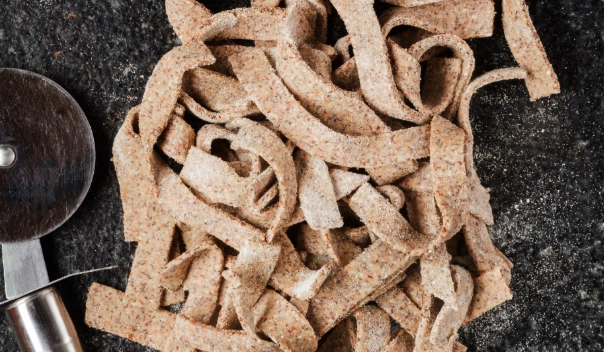
The dough is too dry and crumbly, won't come together. This is the most common issue. Buckwheat flour varies in absorbency. Fix: Make a small well in the crumbly mass. Add a teaspoon of water or a beaten egg white. Mix with your fingers. Repeat if necessary, drop by drop. It's easier to add moisture than flour.
The dough is a sticky, gluey nightmare. You probably added too much liquid or didn't use enough flour during kneading. Fix: Don't add a lot of flour at once. Dust your board and hands lightly, knead for a minute, let it rest for 5 minutes. The flour will absorb moisture. Repeat if needed. A sticky dough often becomes workable after its rest.
It tears easily when I roll it. The dough is too dry or didn't rest enough. It could also be rolled too thin, too fast. Fix: Crumble it back up, sprinkle with a few drops of water, re-knead gently, wrap, and let it rest longer (45-60 mins). When rolling, don't force it. If it resists, let it relax for a minute on the board.
The cooked pasta is mushy. You overcooked it. Fresh buckwheat pasta cooks in 2-3 minutes. Test early and often. Also, ensure your water is at a vigorous boil before adding the pasta.
Answering Your Buckwheat Pasta Questions
Can I make this buckwheat egg pasta recipe without eggs for a vegan version?
You can try, but it's tough. Eggs are the primary binder. Substitutes like flax eggs or a mix of water and oil might hold it together for thick, short shapes like maltagliati, but rolling out thin sheets for long noodles will be very challenging. I haven't found a perfect vegan substitute that replicates the texture.
How do I store fresh buckwheat pasta?
To cook later the same day: Lay the cut noodles in nests on a floured baking sheet. To dry: Hang them on a drying rack or lay them out for 24-48 hours until completely brittle, then store in an airtight container. They'll keep for a month. To freeze: Freeze the nests on a sheet, then transfer to a bag. Cook from frozen, adding a minute to the cooking time.
What's the best sauce for buckwheat pasta?
Its earthy flavor loves rich, savory companions. Think beyond tomato. Brown butter with sage is a classic. A creamy mushroom or walnut sauce. A hearty ragù (especially with game). Cabbage, potatoes, and fontina cheese is the legendary pizzoccheri combo. Even a simple garlic, olive oil, and Parmesan works.
Is buckwheat pasta healthier than regular pasta?
"Healthier" is subjective. It's different. It's naturally gluten-free, higher in fiber and certain minerals like magnesium, and has a lower glycemic index than refined white pasta. But it's still carbohydrate-dense. The eggs add protein and fat. It's a more nutrient-dense choice, as part of a balanced diet. For detailed nutritional comparisons, resources like the Oldways Whole Grains Council provide excellent information.
My pasta turned out gray! Is it safe to eat?
Yes, completely safe. Buckwheat contains compounds that can react and darken when exposed to air and moisture during kneading and rolling. It's a natural oxidation process. Some batches do it more than others. It doesn't affect flavor.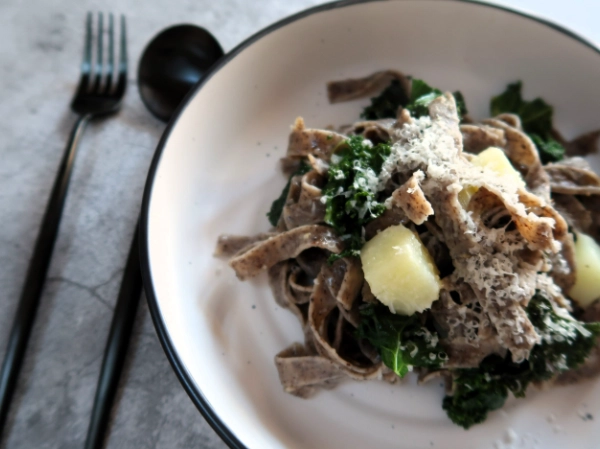
Taking It Further: Creative Twists on the Basic Recipe
Once you've mastered the basic buckwheat egg pasta recipe, try these ideas.
- Herb-Infused: Add finely chopped rosemary or thyme to the dry flour.
- Black Pepper: Crack a generous amount of fresh black pepper into the flour for a spicy kick.
- Squid Ink Buckwheat: Add a sachet of squid ink to the eggs for dramatic black pasta with a briny hint.
- Beetroot Powder: For a stunning pink/purple hue and a subtle earthy sweetness, mix a tablespoon of beetroot powder with the flour.
The beauty of this buckwheat egg pasta recipe is that it feels like a real accomplishment. It connects you to an old tradition—the Italian pasta-making heritage has deep roots in using local, peasant grains like buckwheat in the Alps. You're not just making dinner; you're keeping a craft alive.
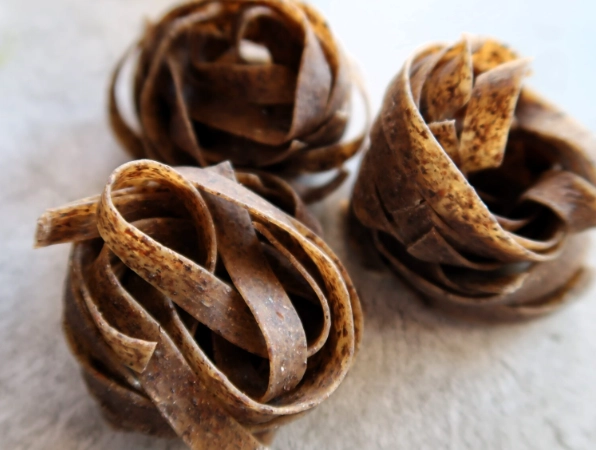 So, give it a shot. Embrace the stickiness, respect the rest, and roll with patience. That first forkful of homemade buckwheat tagliatelle, tangled in a wild mushroom sauce, will make every minute of the process worth it. I promise.
Reader Comments