Let's talk about katsudon. It's not just food. It's a feeling. That moment you crack through a golden, airy crust into juicy pork, all soaked in a sweet-savory sauce over steaming rice. It's the ultimate Japanese comfort food. But here's the thing – most recipes online get a crucial part wrong. They treat the tonkatsu (the fried pork cutlet) and the donburi (the bowl) as separate steps. The magic happens when they become one. I learned this the hard way, after years of serving good, but not great, katsudon. Today, I'm sharing everything so you can skip my mistakes.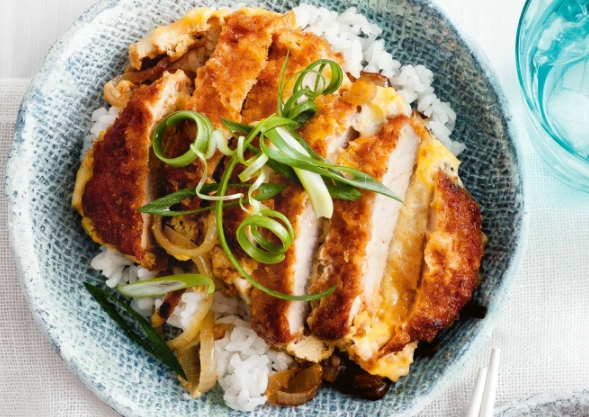
What's Inside This Guide
What Exactly Is Katsudon? More Than Just a Pork Cutlet Bowl
Katsudon (カツ丼) is a "donburi" – a Japanese rice bowl dish. Its name is a portmanteau: "katsu" (from tonkatsu, the breaded pork cutlet) and "don" (from donburi). The standard version involves a freshly fried tonkatsu simmered briefly in a seasoned broth of dashi, soy sauce, mirin, and sugar, along with sliced onions. Beaten egg is then poured over everything, cooked just until set, and the whole mixture is slid over a bowl of hot rice.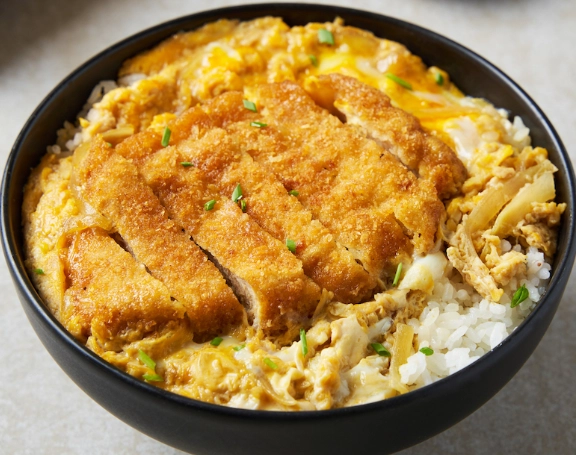
But its cultural weight is heavier than the bowl itself. In Japan, eating katsudon is a popular good-luck ritual before important events like exams or job interviews. This is because "katsu" is a homophone for the verb "to win" (勝つ). It's edible encouragement.
There are also regional twists. In Gyūdon-style Katsudon, the sauce is richer and darker, similar to the beef bowl chain Yoshinoya. Shōgayaki-don isn't technically katsudon, but a common point of confusion – it uses ginger-soy marinated pork slices, not breaded cutlets. The one variation worth seeking out is Miso Katsu, a Nagoya specialty where the cutlet is served with a thick, nutty, red miso sauce. It's a completely different, deeply savory experience.
The Step-by-Step Recipe for Perfect Homemade Katsudon
This isn't just a list of ingredients and steps. It's the method that finally gave me restaurant-quality results at home. The key is timing and temperature control.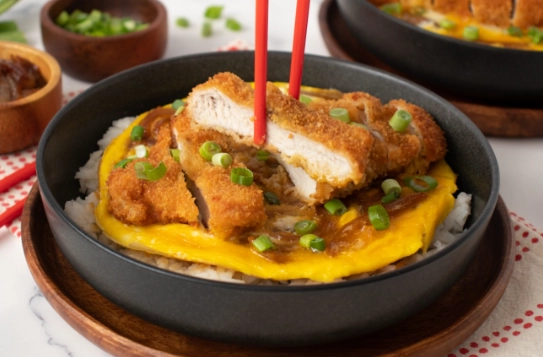
Gathering Your Ingredients (For 2 generous bowls)
For the Tonkatsu:
- 2 pork loin or fillet cutlets (about 1-inch thick, 180g each)
- Salt and black pepper
- All-purpose flour (for dusting)
- 1 large egg, beaten (for coating)
- Japanese panko breadcrumbs (about 1.5 cups) – this is non-negotiable. Regular breadcrumbs won't give you that signature shaggy, ultra-crisp texture.
- Neutral oil for deep-frying (like canola or peanut oil)
For the Donburi Sauce & Assembly:
- 1/2 cup dashi stock (If you use instant dashi granules, follow packet instructions. For a quick hack, use 1/2 tsp granules in 1/2 cup warm water.)
- 1.5 tbsp soy sauce
- 1.5 tbsp mirin
- 1 tbsp sugar (adjust to taste)
- 1/2 a medium onion, thinly sliced
- 2 large eggs, lightly beaten in a separate bowl
- 2 servings of freshly cooked, hot Japanese short-grain rice
- Optional garnish: Mitsuba (Japanese wild parsley) or thinly sliced scallions
The Process: A Dance Between Fryer and Pan
Step 1: Prepare the Pork. Trim excess fat. Using the back of a knife or a meat tenderizer, gently pound the cutlets to an even 3/4-inch thickness. This ensures even cooking. Don't pulverize it. Season both sides well with salt and pepper.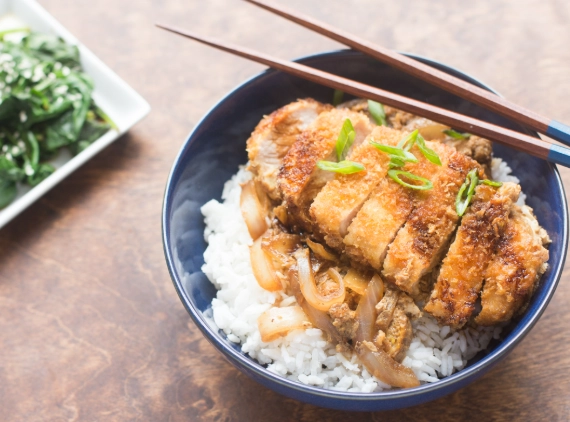
Step 2: The Breading Station (Mis en place is critical). Set up three shallow dishes in this order: flour, beaten egg, panko. Dredge a cutlet in flour, shaking off the excess. Dip it completely in the egg, letting the excess drip off. Finally, press it firmly into the panko, ensuring an even, generous coating. Gently press the panko onto the meat so it adheres. Place on a wire rack. Repeat for the second cutlet. Let them rest for 5-10 minutes – this helps the coating set and prevents it from falling off during frying.
Step 3: Fry the Tonkatsu. In a heavy-bottomed pot or deep fryer, heat about 2 inches of oil to 340°F (170°C). The temperature is vital. Too hot, and the outside burns before the inside cooks. Too low, and the pork absorbs oil and becomes greasy. Carefully lower one cutlet into the oil. Fry for about 5-6 minutes, turning occasionally, until deeply golden brown and the internal temperature reaches 145°F (63°C). Remove and drain on a wire rack, not paper towels. Paper towels trap steam and make the bottom soggy. Let the oil return to temperature before frying the second cutlet.
Step 4: Simmer the Sauce & Assemble. This is where most home cooks rush. While the tonkatsu rests, combine dashi, soy sauce, mirin, and sugar in a small saucepan or a small frying pan (one that will fit a cutlet). Heat until simmering and the sugar dissolves. Add the sliced onions and simmer for 2-3 minutes until they start to soften.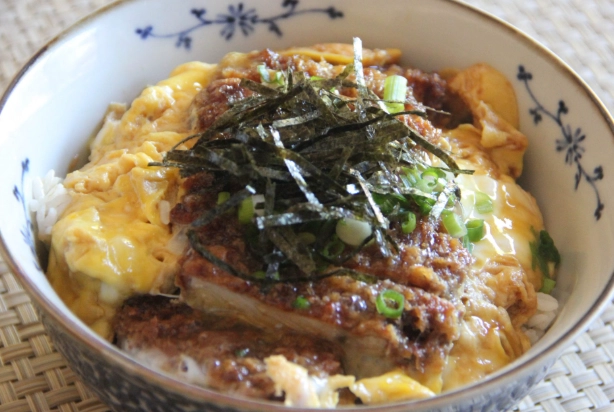
Slice your hot tonkatsu into 1-inch wide strips. Do not let it cool completely. Place the sliced tonkatsu on top of the simmering onions in the pan. Pour half of the lightly beaten eggs evenly over the cutlet and onions. Immediately cover the pan with a lid. Cook for just 45-60 seconds, until the egg is softly set but still slightly runny. The residual heat will continue cooking it.
Step 5: The Grand Finale. Have your bowl of hot rice ready. In one confident motion, slide the entire contents of the pan – sauce, onions, egg, and tonkatsu – directly over the rice. Garnish. Repeat the process for the second bowl. Serve immediately. The contrast between the crispy pork, soft egg, and hot rice is everything.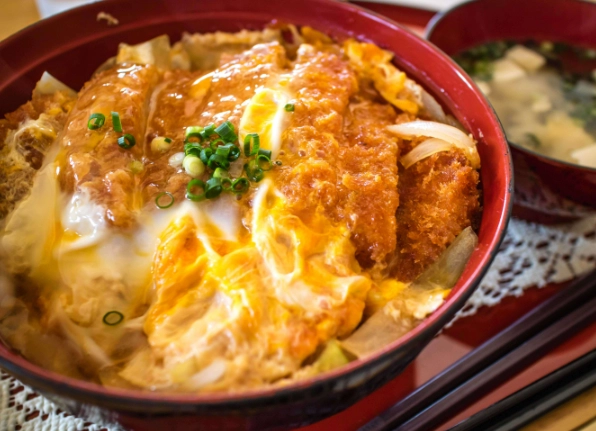
The 3 Most Common Mistakes (And How to Avoid Them)
After teaching this recipe for years, I see the same errors pop up.
1. Frying at the Wrong Temperature. Guessing the oil temp is a recipe for failure. Use a thermometer. 340°F (170°C) is the sweet spot. If you don't have one, test by dropping a panko breadcrumb in the oil. It should sizzle vigorously and rise to the surface within 2-3 seconds.
2. Letting the Tonkatsu Get Soggy Before Assembly. The tonkatsu must be hot when it goes into the simmering sauce. If it's cooled down, the crust immediately starts absorbing liquid and turns mushy. Time your cooking so the sauce is ready just as the tonkatsu comes out of the fryer and is sliced.
3. Overcooking the Egg. The egg should be softly set, almost like a creamy sauce that binds everything together. If you cook it until it's firm and dry, you lose the luxurious texture that defines a great katsudon. As soon as you see the egg set around the edges, it's done. The lid and residual heat do the rest.
Where to Eat the Best Katsudon in Japan: A Curated Shortlist
Sometimes, you need to taste the benchmark. If you're traveling to Japan, these spots are worth a pilgrimage. I'm skipping the famous chains to focus on specialists.
| Restaurant Name | Location / Address | What Makes It Special | Approx. Price | Notes |
|---|---|---|---|---|
| Katsukura | Multiple locations, incl. Kyoto Station Bldg. 11F & Shinjuku Takashimaya. The Kyoto one is at Kyoto-shi, Shimogyo-ku, Karasuma-dori, Shiokoji-sagaru, Higashishiokoji-cho, 848. | You grind your own sesame seeds for the dipping sauce (for the tonkatsu part). The pork quality is exceptional, and you can choose your cut (loin or fillet) and breadcrumb coarseness. | ¥1,500 - ¥2,200 | Often has queues. Go right at opening. Their set meals are fantastic value. |
| Maisen (for Tonkatsu) | Head to the original in Harajuku: 4-8-5 Jingumae, Shibuya-ku, Tokyo. It's in a converted old public bathhouse. | Widely regarded as one of Tokyo's tonkatsu temples. While they specialize in tonkatsu plates, their katsudon (often a lunch special) is sublime. The crust is impossibly light. | ¥1,800 - ¥3,000 | The building itself is an experience. Expect a wait, but it moves fast. |
| Saboten | Countless locations across Japan. The Shinjuku branch is convenient: 3-28-10 Shinjuku, Shinjuku-ku, Tokyo. | A reliable, high-quality chain. Consistently excellent, with a great cabbage salad refill system. A safe and delicious bet if you're not near a specialist. | ¥1,300 - ¥2,000 | No-fuss, efficient, and the quality is always there. Perfect for a reliable meal. |
| Katsuya (in Kichijoji) | 1-1-8 Kichijoji Honcho, Musashino-shi, Tokyo. In the Harmonica Yokocho alley. | A tiny, standing-only bar in a famous alley. It's all about the vibe and a quick, delicious, and cheap katsudon fix. The egg is always runny and perfect. | ¥850 - ¥1,000 | Cash only. It's cramped and loud, but it's a true local experience. Go for lunch. |
For the most authentic research, I always check the latest reviews and rankings on local platforms like Tabelog (Japan's equivalent of Yelp, but far more critical) or consult food-focused travel guides from publishers like Lonely Planet, which often have updated recommendations.
Your Katsudon Questions, Answered
My pork cutlet always ends up dry inside. How do I keep it juicy?
Two things: thickness and temperature. First, use a cutlet at least 3/4-inch thick. Thin cutlets overcook in seconds. Second, and this is crucial, fry at 340°F (170°C), not higher. A violent, high-temperature sear will lock in juices for a steak, but for a breaded cutlet, it just burns the panko before the center reaches a safe temperature, forcing you to overcook it. The moderate temperature allows the inside to cook gently while the outside crisps. Using pork loin with a bit of marbling helps too.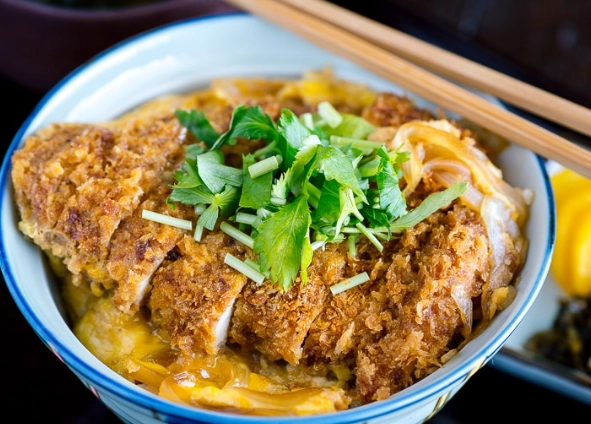
Can I make katsudon with chicken or tofu?
Absolutely. For chicken, use a boneless, skinless chicken thigh, pounded to even thickness. It's more forgiving than breast meat. For tofu, you need extra-firm or firm tofu. Press it for 30 minutes to remove water, cut into thick slabs, and follow a similar flour-egg-panko process. You may need to pan-fry instead of deep-fry to handle it gently. The simmering sauce and egg method works exactly the same. It's a great vegetarian alternative.
My panko crust falls off during frying. What am I doing wrong?
The main culprit is usually not letting the breaded cutlet rest before frying. That 5-10 minute rest allows the egg layer to slightly dry and glue the panko on. Also, make sure you're shaking off the excess flour after the first dredge. A thick layer of dry flour prevents the egg from adhering to the meat. Finally, when you press the cutlet into the panko, really press it in. Don't just sprinkle it on.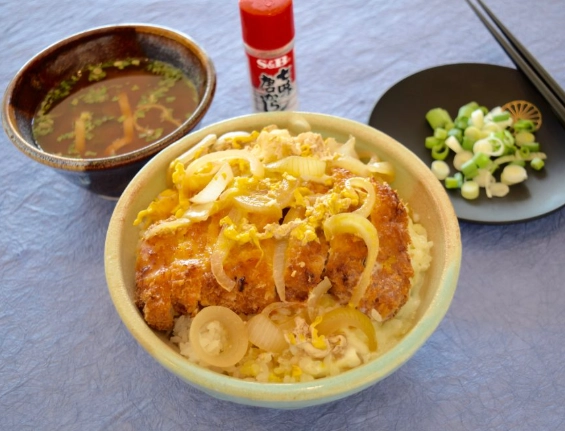
What's the best side dish to serve with katsudon?
In Japan, it's almost always a simple, shredded cabbage salad (often with a sesame or ponzu dressing) and a bowl of miso soup. The fresh, crisp cabbage cuts through the richness of the fried pork and egg beautifully. Pickled vegetables (tsukemono), like takuan (yellow daikon radish), are also a classic, palate-cleansing accompaniment. Don't overcomplicate it – the bowl is the star.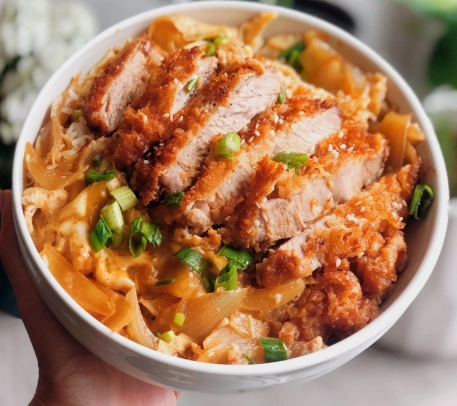
Reader Comments