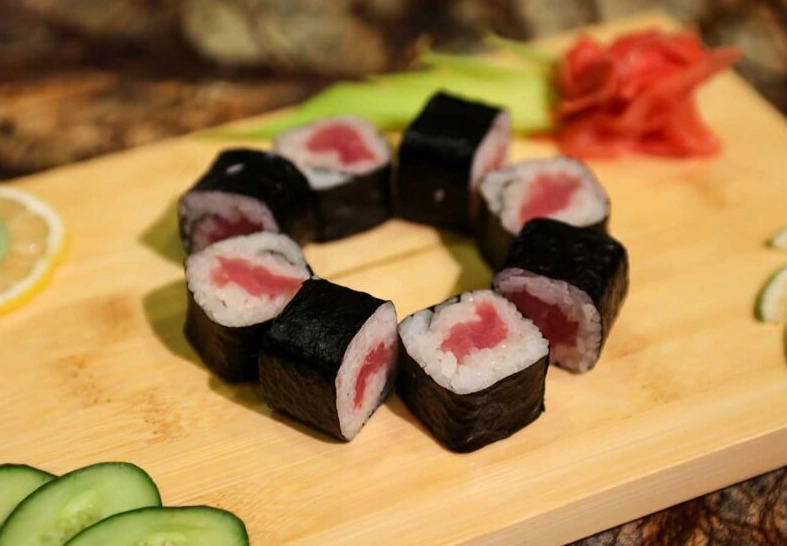
You see it on every sushi menu, often listed first under rolls: Tekka Maki. It looks simple – just a cylinder of rice and dark red tuna wrapped in nori seaweed. If you're new to sushi, you might wonder what the fuss is about. If you're a regular, you might order it without a second thought. But what is tekka maki sushi, really? It's not just a basic roll. It's a masterclass in minimalism, a test of ingredient quality, and a piece of edible history from the bustling streets of old Tokyo. Let's strip it down and see why this humble roll deserves your full attention.
Your Quick Guide to Tekka Maki
The Surprising Story Behind the Name "Tekka"
Most sushi names are pretty straightforward. "Sake" is salmon. "Ebi" is shrimp. But "tekka"? That one's a curveball. It doesn't mean "tuna." The word for tuna is "maguro." So what's going on?
"Tekka" (鉄火) literally translates to "iron fire" or "red-hot iron." The story goes that this roll was a favorite snack in the gambling dens ("tekkaba") of the Edo period. Gamblers needed food they could eat with one hand, leaving the other free for... other activities. The vibrant red color of the tuna against the white rice and black nori was said to resemble red-hot metal. Some also say the name reflects the fiery, intense atmosphere of those places.
This origin gives tekka maki its character. It's fast food, but of the highest order. It's built for convenience without sacrificing flavor. Every element has to be perfect because there's nowhere to hide. No creamy sauces, no crunchy tempura bits, no avocado – just fish, rice, and seaweed.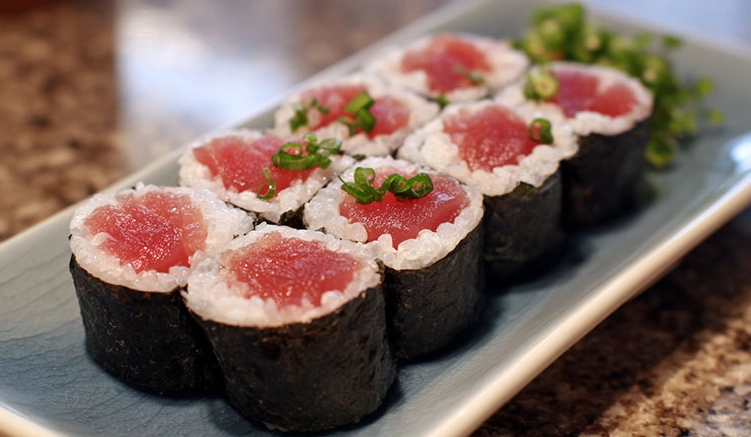
The Heart of the Roll: Understanding Tuna Cuts
This is where most restaurants and home cooks drop the ball. They use any piece of tuna. But the cut makes all the difference. Not all maguro is created equal for tekka maki.
For the ideal roll, you want akami. Akami is the lean, deep red meat from the back of the fish. It has a clean, meaty flavor and firm texture that holds up beautifully when sliced and rolled. It's less fatty than other cuts, which is actually a benefit here – you don't want the rice to become greasy.
| Tuna Cut (Japanese) | Description | Best Used For | Why It Works (or Doesn't) for Tekka Maki |
|---|---|---|---|
| Akami | Lean, dark red meat from the back and sides. | Perfect for Tekka Maki. Also great for sashimi. | Firm texture, clean taste, holds shape, doesn't overpower the rice. |
| Chūtoro | Medium-fatty belly meat. Pinkish-red with marbling. | Premium sashimi, nigiri. | Too rich and soft for a roll. The fat can make the nori soggy. |
| Ōtoro | Very fatty belly meat. Light pink, heavily marbled. | Ultra-premium sashimi. | Overkill. Expensive, melts too easily, texture clashes with the roll structure. |
| Negitoro | Scraped fatty tuna belly mixed with green onions. | Gunkan (battleship) sushi, hand rolls. | Different dish entirely. The paste-like texture is wrong for tekka maki. |
A quick note on sustainability: Bluefin tuna (hon-maguro) is often celebrated but faces serious overfishing pressures. For a daily tekka maki, consider asking for yellowfin tuna (kihada) or bigeye tuna (mebachi). They have excellent akami cuts and are often more sustainable choices. The Monterey Bay Aquarium Seafood Watch program is a great resource for current recommendations.
I once visited a small sushi-ya in Tokyo's Tsukiji outer market (now relocated to Toyosu) where the chef refused to make tekka maki with anything but the day's specific batch of akami from a certain supplier in Ōma. That level of specificity seemed extreme, but after tasting it, I understood. The flavor was pure and concentrated, like the essence of the sea.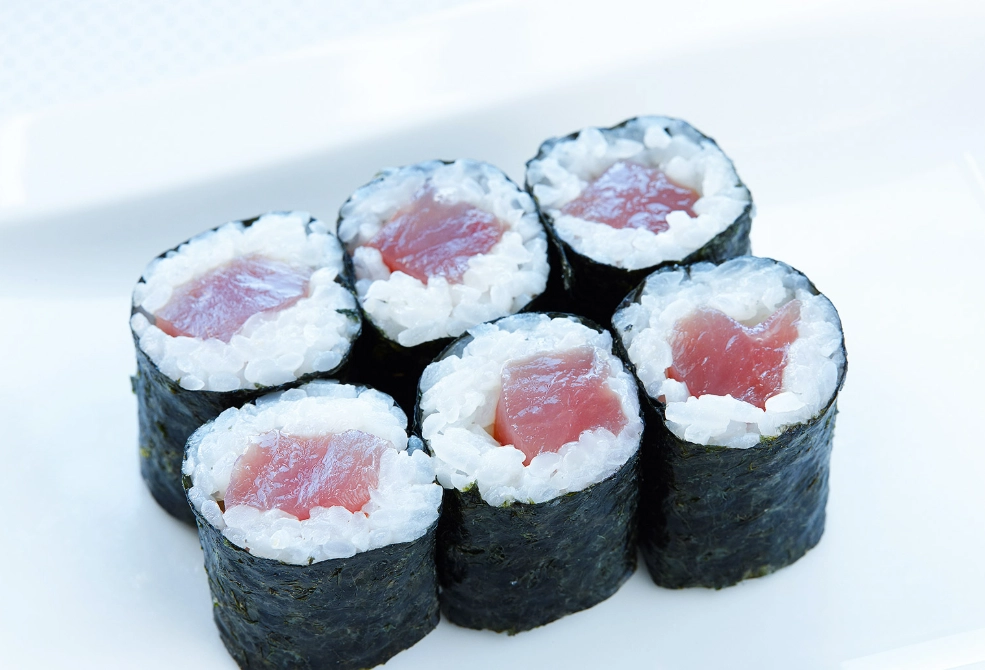
How to Make Authentic Tekka Maki at Home
You don't need a sushi master's license. You need good ingredients and attention to three things: rice, knife, and pressure.
The Rice is the Foundation
Sushi rice (shari) isn't just steamed rice. It's seasoned with a mix of rice vinegar, sugar, and salt. The balance is key. Too much sugar and it tastes like dessert. Too much vinegar and it overpowers the tuna. The rice should be at body temperature when you roll – cold rice is hard and flavorless, hot rice will cook the fish and wilt the nori.
The Cut is Everything
Don't just slice the tuna block into rectangles. For the best texture and appearance, you need to sogigiri – slice against the grain. Identify the direction of the muscle fibers and cut perpendicular to them. This shortens the fibers, making the tuna tender to bite through, rather than stringy. Your knife must be razor-sharp. A dull knife will crush the flesh, ruining its texture and causing it to bleed onto the rice.
Rolling with Confidence, Not Force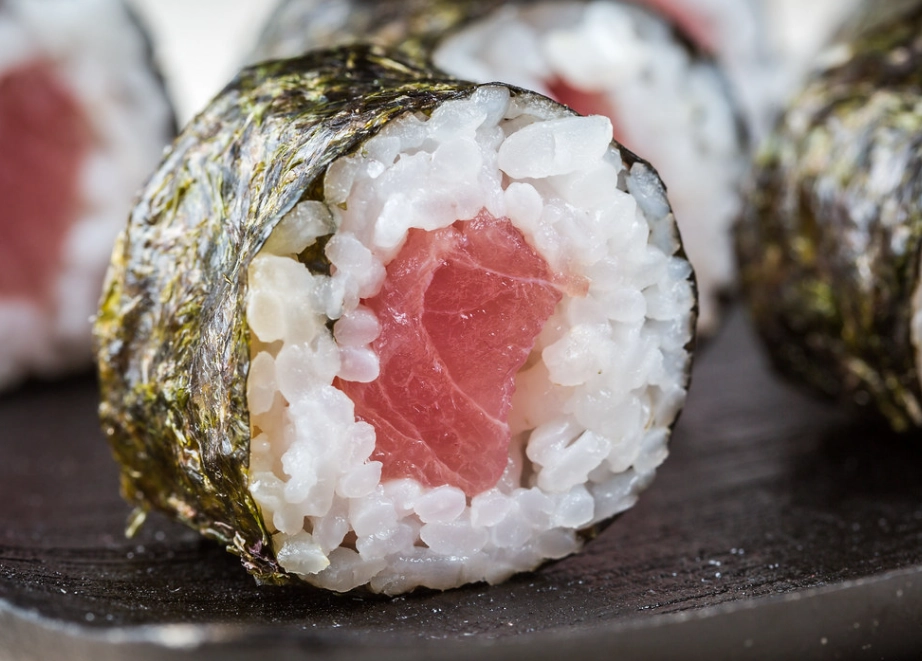
Lay your nori shiny-side down on the makisu (bamboo mat). Spread a thin, even layer of rice, leaving a 1cm border at the top. Place your tuna baton in the center. Now, using the mat, roll from the bottom edge, tucking the fillings in tightly with your fingers. Apply firm, even pressure as you roll forward to create a compact cylinder. Don't squeeze like you're trying to choke it – you want it tight enough to hold together, but loose enough that each grain of rice isn't smashed.
How to Eat Tekka Maki the Right Way
You can just pop it in your mouth, sure. But a few tweaks elevate the experience.
Dipping Sauce: Turn the roll on its side (so the nori seam is facing you) and lightly dip just the fish-end into your soy sauce. Avoid dunking the rice side. The rice is already seasoned and will soak up too much soy, becoming salty and falling apart.
Wasabi: The classic preparation already has a hint of wasabi spread between the rice and tuna. If you want more, place a small dab directly on the fish after dipping, not into your communal soy sauce dish.
Order of Eating: In a traditional omakase, tekka maki often comes at the end, as a sort of savory palate cleanser or closing note. It's simple and satisfying. At home or in a casual setting, eat it whenever you like, but try it after richer, oilier pieces like salmon or eel. Its cleanness is a wonderful contrast.
3 Common Tekka Maki Mistakes to Avoid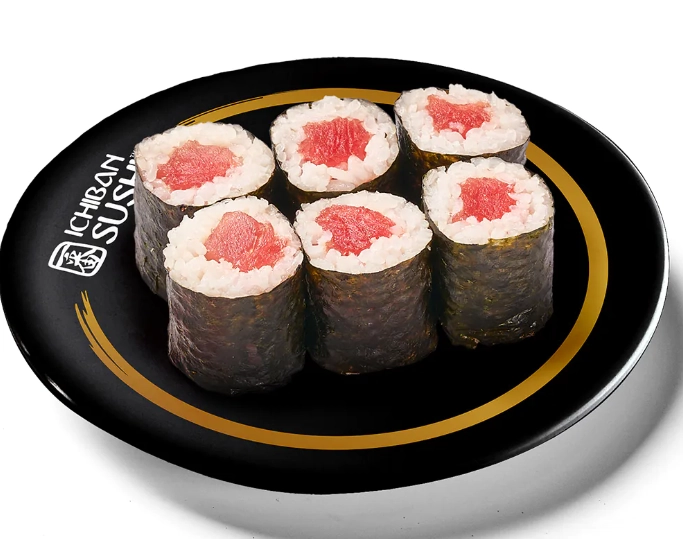
After watching countless people make and eat this roll, I see the same errors again and again.
1. Using low-quality or frozen-and-thawed-multiple-times tuna. This is the biggest sin. The tuna turns a dull, brownish-grey, loses its firmness, and develops a faint metallic or "fishy" taste. Fresh, sushi-grade akami should be a vibrant red and smell clean, like the ocean, not fishy.
2. Slicing with the grain. This turns the tender tuna into a chewy, stringy experience. It's a subtle detail that separates okay sushi from great sushi.
3. Overloading the roll. Tekka maki is meant to be slim. The standard ratio is about 80% rice, 20% tuna by cross-section. A roll that's half tuna is not authentic tekka maki; it's just a thick piece of tuna awkwardly wrapped in rice and nori. The harmony is lost.
I've been served rolls where the tuna was so thick I had to unhinge my jaw. It felt like eating a tuna steak wrapped in paper. That's not the point.
Your Tekka Maki Questions Answered
 Is tekka maki a healthy sushi choice?
So, what is tekka maki sushi? It's more than a simple tuna roll. It's a benchmark. When you sit down at a new sushi bar, order the tekka maki. Look at the color of the tuna. Taste the balance of the rice. Feel the texture. Does the nori crackle? If they get this fundamental, no-frills roll right, you can trust them with the more complicated stuff. It's the sushi equivalent of judging a baker by their plain baguette. In its perfect simplicity, you find the true art of sushi.
Reader Comments