Quick Navigation
- Forget "Best" – What Are You Actually Looking For?
- The Heavyweight Contenders: Breaking Down the Major Brands
- Beyond the Box: The Secret Weapons and Common Pitfalls
- Your Decision Matrix: Which Japanese Curry Should YOU Buy?
- Answering Your Burning Curry Questions (FAQ)
- The Final Simmer: It's Your Curry Journey
Alright, let's talk about one of the great comfort food questions of our time. You're standing in the grocery store aisle, or maybe browsing online, staring at a wall of boxes with Japanese writing and pictures of steaming, rich curry. Your brain is asking the big one: which Japanese curry is the best? It's a simple question with a surprisingly complicated answer. See, the "best" isn't some mythical, universally agreed-upon holy grail. It's deeply personal. It depends on whether you like it sweet or spicy, thick or a bit soupy, packed with complex spices or straightforward and hearty. What's best for a quick Tuesday night dinner with kids might be totally wrong for a solo, indulgent weekend meal where you want to taste every layer of flavor.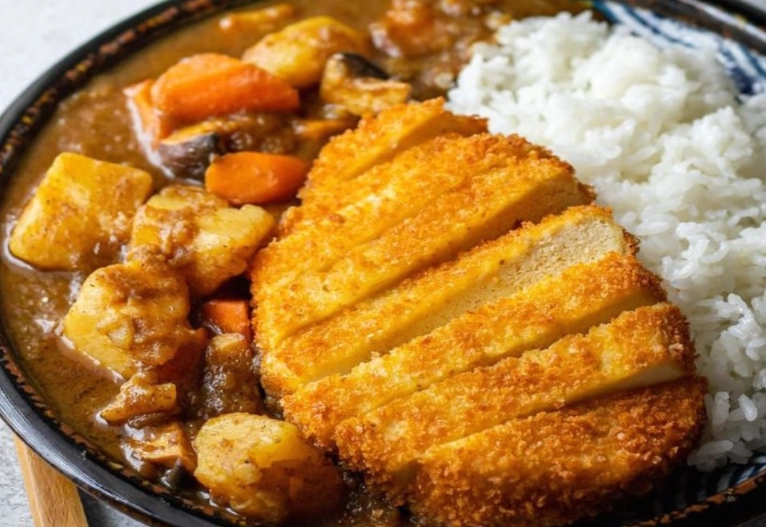
I've been down this rabbit hole more times than I can count. My own kitchen has seen experiments that ranged from triumphant to... well, let's just say the dog looked interested but even he was skeptical. The quest to find the best Japanese curry is a journey, not a destination. And today, I want to be your guide on that journey. We're not just going to list brands. We're going to dig into what makes each one tick, who it's for, and how to match the curry to your mood, your pantry, and your taste buds.
Forget "Best" – What Are You Actually Looking For?
Before we even look at brand names, we need to figure out your curry profile. Japanese curry roux blocks (those are the solid blocks of fat, flour, and spices you melt into your stew) vary across a few key spectrums. Getting this wrong is how you end up with a curry that's too sweet when you wanted savory, or too mild when you were craving heat.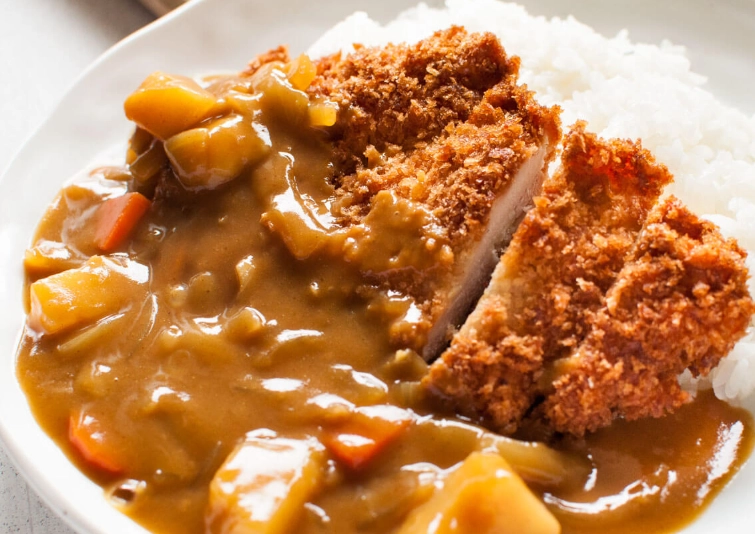
The Flavor Profile Spectrum
Most mass-market Japanese curries sit somewhere between these poles:
Sweet & Fruity vs. Savory & Spicy. This is the big one. Sweet curries often use ingredients like apple, honey, or other fruit purees to balance the spices. They're incredibly mellow, kid-friendly, and comforting. Savory and spicy curries lean more on a backbone of onions (lots of them, caramelized), garlic, and a more pronounced blend of spices like cumin, coriander, and pepper. They have more of a grown-up, complex kick.
Rich & Thick vs. Light & Soupy. The thickness comes from the roux itself – more flour and fat. A thick curry clings to rice and meat beautifully. A lighter, soupier curry is almost like a stew and can be great if you're adding a ton of vegetables. Some people find the very thick ones a bit gluggy or heavy, especially in summer.
The Heat Level Ladder
Don't let the word "spicy" fool you. Japanese curry spicy is not Thai or Indian curry spicy. Their scale is much gentler.
- Mild (甘口 Amakuchi): Barely any heat. All flavor, no burn. The default for families.
- Medium Hot (中辛 Chūkara): A gentle warmth in the background. The perfect gateway for most adults who want a bit more than mild.
- Hot (辛口 Karakuchi): A noticeable, building heat. It won't blow your head off, but you'll know it's there. For those who like a kick.
- Extra Hot (大辛 Ōkara) / Special Hot: Now we're talking. These can actually be quite spicy. Brands like Java Curry and some of Vermont Curry's special editions go here. Proceed with caution if you're sensitive.
So, where do you land? Do you need a crowd-pleasing, sweet mild curry for the whole family? Or are you a heat-seeker wanting the deepest, most complex spice blend you can find? Hold that thought.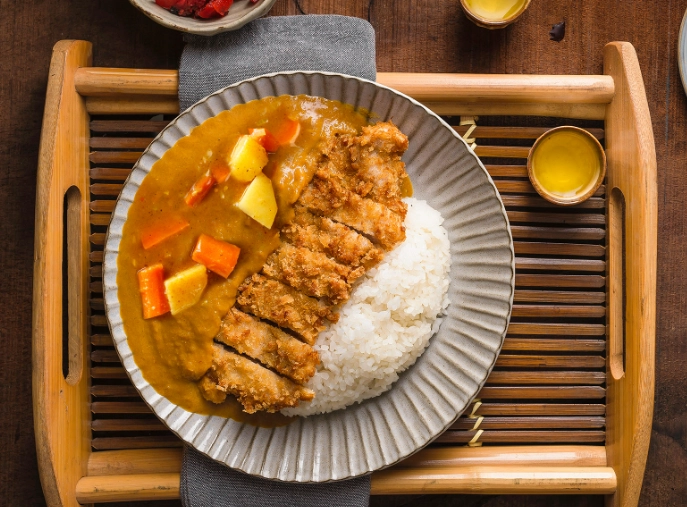
The Heavyweight Contenders: Breaking Down the Major Brands
Okay, now to the main event. These are the brands you'll most commonly find outside of Japan. They're all good, but they're good at different things. I've cooked with all of them, multiple times. Here’s the real, unfiltered breakdown.
| Brand Name | Best Known For | Flavor Profile | Typical Thickness | Who It's Perfect For | My Personal Take |
|---|---|---|---|---|---|
| House Foods Vermont Curry | Its signature sweetness from apple and honey. | Sweet, mild, fruity, incredibly mellow. | Medium-Thick | Families with young kids, first-timers, anyone who dislikes heat. | The ultimate comfort blanket of curries. Sometimes I find it a bit one-note sweet, but it's impossible to hate. |
| S&B Golden Curry | Being the classic, balanced, all-purpose curry. | Well-rounded, slightly sweet, slightly savory. The "gold standard" in more ways than one. | Thick | Almost everyone. It's the safe, reliable choice that rarely disappoints. | It's like the Toyota Camry of curries. Dependable, does the job well, but maybe lacks a bit of personality for my adventurous days. |
| House Foods Java Curry | Robust, spicy, and adult-oriented flavors. | Savory, spicy, complex, with a deeper umami and less sweetness. | Very Thick | Adults who find other curries too sweet, heat lovers, people wanting a more "restaurant-style" depth. | My personal go-to for a satisfying, non-sweet meal. The extra hot version has a proper kick that I really enjoy. |
| Glico Curry Zeppin (Premium) | High-end, restaurant-quality taste in a box. | Rich, multi-layered umami, less reliant on simple sweetness. Often uses multiple fruits and fermented flavors. | Medium (silkier) | Foodies, people willing to pay a bit more for a superior experience, special dinners. | The texture is fantastic – silky, not pasty. The flavor is complex. It feels like a treat. Pricey for a weeknight, though. |
| SB Kokumaru Curry | Extreme thickness and a unique, very sweet profile. | Very sweet, very thick, almost gravy-like. | Extremely Thick | Those who love a curry that sits on top of rice without soaking in, and have a serious sweet tooth. |
See? Already, the answer to "which Japanese curry is the best" starts to splinter.
If you're new to this, just grab a box of S&B Golden Curry in Medium Hot. You can't go wrong. It's the perfect introduction. But if you know you hate sweet food, skip Vermont and go straight for Java. If you want to impress someone, hunt down the Glico Zeppin.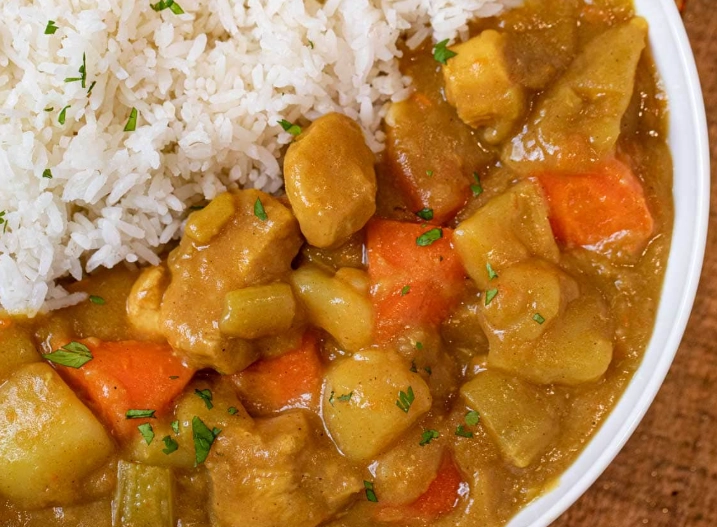
Beyond the Box: The Secret Weapons and Common Pitfalls
The roux box is just the foundation. What you build on it determines whether your curry is just okay or truly great. This is where most home cooks drop the ball, and it's a tragedy.
The Non-Negotiable Step: Building Umami
You cannot, I repeat, cannot just boil some meat and potatoes and chuck in the roux blocks. The result will be bland and sad. The magic is in the base.
- Caramelize Your Onions. Slowly. I'm talking 30-45 minutes on low heat until they're a deep, jammy, brown mess. This is the single most important thing you can do. It adds a profound sweetness and savoriness that no box can provide. I use at least two large onions for a standard pot.
- Use a Flavorful Liquid. Don't just use water. Use a good chicken stock, beef stock, or a dashi broth. The Japanese Curry Association (yes, it's a real thing) often emphasizes the role of dashi as a foundational element. It makes a world of difference.
- Add Umami Boosters. A tablespoon of tomato paste fried with the onions. A splash of soy sauce or Worcestershire sauce (Tonkatsu sauce works amazingly) added at the end. A teaspoon of instant coffee or a square of dark chocolate stirred in with the roux. These are chef's secrets that add layers of complexity.
The Ingredient Timing Problem
If your potatoes are mush and your carrots are crunchy, you messed up the timing. Hard vegetables (carrots, potatoes) need longer to cook. Add them early with the liquid. Softer vegetables (bell peppers, zucchini) or things you just want to warm through (peas, corn) go in right before you add the roux, or even after.
Meat is another story. Stewing beef needs to simmer for over an hour to become tender. Chicken thigh can cook in 20-30 minutes. If using quick-cooking protein like shrimp or thin pork slices, add them at the very end, just to cook through.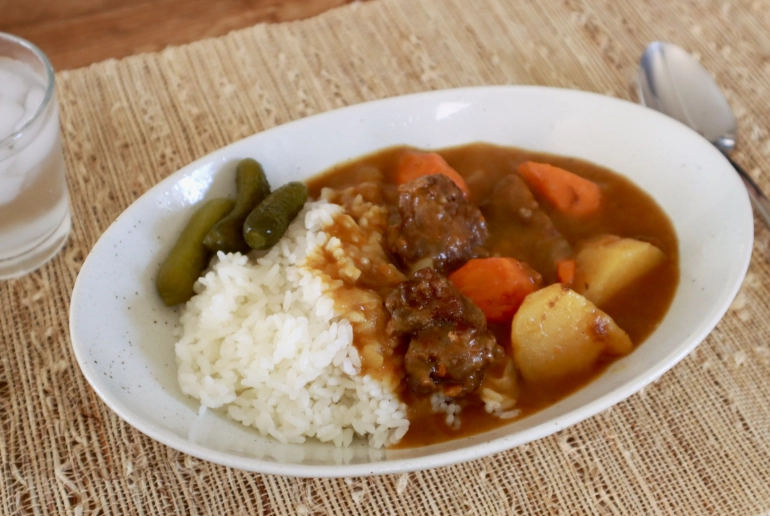
So you see, the brand of roux is maybe 50% of the battle. Your technique is the other 50%. A well-made Java can beat a lazily made Golden Curry any day.
Your Decision Matrix: Which Japanese Curry Should YOU Buy?
Let's make this practical. Stop thinking about "best." Start thinking about "best for this situation." Here’s a quick-fire guide.
You're cooking for kids or very picky eaters.
Verdict: House Foods Vermont Curry (Mild). Its sweetness is a universal kid-pleaser. The mild heat (or lack thereof) won't scare anyone. It's the diplomatic choice.
You want the most authentic, restaurant-style depth.
Verdict: House Foods Java Curry (Medium Hot or Hot). Or, if you can find and afford it, Glico Curry Zeppin. These have the complexity and savory punch that often mimics what you get in good curry shops in Japan. Don't forget the caramelized onions!
You're on a budget and need reliability.
Verdict: S&B Golden Curry. It's widely available, often the cheapest, and consistently good. It's your workhorse.
You love thick, clingy sauces.
Verdict: S&B Kokumaru or Java Curry. Both are known for their viscosity. They coat every grain of rice.
You're a heat seeker.
Verdict: Java Curry (Extra Hot) or explore the "Special Hot" variants from Vermont or Golden Curry. Read the box carefully – some brands have a "Super Spicy" line that actually delivers.
Still unsure?
Buy the small boxes. Many brands sell smaller packs with 2-4 servings. Buy a Vermont, a Golden, and a Java. Cook them over successive weeks. Treat it like a personal taste test. Take notes. Which one did you look forward to finishing? That's your winner.
Answering Your Burning Curry Questions (FAQ)
The Final Simmer: It's Your Curry Journey
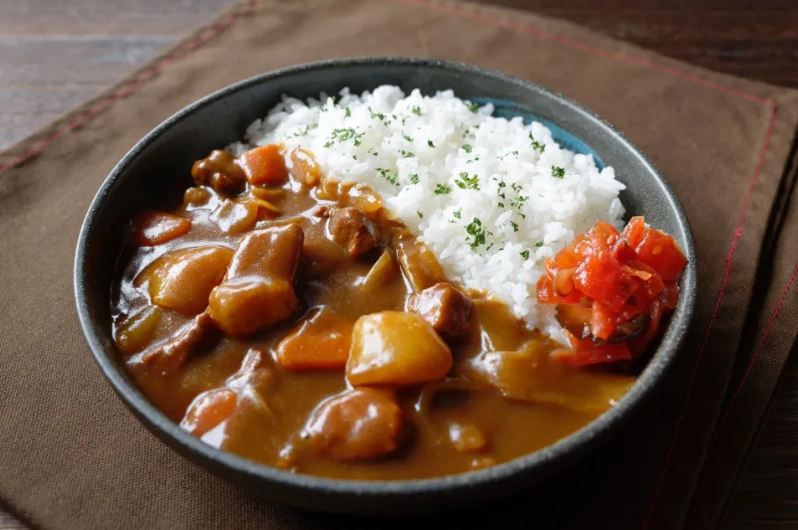
Look, at the end of the day, my opinion doesn't matter. My favorite is House Foods Java Curry in Medium Hot, with a mountain of caramelized onions and a side of tangy fukujinzuke pickles. But that's me. You might take one bite and think it's too bitter, not sweet enough. You might fall head over heels for the gentle embrace of Vermont Curry.
The question "which Japanese curry is the best?" is the start of a fun, delicious experiment. It's an excuse to try new things, to tweak and adjust, to make a mess in your kitchen and end up with a pot of something warm and wonderful.
So don't stress about finding the one true answer. Grab a box that sounds interesting based on what we talked about. Cook it with a little extra love. Taste it. Adjust next time. Maybe you'll become a Golden Curry loyalist. Maybe you'll be a Java devotee. Maybe you'll start mixing half a block of Vermont with half a block of Java to get your perfect sweet-spicy balance (a pro move, by the way).
Now, if you'll excuse me, all this talk has made me hungry. I think I know what I'm making for dinner tonight. I wonder which Japanese curry is the best... for right now.
Reader Comments