Let's get this out of the way first, because I know it's the main reason you're here. You're staring at a beautiful plate of thinly sliced, deep red beef, maybe at a fancy restaurant or in a recipe you're thinking of trying. The edges are subtly browned, but the center is undeniably, vividly red. And the question pops into your head: is beef tataki raw?
In This Article
- What Exactly Is Beef Tataki? It's More Than Just "Seared"
- So, Is the Beef in Tataki Safe to Eat? Addressing the Elephant in the Room
- Why Would Anyone Eat It? The Flavor and Texture Experience
- How to Make Beef Tataki at Home (Safely)
- Frequently Asked Questions (FAQs)
- Final Verdict: To Try or Not to Try?
The short, slightly annoying answer is: yes and no. It's not raw in the same way a piece of sashimi-grade tuna is raw. But it's also not cooked through like a well-done steak. Beef tataki occupies this fascinating, delicious, and sometimes confusing middle ground. If you're someone who gets nervous about undercooked meat (and I don't blame you, food safety is serious), this article is for you. We're going to dig deep, past the simple yes/no, and look at exactly what beef tataki is, how it's made, why it's (usually) safe, and what it actually tastes like. I'll even throw in some personal kitchen disasters so you can learn from my mistakes.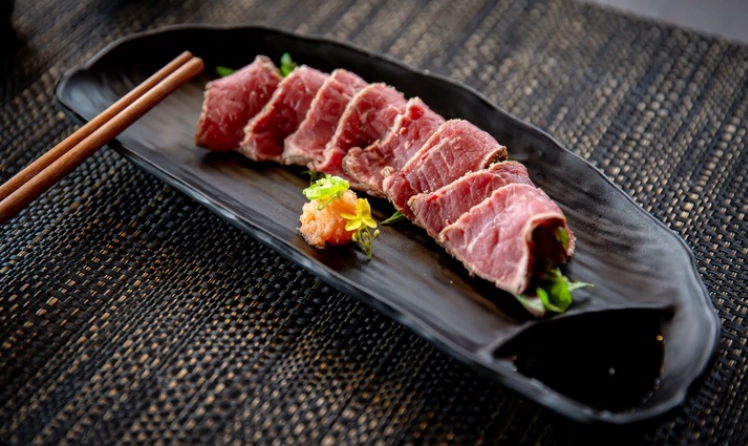
I remember the first time I ordered it. I was trying to impress a date, feeling adventurous. The waiter described it as "seared and marinated." When it arrived, I had a mini panic attack. It looked raw. My date dove right in, but I was hesitant. Was I about to eat raw beef? Was that safe? Turns out, my worries were mostly unfounded, but they were born from not really understanding the process. That's what we're going to fix today.
What Exactly Is Beef Tataki? It's More Than Just "Seared"
Before we can fully answer "is beef tataki raw," we need to know what we're talking about. "Tataki" (たたき) is a Japanese preparation method. The word itself means "pounded" or "beaten into pieces," which refers to an older style of preparing fish. For beef, the term has evolved. At its core, beef tataki involves taking a high-quality cut of beef—almost always a lean, tender cut like filet mignon (tenderloin) or sometimes sirloin—and subjecting it to a very brief, intensely hot sear.
We're talking seconds per side in a blazing hot pan, over a grill, or with a culinary torch. The goal isn't to cook the meat through. The goal is to create a thin, flavorful crust on the very outside while leaving the entire interior completely untouched by heat. After this flash-searing, the meat is plunged into an ice bath or chilled very rapidly. This stops the cooking process dead in its tracks. No residual heat is allowed to creep inward. Then, it's sliced paper-thin against the grain and served, often with a dipping sauce like ponzu (a citrus-soy sauce) and garnishes like grated daikon radish, sliced scallions (negi), and maybe some aromatic shiso leaves.
So, when you look at a slice, you see a very narrow band of gray or brown around the edge (the sear), and then a vast expanse of bright, cool red (the interior). That interior has never been warmer than room temperature. By most standard definitions, that interior is raw.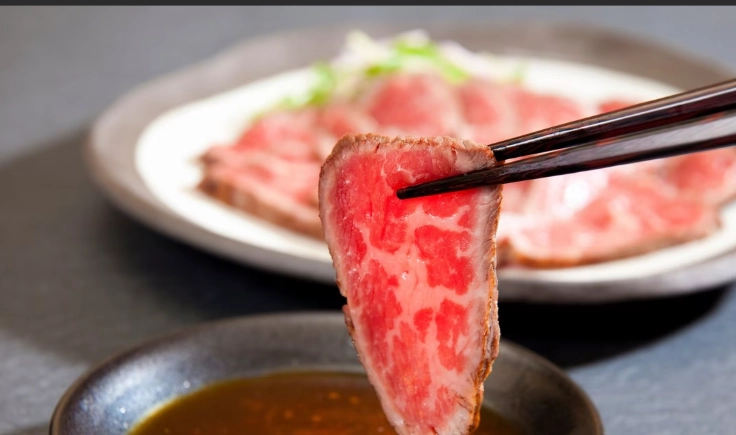
The Tataki Process: A Step-by-Step Breakdown
To really visualize why people ask if beef tataki is raw, let's break down the steps:
- Selection: A pristine, whole cut of beef is chosen. Fat is trimmed. This is not a dish for pre-cut stew meat or anything with sinew.
- Searing: The whole cut is blasted with high heat for 30-60 seconds per side, just until the surface caramelizes. The center remains cold.
- Shocking: Immediate chilling in ice water. This is the critical step that defines tataki versus a rare steak.
- Slicing: Chilled meat is patted dry and sliced thinly (about 1/8 inch or 3mm) with a very sharp knife.
- Serving: Served cold or at room temperature, with acidic, pungent accompaniments that "cook" the meat slightly via acidity.
See the difference? A rare steak is cooked *through* to a certain temperature (usually 120-130°F internally). Beef tataki's interior never gets warm. It's a different beast entirely.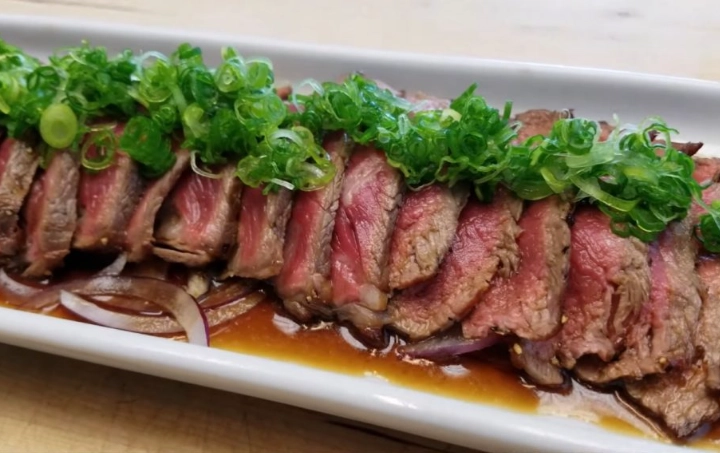
So, Is the Beef in Tataki Safe to Eat? Addressing the Elephant in the Room
This is the million-dollar question, right? We've established the interior is technically raw. So, is eating raw beef tataki safe? The answer is a conditional yes, but with very important caveats. You shouldn't just buy any old steak from the supermarket and try this.
The safety hinges on two pillars: the quality of the meat and the preparation method.
• Sushi-grade or sashimi-grade beef: These are marketing terms, not legal ones, but they generally indicate the supplier has handled the beef with raw consumption in mind. It often comes from trusted, high-welfare farms.
• High-quality, fresh cuts: Think tenderloin, strip loin, top sirloin. They should be whole cuts, not ground meat. Ground meat has much more surface area for bacteria to live on.
• Potential freezing: Many experts and official guidelines recommend freezing the beef beforehand to kill parasites. The USDA recommends freezing fish for raw consumption, and the same logic is often applied to beef for dishes like tataki or steak tartare. Freezing at -4°F (-20°C) for at least 7 days is a common safety practice. Reputable restaurants sourcing for tataki will have done this.
The searing itself does kill surface bacteria, which is a key safety step. Since bacterial contamination is primarily on the surface of a solid cut of meat, that quick, hot sear sanitizes the outside. The pristine, untouched interior is, in theory, free from contamination if the meat was handled properly from slaughter to kitchen.
I'm pretty adventurous, but I have a rule. I'll only eat beef tataki at restaurants I deeply trust—places with high turnover, known for quality, and with a clean kitchen reputation. I'm much more cautious about making it at home, and I follow the freezing rule religiously. The peace of mind is worth the extra planning.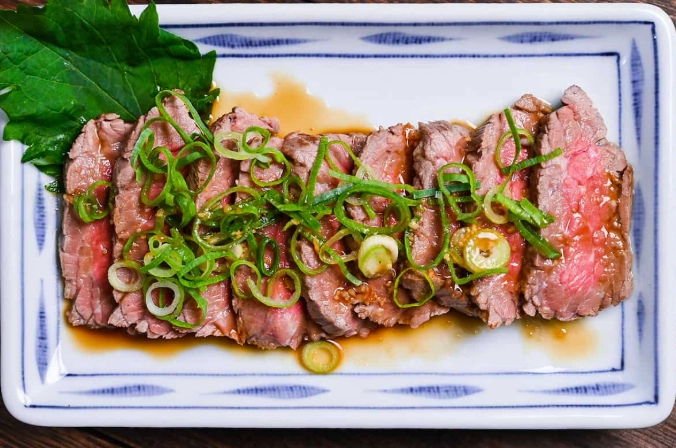
Beef Tataki vs. Other Raw Beef Dishes: A Safety & Style Comparison
People often confuse tataki with other dishes. This table should clear things up and show where tataki sits on the "rawness" and safety spectrum.
| Dish | Preparation | Level of "Raw" | Key Safety Consideration |
|---|---|---|---|
| Beef Tataki | Whole cut briefly seared, then chilled and sliced. | Interior is completely raw (cool). Exterior seared. | Searing kills surface germs. Relies on high-quality whole cut. |
| Steak Tartare | High-quality raw beef, hand-chopped or ground, seasoned. | Completely raw. | Highest risk. Requires absolute top-tier, freshly ground beef prepared immediately. Not for the risk-averse. |
| Carpaccio | Raw beef sliced tissue-paper thin, often pounded thinner. | Completely raw. | Similar to tartare—requires impeccable sourcing. Often dressed with acidic lemon or vinegar. |
| Rare/Rare-Plus Steak | Steak cooked on a grill/pan until the center reaches ~120-130°F. | Interior is cooked but red, cool, and juicy. | Heat has penetrated the entire piece, pasteurizing it over time. Generally considered safe for most. |
See? Tataki has a built-in safety step (the sear) that pure raw dishes don't. It's often seen as a "gateway" to raw beef dishes because of that. If you're wondering, "is beef tataki raw like steak tartare?" the answer is no. Tartare is a different league of rawness.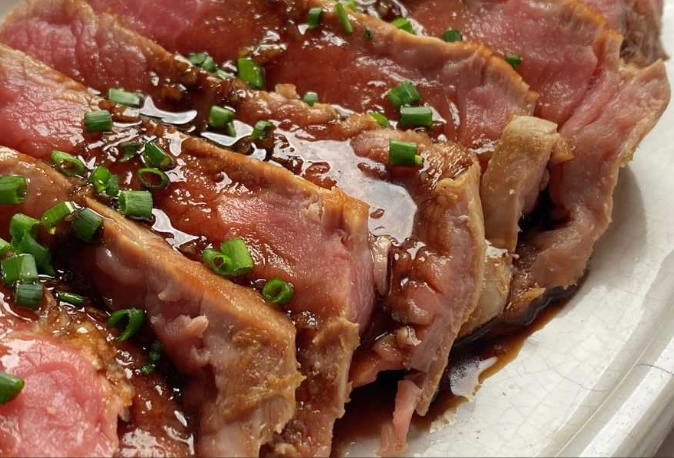
Why Would Anyone Eat It? The Flavor and Texture Experience
If there's risk (however managed), why bother? Because the payoff is a unique eating experience you can't get from cooked meat. When you cook a steak, the heat changes the protein structure, firms it up, and creates new flavors (the Maillard reaction on the crust). Tataki gives you something else.
The texture of the raw interior is incredibly tender, almost buttery, and clean. It melts with very little chew. There's no fibrousness. Then you get the hit of intense, savory, caramelized flavor from the whisper-thin seared crust. It's a two-part harmony in one bite. The cold temperature is also crucial—it makes the meat feel refreshing, not heavy. Paired with the tangy, salty, citrusy ponzu and the sharpness of the daikon and scallions, it's a wake-up call for your palate. It's light, elegant, and deeply savory.
A perfectly cooked rare steak is wonderful. But it's a warm, uniformly textured experience. Tataki is a contrast—cold vs. warm (from the sear), soft vs. slightly crisp, pure beefy flavor vs. complex char. It's for when you want something more nuanced than a steak.
How to Make Beef Tataki at Home (Safely)
If you're tempted to try making it yourself after understanding what it is, here's a practical, safety-first guide. This assumes you are not in a high-risk group.
- Source the Beef: This is 90% of the battle. Talk to your butcher. Tell them you plan to serve it very rare/raw, like for tataki. Ask for a center-cut piece of filet mignon or sirloin. Ask if it has been frozen for parasite control. If not, you should freeze it. Seal it tightly and freeze at your freezer's coldest setting (hopefully 0°F or below) for at least 7 days. Thaw slowly in the fridge before use.
- Prep & Sear: Pat the thawed, cold beef completely dry. Season liberally with salt and pepper. Heat a heavy cast-iron skillet, grill pan, or carbon steel pan until it's smoking hot. Add a tiny bit of high-smoke-point oil (avocado, grapeseed). Sear the beef on all sides, including the ends, for 45-60 seconds per side. You want a dark brown crust. Don't move it around.
- The Critical Shock: Have a bowl of ice water ready. The moment the sear is done, plunge the meat into the ice bath. Let it sit for 5-10 minutes until completely cold. This is what makes it tataki.
- Slice and Serve: Remove, pat extremely dry. Use the sharpest knife you own. Slice as thinly as you possibly can against the grain. Arrange on a plate. Serve immediately with ponzu, grated daikon, and sliced scallions.
Making it at home demystifies it. You see the process, you control the sourcing, and you can confidently answer for yourself: is the beef tataki I made raw? Yes, the inside is. And you know exactly why and how it's safe.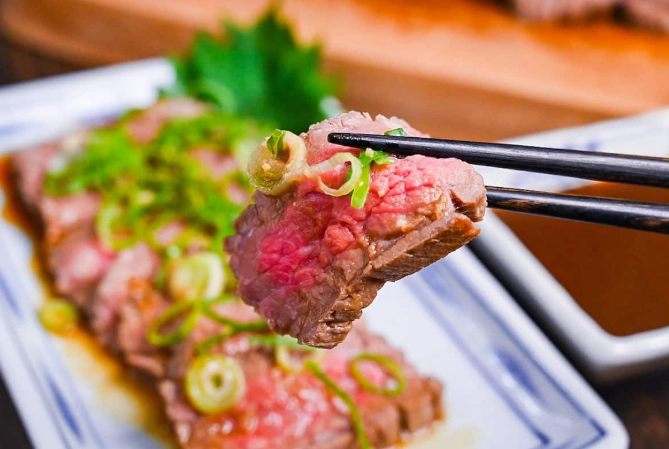
Frequently Asked Questions (FAQs)
Can beef tataki be fully cooked?
Technically, if you cook it through, it's no longer tataki. It becomes a seared and chilled steak, which is a different thing. The defining characteristic of tataki is the raw, cold interior. If you're uncomfortable with that, there are other wonderful cooked Japanese beef dishes, like gyudon (beef bowl) or sukiyaki.
Where did beef tataki originate?
While "tataki" as a method is Japanese, the story goes that beef tataki specifically originated in the city of Kochi on Shikoku island. Legend says it was inspired by foreign sailors (perhaps Portuguese) who cooked meat over open fires. The locals adapted the searing technique but paired it with their traditional Japanese flavors like ponzu and ginger. So it's a lovely fusion dish with deep roots.
What's the best cut of beef for tataki?
Filet mignon (beef tenderloin) is the king. It's lean, incredibly tender, and has a mild flavor that suits the delicate preparation. Top sirloin is a good, more affordable alternative, but it can be slightly less tender. Fat isn't your friend here, as it doesn't render when raw, so avoid heavily marbled cuts like ribeye.
How should beef tataki be stored?
If you have leftovers (slice it fresh to order if possible), wrap the unsliced, seared-and-chilled log tightly in plastic wrap and store it in the coldest part of your fridge for no more than 24 hours. The clock is ticking faster than on cooked meat. Do not store pre-sliced tataki.
Is there a risk of parasites?
This is the core safety concern behind the freezing recommendation. Parasites like Toxoplasma gondii or Taenia saginata (beef tapeworm) can be present in raw beef. Proper freezing (as outlined by the FDA's guidance on parasite destruction) kills these parasites. Commercial beef in many countries also has a very low incidence of parasites due to farming practices. The risk is low but not zero, which is why the freezing step is such a common and wise precaution for home cooks.
Final Verdict: To Try or Not to Try?
So, after all this, what's the final answer to is beef tataki raw? Yes, the interior of beef tataki is raw. It is intentionally and artfully raw. It is not, however, recklessly raw. The preparation involves specific steps (high-heat searing, careful sourcing, often freezing) designed to mitigate the risks associated with consuming raw meat.
Should you try it? If you are not in a high-risk health group and you have the opportunity to try it at a reputable restaurant, I'd say absolutely. It's a classic for a reason. The combination of textures and flavors is special. If you're a home cook wanting to try, respect the process. Source wisely, freeze if unsure, and nail the sear-and-shock technique.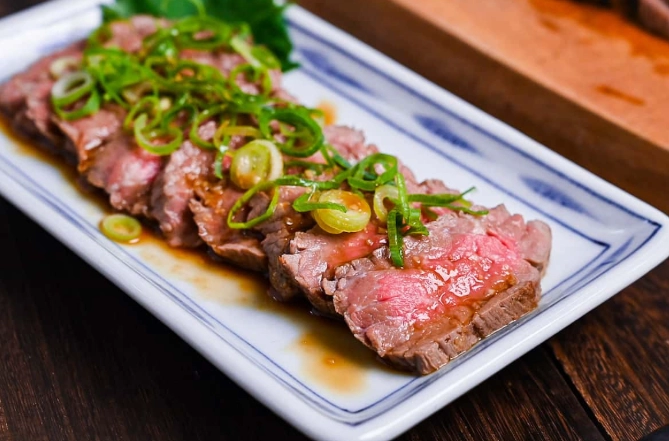
Understanding what you're eating takes the fear out of it. It transforms the question from a nervous "Is this raw?" to an informed appreciation: "Ah, this is tataki—seared outside, cool and tender inside, and prepared with care." That's a much more enjoyable way to experience any food.
In the end, it's a personal choice. But now, at least, it can be an informed one.
Reader Comments